We earn a commission when you buy through our Amazon links, at no extra cost to you. It never decides a ranking, and where the best tool in a class is one we earn nothing on, we say so and link it anyway. How this works.
Rip teeth on one edge, crosscut on the other, a plate thin enough to cut with almost no force, and a maker who actually sells replacement blades. That last point is why it rates as well as it does.
Gyokucho's hardwood-specific tooth geometry, which is a real distinction rather than a marketing one: fewer, stouter teeth that survive dense timber instead of stripping.
A stiffened back over a very thin crosscut plate. The kerf is narrow enough that the saw goes exactly where the knife line is, which is the whole job of a dovetail saw.
The workshop-standard dozuki. Nothing about it is remarkable, which is the recommendation: it has been the default for long enough that the design has no remaining surprises.
#ad· Live prices from the Amazon Product API, as of November 22, 2026. Where we have no verified live price we show none, and the cost-per-decade figure is suppressed with it — we would rather leave a gap than print a number that has rotted.
Buy SUIZAN if you want one brand and no thinking: it sells replacement blades for its own ryoba, dozuki and kataba saws as a single collection on its own website, so the saw you buy today has a documented path to a new blade years from now. Buy Gyokucho when you want a specific tooth geometry it makes and SUIZAN does not — its hardwood ryoba is the clearest case — and accept that the replacement blade is keyed to a saw number and bought from a specialist retailer who may be out of it. Both brands cut better than any western handsaw at the same money. That is not the decision.
Here is the fact that makes this a buy-it-for-life question rather than a preference question. The teeth on these saws are impulse hardened— the cutting edge is flash-heated and quenched to a hardness far above the plate behind it. That is why they cut so well for so long out of the packet, and it is also why a file will not touch them. There is no sharpening a Japanese razor saw. When the teeth are done, the blade is done.
So the saw is a handle, a spine and a consumable. Which means the only durability question worth asking is whether anyone will still sell you the consumable — and that is where these two brands genuinely differ. Warranties and repairability is the general version of this argument: a parts catalog beats a warranty promise, because a warranty is an intention and a parts listing is an ongoing commitment.
The blade supply, side by side
SUIZANpublishes a replacement-blade collection on its own storefront covering its ryoba, dozuki and kataba lines. Its FAQ states the position in its own words — the blades are impulse-hardened and cannot be resharpened — and sells the blades as the answer to that rather than leaving you to discover it. The warranty, also verbatim from the FAQ, is 30 days from delivery against initial defects. Short, written and real, which is more than most of this category manages.
Gyokuchoblades exist, are made in Japan, and are sold in the US — but through specialist woodworking retailers rather than by the brand, and they are keyed to a saw model number. A retailer listing for a 240 mm dozuki blade we checked gives it as Gyokucho blade #S-370, 26 TPI crosscut, 0.012 in thick with a 0.018 in kerf and a 2-5/8 in blade depth, explicitly “for use with Gyokucho Saw #370” — and showed it sold out at the time we looked. That is the pattern across the brand: excellent documentation, a blade for almost every saw, and a supply chain with gaps in it.
The practical consequence is a buying rule rather than a verdict: before you buy a Gyokucho, search for its blade number and confirm somebody stocks it. With SUIZAN that check is one page on the maker's own site.
Where Gyokucho is the better buy anyway
Gyokucho is the older and more specialized catalog, and it does things SUIZAN does not. The one that matters most to a furniture maker is tooth geometry matched to the timber: its hardwood ryoba has fewer, stouter teeth that survive oak and maple instead of stripping in them. That is a genuine engineering distinction, not a marketing one, and it is the reason the Gyokucho ryoba is second on this page rather than fourth.
The flip side is specific and worth stating: a hardwood geometry is slower in softwood. If you mostly cut pine and construction lumber, that saw works against you and the general-purpose SUIZAN is the faster tool.
Gyokucho also owns the bottom of the market outright. Its entry dozuki is under twenty dollars and will cut an accurate dovetail out of the packet, which nothing western comes close to. We have ranked it last here, and the reason is strictly the blade: replacement availability for that specific model is patchy in the US, so it rates as a saw you learn on rather than a saw you keep. That is also why it is the only pick on this page carrying our sealed-blade durability tier rather than the replaceable-blade one.
One Gyokucho saw we would have ranked and did not
Gyokucho makes a 240 mm ryoba built explicitly around a replaceable blade — the honest way to sell an impulse-hardened saw, since it prices the saw as a handle and a spine with the cutting part as a supply item. On the criteria of this page it would have been the strongest Gyokucho here.
It is not on the list because at our last price check it returned no buyable offer. We do not rank a product we cannot confirm you can buy, and we do not quote a remembered price for one — so it gets a paragraph instead of a row. If it comes back, it belongs near the top.
What the two brands have in common
Pull-stroke cutting.The plate is in tension on the cut, so it can be far thinner than a push saw's plate without buckling. Thin plate, narrow kerf, less wood removed, much less force. This is the whole reason to own one and Japanese vs western saws covers the trade in full.
Unsharpenable teeth.Both. If what you want is a saw you can file and set forever, you want a traditional western filed saw — the best tenon saws is that market, and the Sheffield gents saws on the best dovetail saws are the resharpenable answer to a dozuki.
A thin plate that kinks if you force it. Let the saw cut. Steering a Japanese saw by twisting is how people break them, and it is the single most common beginner mistake with both brands.
Made in Japan, documented in English. Both brands publish specifications in a way most western saw makers no longer bother to.
Which type, before which brand
A brand choice matters less than a type choice, and three of the six picks here are ryoba while three are dozuki for exactly that reason:
Ryoba— double-edged, rip teeth one side and crosscut the other, no back, so it cuts to any depth. The one saw to own if you own one.
Dozuki— a stiffened spine over a very thin crosscut plate: more accurate, absolutely limited in depth by the back. A joinery specialist.
Kataba— single-edged, no back, deep cuts with one tooth pattern.
Where the two brands separate most clearly is in dense timber, and that comparison is carried further on the best Japanese saws for hardwood.
Every pick, in full
The write-ups
01Best hand saw overall
Length
9.5 in
Teeth
Rip one edge, crosscut the other
Blade
Impulse hardened, replaceable
Action
Pull stroke
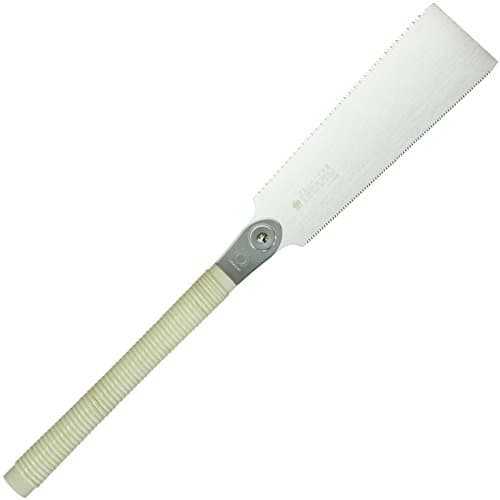
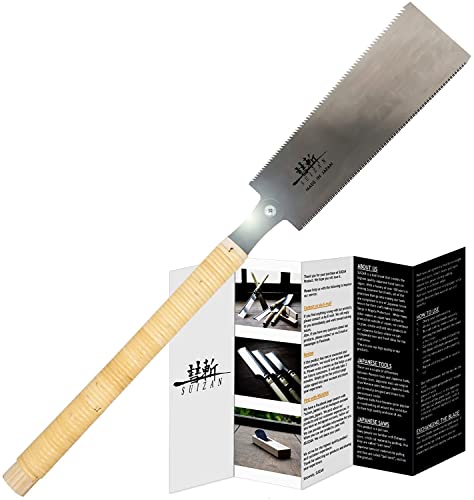
SUIZAN Ryoba Double Edge Pull Saw, 9.5 in
SUIZAN
8.5/10
Rip teeth on one edge, crosscut on the other, a plate thin enough to cut with almost no force, and a maker who actually sells replacement blades. That last point is why it rates as well as it does.
Cost per decade
$18.93
Horizon · tier C
20 years — No lifetime warranty; parts purchasable and resharpenable
The teeth are impulse-hardened and cannot be filed, so the blade is a consumable — but the maker sells replacement blades directly for this model. The handle and spine are the durable part; the blade is a scheduled purchase, not a failure.
Rebuy risk
High
parts listed
Cut quality
9.5
Blade life
8.0
Control
8.0
Renewability
8.0
Value
9.0
What it gets right
+Two saws in one, and both edges are good rather than compromised
+SUIZAN sells replacement blades directly, so the handle is the lasting purchase
+Thin kerf means less wood removed and much less effort
What it costs you
−Impulse-hardened teeth cannot be filed; when they go, you buy a blade
−The blade warranty stated on the replacement blades is one month
−A thin plate kinks if you force or twist it
Skip this if…
…your definition of buy-it-for-life excludes consumables. A ryoba is a handle plus a scheduled blade purchase, and no amount of framing changes that.
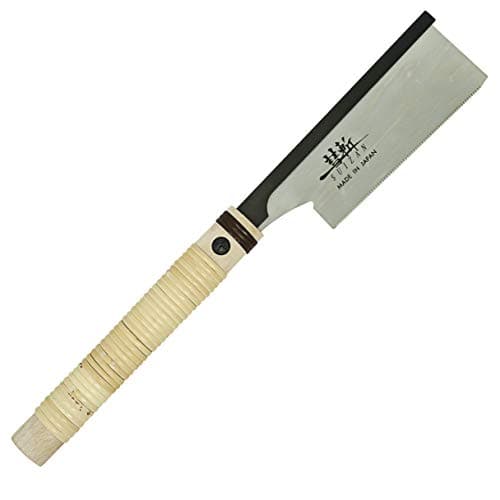
Gyokucho's hardwood-specific tooth geometry, which is a real distinction rather than a marketing one: fewer, stouter teeth that survive dense timber instead of stripping.
Cost per decade
$19.00
Horizon · tier C
20 years — No lifetime warranty; parts purchasable and resharpenable
The teeth are impulse-hardened and cannot be filed, so the blade is a consumable — but the maker sells replacement blades directly for this model. The handle and spine are the durable part; the blade is a scheduled purchase, not a failure.
Rebuy risk
High
parts listed
Cut quality
9.5
Blade life
8.5
Control
8.0
Renewability
7.5
Value
8.5
What it gets right
+Tooth geometry genuinely optimized for dense hardwood
+Gyokucho blades are a long-established standard in Japan
+Cuts cleaner in oak and maple than a general-purpose ryoba
What it costs you
−Slower in softwood than a softwood-geometry saw
−Replacement blade availability varies by model in the US
−Unsharpenable teeth
Skip this if…
…you mostly cut pine and construction lumber. The hardwood geometry works against you there.
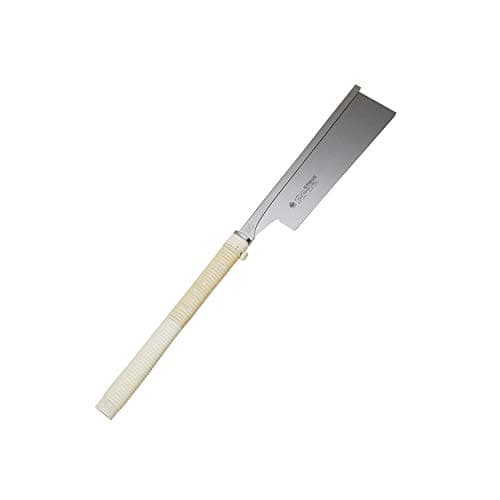
A stiffened back over a very thin crosscut plate. The kerf is narrow enough that the saw goes exactly where the knife line is, which is the whole job of a dovetail saw.
Cost per decade
$14.74
Horizon · tier C
20 years — No lifetime warranty; parts purchasable and resharpenable
The teeth are impulse-hardened and cannot be filed, so the blade is a consumable — but the maker sells replacement blades directly for this model. The handle and spine are the durable part; the blade is a scheduled purchase, not a failure.
Rebuy risk
High
parts listed
Cut quality
9.5
Blade life
8.0
Control
9.5
Renewability
8.0
Value
9.0
What it gets right
+Kerf narrow enough to split a knife line reliably
+Replacement blades sold by the maker
+6 inch is the right length for drawer-scale dovetails
What it costs you
−The back limits depth of cut absolutely
−Impulse-hardened teeth cannot be filed
−The thin plate is unforgiving of a forced stroke
Skip this if…
…you cut deep tenons. The spine will bottom out and there is no way around it.
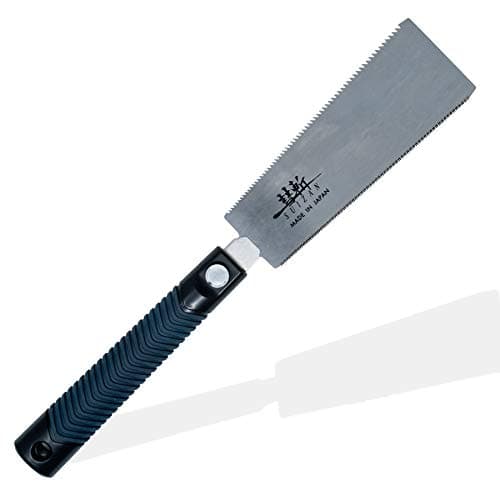
The workshop-standard dozuki. Nothing about it is remarkable, which is the recommendation: it has been the default for long enough that the design has no remaining surprises.
Cost per decade
$20.50
Horizon · tier C
20 years — No lifetime warranty; parts purchasable and resharpenable
The teeth are impulse-hardened and cannot be filed, so the blade is a consumable — but the maker sells replacement blades directly for this model. The handle and spine are the durable part; the blade is a scheduled purchase, not a failure.
Rebuy risk
High
parts listed
Cut quality
9.0
Blade life
8.5
Control
9.0
Renewability
8.0
Value
8.0
What it gets right
+The reference dozuki against which others get described
+Excellent balance and a handle that suits long sessions
+Blade supply is well established
What it costs you
−Depth limited by the back, as with any dozuki
−Unsharpenable teeth
−Costs more than the entry Gyokucho for a refinement most beginners will not notice
Skip this if…
…you want one saw for everything. A dozuki is a joinery specialist and nothing else.
The same saw at a size that suits joinery and box work better than breaking down stock. Easier to control, less capacity.
Cost per decade
$14.74
Horizon · tier C
20 years — No lifetime warranty; parts purchasable and resharpenable
The teeth are impulse-hardened and cannot be filed, so the blade is a consumable — but the maker sells replacement blades directly for this model. The handle and spine are the durable part; the blade is a scheduled purchase, not a failure.
Rebuy risk
High
parts listed
Cut quality
9.0
Blade life
8.0
Control
8.5
Renewability
8.0
Value
8.5
What it gets right
+Much easier to steer accurately than the 9.5 inch
+Replacement blades available from the maker
+Good first pull saw if the work is small
What it costs you
−Depth of cut is limited by the plate height
−Same unsharpenable teeth as the larger version
−Slower through thick stock
Skip this if…
…you are breaking down boards. Buy the 9.5 inch; you will run out of blade depth immediately.
06The cheapest saw here that cuts a clean dovetail
Type
Dozuki, backed
Teeth
Fine crosscut, impulse hardened
Model
770-3500
Action
Pull stroke
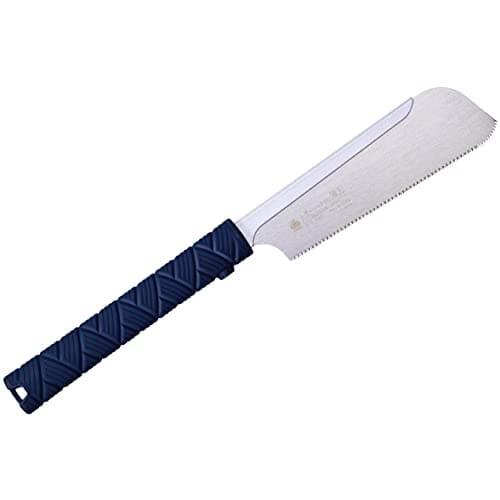
Gyokucho Razor Dozuki Saw with Blade
Gyokucho
7.5/10
Under twenty dollars for a saw that will cut joinery accurately. There is no comparable western backsaw at this price, and it is not close.
Cost per decade
$17.95
Horizon · tier D
10 years — No warranty and no parts availability found
Impulse-hardened teeth cannot be resharpened, and we could not find a replacement blade listing for this model at the date checked. When the teeth go, the saw goes — which is what the rating below is telling you.
Rebuy risk
High
none of the three met
Cut quality
8.5
Blade life
7.0
Control
8.5
Renewability
4.0
Value
9.5
What it gets right
+Extraordinary value; nothing western competes at this price
+Genuinely accurate for joinery straight out of the packet
+Cheap enough that a kinked plate is annoying rather than expensive
What it costs you
−Handle is basic
−Replacement blade availability for this specific model is patchy in the US
−Not a saw anyone hands down
Skip this if…
…you are buying for life. Buy this to learn on and a better one when you know what you want.
A ryoba blade is not a failure, it is a scheduled purchase, and the arithmetic is more favorable than “consumable” makes it sound. A hobbyist cutting joinery a few weekends a month will get years out of one blade; somebody breaking down stock weekly will not. Either way the honest way to read the price is cost per decade: saw plus a blade every few years, against a western filed saw that costs more up front and never needs a part, only a file and the skill to use it.
What makes the Japanese saw win that comparison for most people is not the arithmetic, it is that the skill is optional. A dozuki is accurate on day one. Sharpening a dovetail saw is what the western alternative asks of you instead — a real skill, worth having, and not one you acquire before your first set of dovetails.
How to check a blade is available before you buy
Find the saw's model number, not just its description. Gyokucho saws and blades are both numbered; a blade marked S-370 belongs to saw 370 and to nothing else.
Search the blade number, not the saw name.“Gyokucho S-306 replacement blade” tells you something; “Gyokucho dozuki blade” does not.
Check a specialist, then the brand.For Gyokucho, the US blade supply sits with woodworking retailers. For SUIZAN, start at the maker's own replacement blade collection.
Treat “sold out” as information. A blade that is out of stock today may be back next month or may be discontinued, and for a saw you intend to keep that distinction is the whole purchase.
Making the blade last
Never cut a nail, a screw or a staple.Obvious, and still the most common way an impulse-hardened blade dies — the teeth are hard, which also means brittle, so they chip rather than bend.
Do not force the stroke. A pull saw cuts on its own weight plus a light pull. Pushing hard on the return is what buckles a 0.012 in plate.
Start the cut on the far corner at a shallow angle, with the teeth you can see, and let the kerf establish itself before you lower the saw into the line. How to use a hand saw covers the push-saw version of the same motion and where the two differ.
Keep it dry and out of a drawer full of other steel. A thin plate rusts fast and a pitted plate binds in the kerf. Rust removal and prevention is what to do if it has already happened.
Change the blade before it is useless. A saw that has started to wander teaches you bad habits you then have to unlearn on the new blade.
If you want one saw from each brand
A defensible two-saw kit, and the one we would buy: the SUIZAN 9.5 in ryoba for everything that is not joinery, because it is the general-purpose saw with the best-documented blade supply, and the SUIZAN 6 in dozuki for dovetails and small shoulders, because at drawer scale a 6 in plate is far more controllable than a 9.5 in one and the blade comes from the same place.
Add a Gyokucho hardwood ryobaas a third saw if you work mostly in oak, maple or anything dense — that is the case where its tooth geometry is worth owning a second brand for. Do not start there if your stock is softwood.
For the wider field, including the brands neither of these two competes with, the best Japanese saws ranks across types and how to choose a hand saw is the decision from first principles.
Questions
Frequently asked
Is SUIZAN or Gyokucho better?+
Neither cuts meaningfully better than the other — both are impulse-hardened Japanese plates that outperform western saws at the price. SUIZAN is the betterpurchase because it sells replacement blades for its own saws on its own site, and the teeth of both brands cannot be resharpened. Buy Gyokucho when you specifically want a tooth geometry it makes, such as its hardwood ryoba, and check the blade number is stocked first.
Can Japanese saw teeth be sharpened?+
Not on these saws. The teeth are impulse hardened — flash-heated and quenched well above the hardness of the plate — so a saw file skates off them. SUIZAN states this in its own FAQ. Traditional Japanese saws with filed teeth exist and can be sharpened by a specialist, but every SUIZAN and Gyokucho razor saw sold through mainstream US channels is a replace-the-blade tool.
Are Gyokucho replacement blades hard to get in the US?+
Available but not guaranteed. They are sold by US woodworking retailers rather than by the brand, and each blade is keyed to a saw model number — blade S-370 fits saw 370 and nothing else. One 240 mm dozuki blade we checked was listed at a US retailer and showed sold out at the time. Search the blade number before buying the saw.
Does SUIZAN have a warranty?+
Thirty days from delivery against initial defects, in SUIZAN's own words: it will replace the item free of charge. That is a defect-on-arrival warranty, not a lifetime term, and it is honest about what it is. The durability case for the brand rests on the replacement blade line, not on the warranty.
Which should I buy first, a ryoba or a dozuki?+
A ryoba. It has rip teeth on one edge and crosscut on the other, no back to limit depth, and it will do every cut a beginner needs including breaking down stock. Add a dozuki when joinery accuracy starts to matter — it is more accurate and absolutely depth-limited by its spine, which makes it a specialist rather than a first saw.
Will a Japanese saw replace my western hand saws?+
For joinery and fine crosscutting, largely yes. For rough framing work, a western saw is still easier — you can lean on it, it tolerates a twisted stroke, and a thicker plate does not care about a knot. Many people end up with a pull saw for accuracy and one coarse western saw for everything brutal.
We have not handled these tools. Nobody here has tested one, owned one, or taken one apart. Specifications come from the manufacturer or the retailer listing; warranty terms come from the maker's own warranty page; the cost-per-decade arithmetic is ours and reproducible. Where we could not verify a figure we say so on the page rather than quietly leaving it out. Read the full method.