We earn a commission when you buy through our Amazon links, at no extra cost to you. It never decides a ranking, and where the best tool in a class is one we earn nothing on, we say so and link it anyway. How this works.
Gyokucho's hardwood-specific tooth geometry, which is a real distinction rather than a marketing one: fewer, stouter teeth that survive dense timber instead of stripping.
Explicitly built around a replaceable blade, which is the honest way to buy an impulse-hardened saw: you are buying a handle and a spine, and the cutting part is a supply item.
The replaceable-blade ryoba with the widest blade supply
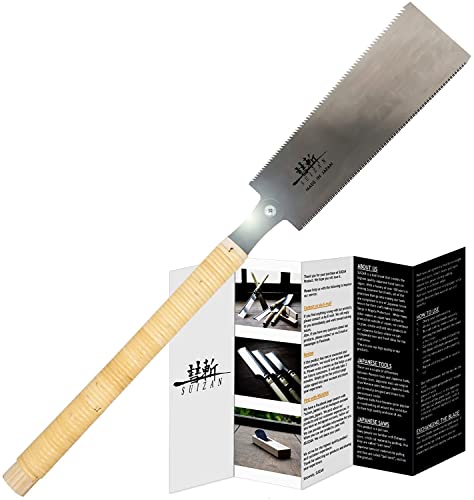
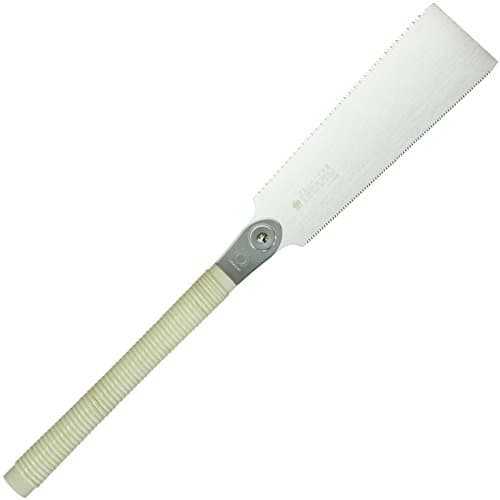
Rip teeth on one edge, crosscut on the other, a plate thin enough to cut with almost no force, and a maker who actually sells replacement blades. That last point is why it rates as well as it does.
The workshop-standard dozuki. Nothing about it is remarkable, which is the recommendation: it has been the default for long enough that the design has no remaining surprises.
A competent double-edge pull saw at well under the SUIZAN price. It cuts a little rougher and it is the one to buy if you are still deciding whether pull saws suit you.
#ad· Live prices from the Amazon Product API, as of November 22, 2026. Where we have no verified live price we show none, and the cost-per-decade figure is suppressed with it — we would rather leave a gap than print a number that has rotted.
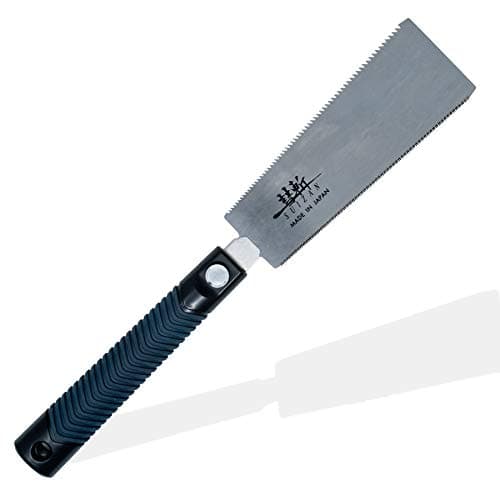
The verdict: buy the Gyokucho Razorsaw 9.5 in ryoba. It is the one saw in our registry sold specifically with hardwood tooth geometry — fewer, stouter teeth that survive dense timber instead of stripping — on an impulse-hardened blade. It is for anyone whose stock is oak, maple, ash or cherry rather than pine. The budget pick is the KAKURI 9.5 in ryoba, the cheapest saw here, which cuts hardwood adequately and is the right buy if the saw will be used occasionally rather than daily. Prices below are live, with the date they were checked.
This is a narrower question than the best Japanese saws, which ranks the field in general and is won by a different saw. Hardwood changes the answer, and it changes it for a reason worth understanding before you spend anything.
Why hardwood needs a different saw
A Japanese saw cuts on the pull stroke, which puts the plate in tension and allows it to be far thinner than any push saw. Thin plate, narrow kerf, less effort — that is the whole advantage, and in softwood it is overwhelming. In dense timber it becomes a liability, because the same thin plate carries small teeth into material hard enough to snap them.
Tooth geometry is the first criterion. A softwood-pattern saw has more, finer, more acutely raked teeth that clear soft fibrous shavings quickly. A hardwood-pattern saw has fewer and stouter teeth with a less aggressive rake: it is slower in pine, and it is still cutting in oak after the other one has lost a tooth. Gyokucho sells the distinction explicitly rather than as marketing, which is why it leads this page.
Tooth hardness is the second, and it is a trap. Almost every Japanese saw sold today has impulse-hardened teeth — induction-hardened to a hardness no file will touch. They stay sharp several times longer than a filed tooth and they cannot be resharpened, ever. In hardwood they dull faster, so the practical question becomes the third criterion.
Can you buy a blade for it? On an unsharpenable saw this is the only thing standing between you and a disposable tool. SUIZAN sells replacement blades for its ryoba, dozuki and kataba saws directly. Gyokucho blades are keyed to a saw model number and are sold through specialist retailers rather than by the brand, which makes supply model-dependent — worth checking before you commit to a format. That is the whole case for the replaceable-blade version of the Gyokucho ryoba, ranked second here.
What is not a criterion: TPI as a headline number. A high tooth count is only better up to the point where the gullets stop clearing the dust, and in hardwood that point arrives sooner.
The saw to buy: Gyokucho Razorsaw ryoba, 9.5 in
Gyokucho publishes a hardwood tooth geometry for this saw, and in oak and maple it cuts cleaner than a general-purpose ryoba because the teeth are built for the job rather than tolerating it. A ryoba gives you rip teeth on one edge and crosscut on the other, so one blade covers tenon cheeks and shoulders in dense stock.
Two honest marks against it. It is slower than a softwood-geometry saw in pine and construction lumber, so if most of your work is softwood this is the wrong saw — buy a general-purpose ryoba instead. And replacement blade availability varies by model in the US, which is precisely the risk the next pick removes.
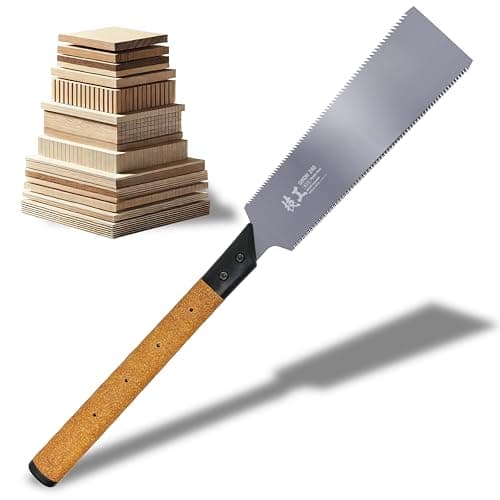
The one to buy if you plan to keep it: the 240 mm replaceable-blade ryoba
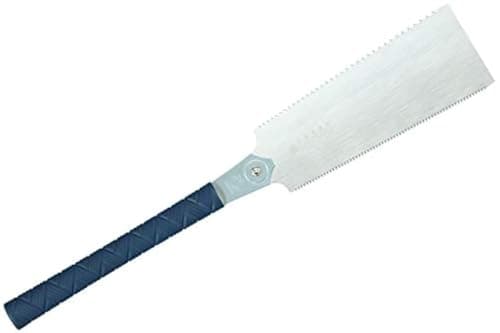
The Gyokucho 240 mm with the TPE grip is built around blade replacement rather than tolerating it: 14 TPI crosscut and 7 TPI rip, a standard 240 mm blade format with the deepest supply in Japan, and a handle and spine that will outlast several blades. On an impulse-hardened saw this is the honest purchase — you are buying a handle, and the cutting part is a supply item.
It costs more up front than the fixed-blade saw and commits you to one blade format. If you will genuinely never buy a second blade, the fixed-blade saw is the cheaper route to the same cuts, and this ranking says so.
The SUIZAN alternative, and when it is the better call
SUIZAN does not sell a hardwood-specific geometry, but it does the thing that matters most over a decade: it sells replacement blades for its saws directly, and it publishes an actual written warranty — a 30-day initial-defect replacement — which almost nobody in this market does. The 9.5 in ryoba is the general-purpose pick and the 7 in is the one for small work and for anyone who finds a full-size ryoba unwieldy.
If you are choosing between the two brands on anything other than hardwood geometry, that comparison is already written up on SUIZAN vs Gyokucho.
For joint work in hardwood: the dozuki
A ryoba is the wrong saw for a dovetail in hard maple — without a back it follows the grain, and hardwood grain is unforgiving. The Gyokucho Dozuki Noko Giri and the SUIZAN 9.5 in dozuki are the backed saws here: a stiffening spine holds the thin plate to the knife line, which is exactly what dense, figured stock punishes you for lacking.
The spine limits depth of cut to roughly the depth of the plate below it, so these are joint saws and not panel saws. If joinery is the actual job, the saws are ranked by cut on the best hand saws for joinery.
The budget pick: KAKURI 9.5 in ryoba
The cheapest saw on this page. A full-size ryoba at a price that makes it reasonable to own one alongside a better saw and to not care much when it dulls. For occasional hardwood work it is entirely adequate and it does the two-edges-one-blade trick like any ryoba.
Buy it with the trade understood. It is not sold with a hardwood geometry, the teeth are impulse-hardened like everything else here, and it is the saw on this page most likely to become scrap rather than a handle with a new blade in it. For a first Japanese saw that is a reasonable bargain; for the saw you will use every week in oak, it is not.
If what you actually need is a saw for construction lumber and softwood framing, this page is the wrong one and the best hand saws for 2x4s is the right one.
Every pick, in full
The write-ups
01The ryoba specified for hardwood
Length
9.5 in
Teeth
Ryoba, hardwood geometry
Blade
Impulse hardened
Action
Pull stroke
Gyokucho Razorsaw Ryoba, 9.5 in
Gyokucho
8.4/10
Gyokucho's hardwood-specific tooth geometry, which is a real distinction rather than a marketing one: fewer, stouter teeth that survive dense timber instead of stripping.
Cost per decade
$19.00
Horizon · tier C
20 years — No lifetime warranty; parts purchasable and resharpenable
The teeth are impulse-hardened and cannot be filed, so the blade is a consumable — but the maker sells replacement blades directly for this model. The handle and spine are the durable part; the blade is a scheduled purchase, not a failure.
Rebuy risk
High
parts listed
Cut quality
9.5
Blade life
8.5
Control
8.0
Renewability
7.5
Value
8.5
What it gets right
+Tooth geometry genuinely optimized for dense hardwood
+Gyokucho blades are a long-established standard in Japan
+Cuts cleaner in oak and maple than a general-purpose ryoba
What it costs you
−Slower in softwood than a softwood-geometry saw
−Replacement blade availability varies by model in the US
−Unsharpenable teeth
Skip this if…
…you mostly cut pine and construction lumber. The hardwood geometry works against you there.
02The replaceable-blade ryoba with the widest blade supply
Length
240 mm
Teeth
14 TPI crosscut / 7 TPI rip
Blade
Replaceable, 610 blade
Action
Pull stroke
Gyokucho Ryoba Double Edge, 240 mm TPE Grip
Gyokucho
8.5/10
Explicitly built around a replaceable blade, which is the honest way to buy an impulse-hardened saw: you are buying a handle and a spine, and the cutting part is a supply item.
Cost per decade
$19.98
Horizon · tier C
20 years — No lifetime warranty; parts purchasable and resharpenable
The teeth are impulse-hardened and cannot be filed, so the blade is a consumable — but the maker sells replacement blades directly for this model. The handle and spine are the durable part; the blade is a scheduled purchase, not a failure.
Rebuy risk
High
parts listed
Cut quality
9.0
Blade life
8.5
Control
8.0
Renewability
9.0
Value
8.0
What it gets right
+Designed around blade replacement rather than tolerating it
+240 mm is the standard Japanese size with the deepest blade supply
+Handle and spine outlast several blades
What it costs you
−Costs more than the fixed-blade version up front
−You are committed to that blade format
−Still unsharpenable
Skip this if…
…you will never buy a second blade. Then the fixed-blade saw is the cheaper way to the same cuts.
Rip teeth on one edge, crosscut on the other, a plate thin enough to cut with almost no force, and a maker who actually sells replacement blades. That last point is why it rates as well as it does.
Cost per decade
$18.93
Horizon · tier C
20 years — No lifetime warranty; parts purchasable and resharpenable
The teeth are impulse-hardened and cannot be filed, so the blade is a consumable — but the maker sells replacement blades directly for this model. The handle and spine are the durable part; the blade is a scheduled purchase, not a failure.
Rebuy risk
High
parts listed
Cut quality
9.5
Blade life
8.0
Control
8.0
Renewability
8.0
Value
9.0
What it gets right
+Two saws in one, and both edges are good rather than compromised
+SUIZAN sells replacement blades directly, so the handle is the lasting purchase
+Thin kerf means less wood removed and much less effort
What it costs you
−Impulse-hardened teeth cannot be filed; when they go, you buy a blade
−The blade warranty stated on the replacement blades is one month
−A thin plate kinks if you force or twist it
Skip this if…
…your definition of buy-it-for-life excludes consumables. A ryoba is a handle plus a scheduled blade purchase, and no amount of framing changes that.
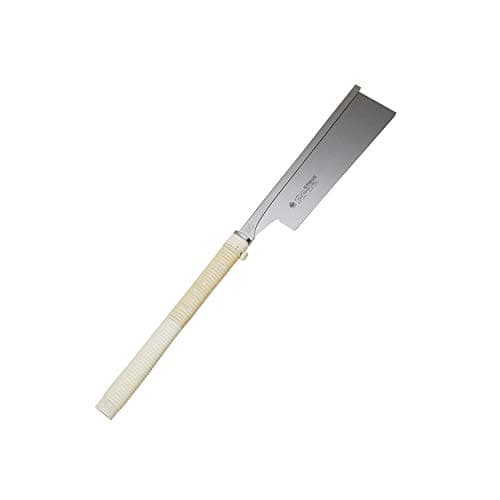
The workshop-standard dozuki. Nothing about it is remarkable, which is the recommendation: it has been the default for long enough that the design has no remaining surprises.
Cost per decade
$20.50
Horizon · tier C
20 years — No lifetime warranty; parts purchasable and resharpenable
The teeth are impulse-hardened and cannot be filed, so the blade is a consumable — but the maker sells replacement blades directly for this model. The handle and spine are the durable part; the blade is a scheduled purchase, not a failure.
Rebuy risk
High
parts listed
Cut quality
9.0
Blade life
8.5
Control
9.0
Renewability
8.0
Value
8.0
What it gets right
+The reference dozuki against which others get described
+Excellent balance and a handle that suits long sessions
+Blade supply is well established
What it costs you
−Depth limited by the back, as with any dozuki
−Unsharpenable teeth
−Costs more than the entry Gyokucho for a refinement most beginners will not notice
Skip this if…
…you want one saw for everything. A dozuki is a joinery specialist and nothing else.
The dozuki scaled up for larger joinery. Same accuracy, more depth before the spine stops you, slightly harder to start cleanly.
Cost per decade
$22.34
Horizon · tier C
20 years — No lifetime warranty; parts purchasable and resharpenable
The teeth are impulse-hardened and cannot be filed, so the blade is a consumable — but the maker sells replacement blades directly for this model. The handle and spine are the durable part; the blade is a scheduled purchase, not a failure.
Rebuy risk
High
parts listed
Cut quality
9.0
Blade life
8.0
Control
8.5
Renewability
8.0
Value
8.0
What it gets right
+Handles tenon shoulders that a 6 inch cannot reach
+Same replaceable-blade supply as the smaller version
+Long stroke means fewer passes on a big cut
What it costs you
−Harder to start accurately than the 6 inch
−Overkill for drawer dovetails
−Longer thin plate is more vulnerable to kinking
Skip this if…
…dovetails are the job. The 6 inch is more controllable at that scale.
The same saw at a size that suits joinery and box work better than breaking down stock. Easier to control, less capacity.
Cost per decade
$14.74
Horizon · tier C
20 years — No lifetime warranty; parts purchasable and resharpenable
The teeth are impulse-hardened and cannot be filed, so the blade is a consumable — but the maker sells replacement blades directly for this model. The handle and spine are the durable part; the blade is a scheduled purchase, not a failure.
Rebuy risk
High
parts listed
Cut quality
9.0
Blade life
8.0
Control
8.5
Renewability
8.0
Value
8.5
What it gets right
+Much easier to steer accurately than the 9.5 inch
+Replacement blades available from the maker
+Good first pull saw if the work is small
What it costs you
−Depth of cut is limited by the plate height
−Same unsharpenable teeth as the larger version
−Slower through thick stock
Skip this if…
…you are breaking down boards. Buy the 9.5 inch; you will run out of blade depth immediately.
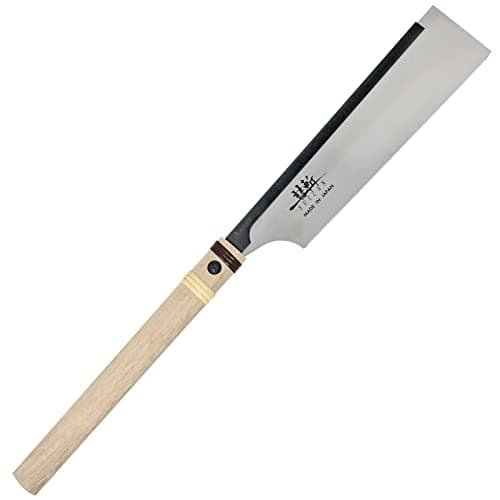
A competent double-edge pull saw at well under the SUIZAN price. It cuts a little rougher and it is the one to buy if you are still deciding whether pull saws suit you.
Cost per decade
$30.80
Horizon · tier D
10 years — No warranty and no parts availability found
Impulse-hardened teeth cannot be resharpened, and we could not find a replacement blade listing for this model at the date checked. When the teeth go, the saw goes — which is what the rating below is telling you.
Rebuy risk
High
none of the three met
Cut quality
8.0
Blade life
7.0
Control
7.5
Renewability
3.5
Value
9.5
What it gets right
+Full-size ryoba capability at an entry price
+Sharp enough out of the packet to be immediately useful
+Low-risk way to find out whether you prefer pulling
What it costs you
−Cut quality is a step below SUIZAN and Gyokucho
−Replacement blade availability is unclear for this model
−Unsharpenable teeth
Skip this if…
…you already know you want a pull saw. Spend the extra on the SUIZAN and get the blade supply with it.
Buy tooth geometry, not tooth count. In dense timber, fewer and stouter teeth with a less aggressive rake survive where a fine softwood pattern strips. A high TPI number on a hardwood cut is a liability once the gullets stop clearing.
Check the blade supply before you buy the handle. Impulse-hardened teeth cannot be resharpened. A saw with a replaceable blade in a standard format is a tool; one without is a consumable with a nice handle.
Backed saw for joints, unbacked for depth. A dozuki tracks better and stops at the spine. A ryoba cuts as deep as the plate is long and wanders if you let it. Hardwood punishes wander more than softwood does.
Score the line, then start on the pull. A Japanese saw started with pressure on the push stroke will kink the plate, and a kinked plate never comes back.
If most of your stock is pine, buy the other saw. Hardwood geometry is slower in softwood and you will notice every cut. This page is for people working oak, maple, ash and cherry.
Questions
Frequently asked
What is the best Japanese saw for hardwood?+
The Gyokucho Razorsaw 9.5 in ryoba, which is sold with a hardwood-specific tooth geometry: fewer and stouter teeth that survive dense timber rather than stripping. If you want the same saw with a guaranteed blade supply, buy the 240 mm replaceable-blade version instead.
Can Japanese saws cut hardwood at all?+
Yes, and very well — the thin tensioned plate gives a narrower kerf than any push saw. The failure mode is using a softwood-geometry saw in oak or maple, where the fine teeth dull quickly and can break. Buy the right geometry and the saw is excellent in dense timber.
Can impulse-hardened teeth be sharpened?+
No. Induction-hardened teeth are harder than any file, which is why they stay sharp much longer and why the saw is finished when they dull. The whole decision therefore turns on whether a replacement blade exists for that model.
Ryoba or dozuki for hardwood?+
Ryoba for general cutting and for anything deeper than a few inches; dozuki for joints, because the spine holds the plate to the line and hardwood grain is unforgiving of wander. The full comparison is on ryoba vs dozuki.
Why did my pull saw lose a tooth?+
Almost always one of three things: a softwood-pattern saw used in dense hardwood, pressure applied on the push stroke, or hitting a knot or a nail. The first is a buying mistake, the second a technique one, and the third is bad luck.
We have not handled these tools. Nobody here has tested one, owned one, or taken one apart. Specifications come from the manufacturer or the retailer listing; warranty terms come from the maker's own warranty page; the cost-per-decade arithmetic is ours and reproducible. Where we could not verify a figure we say so on the page rather than quietly leaving it out. Read the full method.