Hand Saws
Dovetail Saw Guides Explained
A magnetic block that holds the saw at 1:8 will give you a square cut this afternoon. Whether it teaches you anything is the real question.
We earn a commission when you buy through our Amazon links, at no extra cost to you. It never decides a ranking, and where the best tool in a class is one we earn nothing on, we say so and link it anyway. How this works.
The short answer
Quick picks
| # | Tool | Best for | Per decade | Score | Price |
|---|---|---|---|---|---|
| 01 | 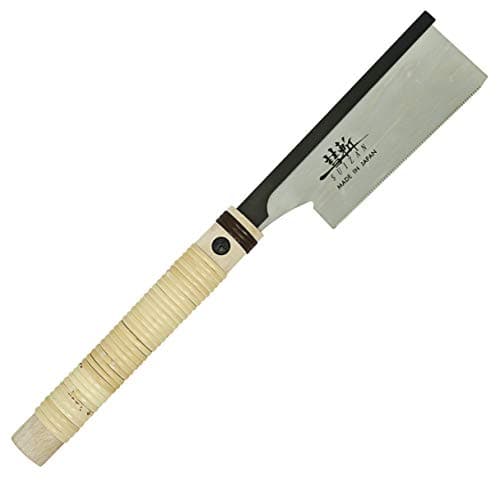 SUIZAN Dozuki Dovetail Saw, 6 in Crosscut A stiffened back over a very thin crosscut plate. The kerf is narrow enough that the saw goes exactly where the knife line is, which is the whole job of a dovetail saw. | Best dovetail saw | $19.40tier C | 8.8/10 | $38.80Amazon |
| 02 | 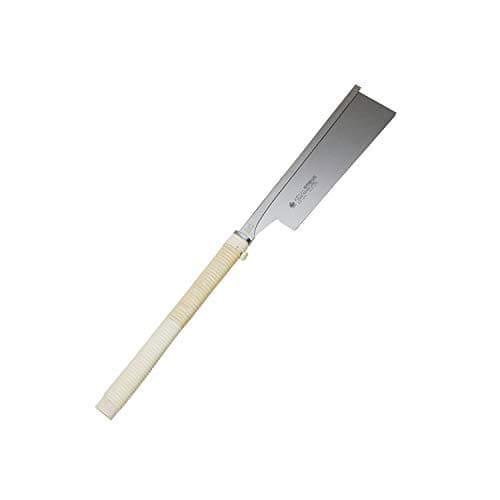 Gyokucho Dozuki Noko Giri Dovetail Saw, 9.5 in The workshop-standard dozuki. Nothing about it is remarkable, which is the recommendation: it has been the default for long enough that the design has no remaining surprises. | The dozuki most Japanese joiners actually own | $21.35tier C | 8.5/10 | $42.70Amazon |
| 03 | 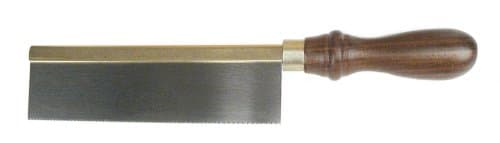 Crown 187 Gents Saw, 8 in A traditional filed gents saw from Sheffield. It does not cut as cleanly out of the box as a dozuki, and unlike a dozuki you can put the teeth back for the rest of your life. | The dovetail saw you can resharpen forever | $20.18tier C | 8.5/10 | $40.37Amazon |
#ad· Live prices from the Amazon Product API, as of October 16, 2026. Where we have no verified live price we show none, and the cost-per-decade figure is suppressed with it — we would rather leave a gap than print a number that has rotted.
A dovetail saw guide is a block of steel or brass with two faces ground at the dovetail angle and magnets set into them. You clamp it to the work, the saw plate sticks to the magnet, and the saw cannot wander off the angle. It works, it will improve your joints today, and it will not teach you to saw to a line — which is the trade, and the only honest way to describe it.
Before anything else, a disclosure about this page. We do not have a saw guide in our product registry with a listing we can verify, so there are no guides ranked here and none recommended by name. The rule on this site is that we only link to products we have checked are live, and a category we cannot verify gets explained rather than sold. The saws in the Quick Picks table above are the dovetail saws this question comes up about; the guide itself is something you will either buy from a specialist retailer or, as we will argue below, make in twenty minutes from a block of hardwood.
What the guide actually does
Cutting a dovetail by hand asks you to hold three things at once: the saw plumb across the board's thickness, the saw at the dovetail angle along its face, and the cut on the line you marked. A guide takes over the first two. The magnets hold the plate flat against a reference face that is already at the right angle, so the only thing left to you is starting in the right place and sawing to depth.
Guides come in a few shapes and they are all the same idea.
Magnetic angle blocks. The common type: a steel or brass block with a vertical face for shoulder cuts and one or two angled faces at a standard dovetail slope, usually 1:6 and 1:8. Rare-earth magnets hold the plate. Clamp it to the work or hold it by hand.
Clamping jigs with a fixed kerf slot. Instead of a magnet, a slot the plate runs in. More positive and less versatile, because the slot has to match your plate thickness.
Mitre-box style guides. A box with angled slots. Fine for repetitive work on small parts, hopeless on a drawer side already in a vise.
And the one you make. A block of dense hardwood with two faces planed at the dovetail angle, clamped to the work. No magnets — you hold the plate against the face with light finger pressure. It costs nothing, it works almost as well, and if you cut it slightly wrong you plane it again. This is the version we would make first, and a block plane is the tool for truing the faces.
What it genuinely fixes
Starting the cut. The first three strokes decide where a hand saw goes, and this is where a beginner loses control. A magnet holds the plate steady while the kerf establishes itself, and that alone accounts for most of the improvement people report.
Angle consistency across a row of tails. Eight tails cut freehand drift a degree or two from each other and the joint still goes together, because the pins are cut from the tails. But a row that is visibly inconsistent reads as sloppy, and the guide makes them all identical.
Working in an awkward position. Cutting a large carcass side that cannot be brought to a comfortable height is where even a practised sawyer goes out of plumb, and a guide does not care how you are standing.
Hard, dense exotics. A plate deflects measurably in something like wenge or hard maple, and the guide holds it where it should be.
The two things it cannot fix
It does not keep you on the line. The guide controls the saw's attitude, not its position. Clamp it a sixteenth off your layout line and you will cut a perfectly square, perfectly angled, perfectly wrong cut. All the layout accuracy you needed before, you still need — and a dependable square and marking gauge matter more than the guide does. The best woodworking squares covers that end of it.
It does not transfer. This is the real cost, and it is the thing the people selling guides are quiet about. Sawing to a line is a skill built by feedback: you cut, you see where you went wrong, you adjust. A guide removes the feedback along with the error. People who learn with a guide and then try to saw without one are generally back where they started, because the practice hours did not go into the skill. Use it as a crutch while you learn and you will be using it in ten years; use it for the awkward cuts and learn freehand on the easy ones, and you get both. How to cut dovetails by hand is the freehand method.
What to look for if you buy one
Which angles it offers. 1:8 is the usual slope for hardwood and 1:6 for softwood. A block with both, plus a 90 degree face for shoulder cuts, covers everything most people cut. More angles is not better, it is more faces to pick up the wrong one of.
Magnet strength against plate thickness. A dozuki plate is a few thousandths of an inch thick and a western backsaw plate is twice that. A magnet sized for a thick plate will not hold a thin one firmly; a magnet strong enough for a thin plate can drag a thick one off your line as it snaps home. If you know which saw you will use it with, that is the saw to size it for.
Whether it clamps or is held. A guide you hold with one hand leaves one hand for the saw and none for the work. Any guide with a clamp or a hole for one is easier to live with.
Height of the reference face. A short face gives the plate less to register against, which matters most at the start of the cut — which is exactly when you wanted the help.
The saws this comes up about
Three saws in our registry are the ones people pair a guide with, and the choice interacts with the guide in a way worth knowing. The Quick Picks table above carries the live price for each.
SUIZAN Dozuki 6 in— a fine-toothed Japanese backsaw with a very thin plate and a replaceable blade. The narrow kerf is the most accurate thing here and the thin plate is also the one most likely to be pulled around by a strong magnet. It cuts on the pull stroke, which makes starting easier with or without a guide.
Gyokucho Dozuki Noko Giri 9.5 in— the dozuki most Japanese joiners own, impulse-hardened and longer, so it reaches tenon depth as well as dovetail depth. Same thin-plate caution.
Crown 187 Gents Saw 8 in— the western option, push-cut with a brass back and filed teeth you can sharpen for the rest of your life. The thicker plate registers more positively against a magnet than either dozuki, and it is the saw to buy if you intend to learn freehand rather than rely on a guide. Japanese vs western saws is the full comparison, and the best dovetail saws is the whole field ranked.
What actually decides it
Buying guide
Making one in twenty minutes
- Start with a block of dense hardwood. Something like 2 x 2 x 4 in. Maple, beech, oak — anything hard enough not to crush when you press a saw plate against it.
- Plane two faces dead square to each other and to the base. This is the part that has to be right, and it is the part a guide is useless without.
- Mark the dovetail slope on the end and plane one face to it. 1:8 is a rise of one in eight along; mark it with a sliding bevel or step it off with a rule. Check it with a square against the base, not against the sloped face.
- Leave one face at 90 degrees. That is your shoulder-cut face, and you will use it more than the angled one.
- Drop in rare-earth magnets if you want them. Two 1/2 in discs per face in drilled recesses, glued flush or a hair below the surface. Entirely optional — finger pressure against a flat wooden face works.
- Clamp it to the work, not to the bench. Any small clamp does it. The best woodworking clamps covers what to own.
Learning freehand instead, which is the cheaper answer
If you want to stop needing a guide, the sequence that works is practice on offcuts rather than practice on projects.
Saw to a knife line, not a pencil line. A knifed line gives the teeth somewhere to sit on the first stroke, and it is visible from both sides of the cut.
Start with the saw at a low angle and almost no pressure. Three light strokes to establish the kerf, then raise the saw and let its weight cut. Nearly every sawing problem is someone pushing too hard too early.
Watch the far side, not the near side. You can only correct an error you can see developing, and the far face is where it shows first.
Cut twenty practice kerfs in a scrap and check each one. Twenty minutes of deliberate practice with a square in hand does more than a guide ever will, and how to use a hand saw has the mechanics.
And one structural point in the guide's favour that should be said plainly: for through dovetails the pins are marked from the sawn tails, so a consistent angle matters more than a correct one. If every tail leans the same way, the joint closes even if that way is not 1:8. That is the strongest practical argument for a guide, and it is also why plenty of excellent joinery was cut by people who never owned one.
Where the money is better spent
If you have a fixed amount to spend on improving your dovetails, the order we would spend it in is: a sharp saw, then a marking knife and a reliable square, then chisels prepared properly, then a guide.
A blunt saw cannot be guided straight. A guide clamped to an inaccurate line cuts an inaccurate joint. And the baseline paring that makes a joint look crisp is chisel work, not saw work — the best chisels for dovetails is where that goes, and how to sharpen a hand saw is how you keep a filed saw cutting. A guide is a genuine help and it is the fourth thing to buy, not the first.
Questions
Frequently asked
Are dovetail saw guides worth it?
For immediate results, yes — they will measurably improve your joints the first afternoon, especially the first few strokes of each cut. For learning to saw, they are a mixed blessing: they remove the error and the feedback together, so practice hours spent with one do not build the freehand skill. The sensible use is for awkward cuts and hard timbers, with freehand practice on easy ones.
What angle should a dovetail saw guide be?
1:8 for hardwood and 1:6 for softwood are the conventional slopes, which work out to about 7 and 9.5 degrees respectively. A guide with both plus a 90 degree face covers everything most people cut. The exact angle matters far less than consistency, because the pins are marked from the tails you cut.
Can you make your own dovetail saw guide?
Easily, and it is what we would do first. A block of dense hardwood with two faces planed at the dovetail angle and one at 90 degrees, clamped to the work, does nearly everything a bought magnetic block does. Add rare-earth magnets in drilled recesses if you want the plate held for you. Twenty minutes and a scrap.
Do magnetic saw guides work with Japanese pull saws?
Yes, with one caution: a dozuki plate is only a few thousandths of an inch thick and a strong magnet can snatch it as it comes close, pulling the start of your cut off the line. If you will use a guide with a pull saw, pick one whose magnets are sized for a thin plate, and start the cut with the plate already against the face rather than letting it snap.
Will a saw guide stop me learning to cut dovetails?
It can, and this is the honest caveat. Sawing to a line is learned through feedback — seeing where the cut went wrong and correcting. A guide removes the error and the lesson at the same time. Use it to get joints you are happy with while you also practise freehand on offcuts, and you keep both.
Receipts
Sources
- SUIZAN Japan — Replacement Blade collection (replacement blades sold directly for ryoba, dozuki and kataba). Retrieved 2026-07-24.
- SUIZAN Japan — FAQ (warranty, verbatim: "We offer a 30-day warranty from the date of delivery. In case of any initial defects, we will replace the item free of charge." The same FAQ's note that "SUIZAN blades are impulse-hardened and cannot be resharpened" refers to its pull-saw blades, which are sold as a replacement line; no such statement appears on any of its kanna pages). Retrieved 2026-09-24.
- Amazon listing for SUIZAN Dozuki Dovetail Saw, 6 in crosscut — specifications and price basis, retrieved via the Amazon Product API on 2026-07-24 and refreshed on the daily price check.
- Amazon listing for Gyokucho Dozuki Noko Giri Dovetail Saw, 9.5 in — specifications and price basis, retrieved via the Amazon Product API on 2026-07-24 and refreshed on the daily price check.
- Amazon listing for Crown 187 Gents Saw, 8 in — specifications and price basis, retrieved via the Amazon Product API on 2026-07-24 and refreshed on the daily price check.
We have not handled these tools. Nobody here has tested one, owned one, or taken one apart. Specifications come from the manufacturer or the retailer listing; warranty terms come from the maker's own warranty page; the cost-per-decade arithmetic is ours and reproducible. Where we could not verify a figure we say so on the page rather than quietly leaving it out. Read the full method.
Keep reading
Related
- How to cut dovetails by handThe freehand method a guide is a shortcut around.
- The best dovetail sawsThe whole field ranked, guide or no guide.
- The best chisels for dovetailsThe baseline paring that makes a sawn joint look crisp.
- What is a dozuki sawThe thin-plate Japanese backsaw two of these picks are.
- How to use a hand sawStarting the cut, which is the part the guide takes over.
Back to Hand Saws · how we pick · editorial policy