Skip to content
PLANE & PATINA
Menu

Buy It For Life

The Best Woodworking Squares

A square is the tool every other tool gets checked against. So the only question that matters is whether anyone will tell you what it is accurate to.

By Stephen V.Last reviewed How we pick
#ad

We earn a commission when you buy through our Amazon links, at no extra cost to you. It never decides a ranking, and where the best tool in a class is one we earn nothing on, we say so and link it anyway. How this works.

The short answer

Quick picks

#ToolBest forPer decadeScorePrice
01
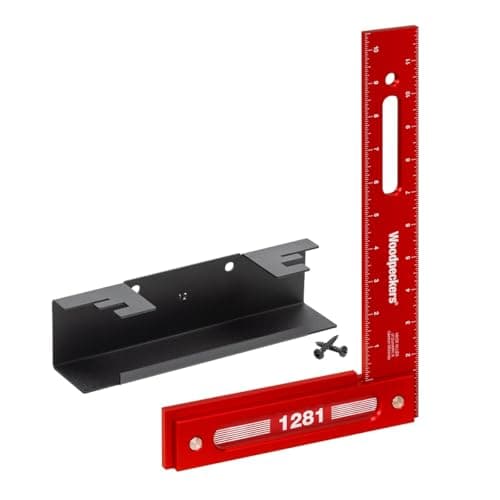
Woodpeckers Woodpeckers Precision Woodworking Square, 12 in
Woodpeckers Precision Woodworking Square, 12 in

A fixed square milled from one piece of cast and ground plate aluminum in Strongsville, Ohio, with laser-engraved scales published to plus or minus 0.004 in total accumulated error. What sets it apart is not the machining but the promise: Woodpeckers will repair or replace it any time you find it out of tolerance, in their words with no fine print and no disclaimers.

The only square here guaranteed against going out of tolerance$50.00tier A$149.99Amazon
02
Starrett Starrett Combination Square, 12 in Blade
Starrett Combination Square, 12 in Blade

Made in Athol, Massachusetts, where the combination square was invented in 1880. It is the tool you check other tools with, which means it is the one that has to be right.

The reference every other tool is checked against$42.63tier B$127.89Amazon
03
iGaging iGaging Combination Square, Premium 2 Piece, 12 in 4R
iGaging Combination Square, Premium 2 Piece, 12 in 4R

Machinist construction at a woodworking price: a hardened, precision-ground and lapped cast head on a chrome-plated etched blade with 4R graduations in 8ths, 16ths, 32nds and 64ths. It does everything a combination square is supposed to do, and the reason it is not ranked first is that nobody publishes what it is accurate to.

Best combination square for most benches$22.89tier C$45.77Amazon
04
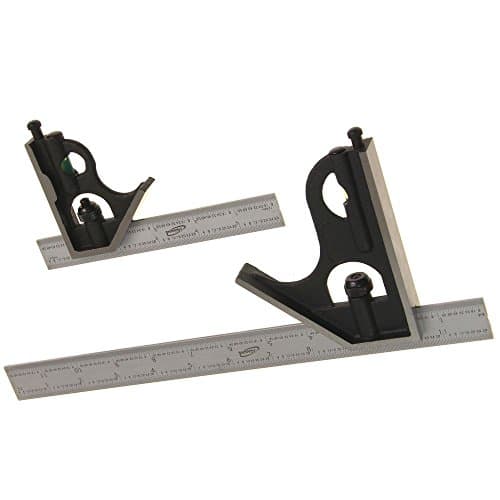
iGaging iGaging Combination Square Set, 6 in and 12 in 4R
iGaging Combination Square Set, 6 in and 12 in 4R

The same construction in the two sizes a bench actually uses: a 6 in for joinery, dovetail layout and anything held in one hand, and a 12 in for panels, carcase work and checking a plane sole. Buying them together costs less than buying them twice, and the small one gets used more than people expect.

Owning both lengths, which is what most people end up doing anyway$33.16tier C$66.31Amazon
05
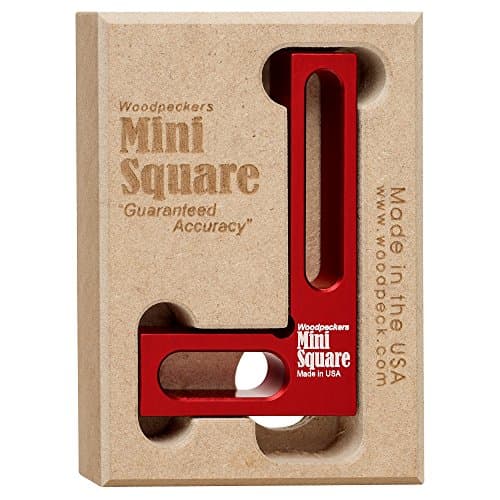
Woodpeckers Woodpeckers Mini Square
Woodpeckers Mini Square

A pocket-sized fixed square from the same Ohio shop, for the checks you make constantly and never want to fetch a tool for: is the blade square to the sole, is the fence square to the table, is this shoulder true. It is a supplement to a real square, and it is honest about being one.

Checking a setup without walking back to the bench$19.00tier C$37.99Amazon
06
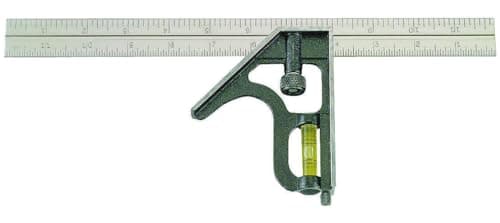
Johnson Level Johnson Level 400EM-S Combination Square, 12 in
Johnson Level 400EM-S Combination Square, 12 in

The point at which a combination square stops being a toy. A CNC-machined cast zinc head, a stainless blade with permanently stamped inch and metric graduations, a screw-in hardened scriber that cannot fall out, and a stated one-year warranty. It is not a precision instrument and it does not pretend to be.

A metal-bodied combination square for very little money$7.09tier C$14.19Amazon
07
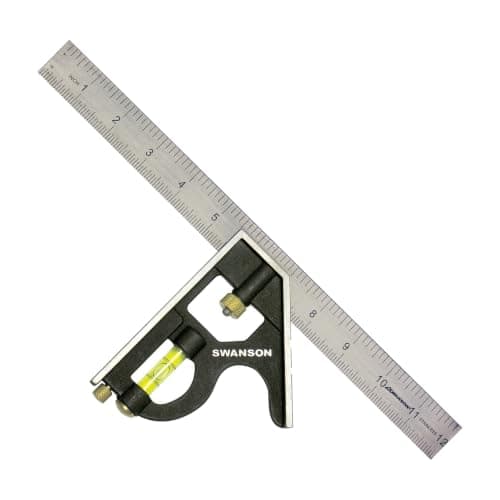
Swanson Swanson TC132 Combo Square, 12 in
Swanson TC132 Combo Square, 12 in

A cast zinc body, a stainless rule and a brass locking bolt at the bottom of the metal-bodied market. It is the square to knock about a job site with so the accurate one stays on the bench, and treating it as anything more than that is how people end up with joints that do not close.

The one you keep in the toolbox and do not worry about$5.82tier C$11.63Amazon

#ad· Live prices from the Amazon Product API, as of Sep 6, 2026. Where we have no verified live price we show none, and the cost-per-decade figure is suppressed with it — we would rather leave a gap than print a number that has rotted.

A square is not a tool that does work. It is the tool that decides whether the work is right. Every joint you cut, every plane sole you flatten, every fence you set is measured against it, which means an inaccurate square does not produce one bad result — it produces a shop where nothing quite fits and nobody can find out why.

That makes this the one category where the specification matters more than the tool, and almost nobody publishes the specification. Of the seven squares below, exactly one maker publishes a numeric accuracy figure, and exactly one publishes a guarantee that covers the square going out of tolerance rather than arriving broken. They are the same maker, and it is not the one whose name everybody reaches for.

How we ranked these

Four things decide the order, and they are the same four for every square on the page. None of them is a feeling about the tool in the hand, because we have not handled these — the notice above this page says so, and our methodology explains what we do instead.

1. Published accuracy.The single most discriminating fact in this category, because it is a claim a maker can be held to and a phrase like “precision ground” is not. Woodpeckers publishes a scale accuracy of plus or minus 0.004 in total accumulated error over the length of the blade. Nobody else on this page publishes a tolerance figure we could find on a page we could reach, including makers whose reputation rests entirely on accuracy.

2. What the warranty actually covers. This is where the category gets interesting, because a square does not usually break. It drifts. It gets knocked off a bench, the head shifts a fraction on the blade, and it goes on looking exactly like a square while quietly lying to you. A warranty against manufacturing defects does nothing about that. A guarantee against being out of tolerance does, and only one maker here offers one.

3. Head and blade construction. On a combination square the head is the part that fails. A hardened, precision-ground cast head with lapped measuring faces holds its relationship to the blade; a soft cast zinc head takes a drop and does not. On the blade it is the graduations that matter: etched or stamped marks survive decades of handling and printed ones do not.

4. Cost per decade.Every card below carries the arithmetic, and squares score unusually well on it because there is nothing on one to consume. No edge, no consumable part, nothing to sharpen. What ends a square is being dropped, which is a behavior problem rather than a wear problem — and it is exactly why the out-of-tolerance guarantee is worth more here than a lifetime defect warranty would be. The tier table is on cost per decade.

The Starrett problem, stated plainly

Starrett is the name everyone gives when asked for a lifetime square, and it is on this page at number two rather than number one for a reason we would rather publish than hide.

Starrett warrants its tools against material and workmanship defects for one year, and states plainly in its own FAQ that no manufacturer's precision tools are guaranteed to work for life. That is not a criticism of the tool. The 12 in combination square is made in Athol, Massachusetts, where the combination square was invented in 1880, the company has manufactured there continuously since, and it services and repairs precision tools passed between generations — which is why we rate it tier B with a thirty-year horizon rather than downgrading it. But the reputation says lifetime and the document says one year, and on a site that ranks tools on published evidence the document wins. The wider research is on warranties and repairability.

Meanwhile the tool at number one carries this, in the maker's own words: we will repair or replace your square any time you find it to be out of tolerance, no fine print, no disclaimers. That is a stronger promise than any defect warranty, because it covers the failure that actually happens.

Combination square or fixed square

Two different tools share this page and it is worth being clear which you are shopping for before you look at prices.

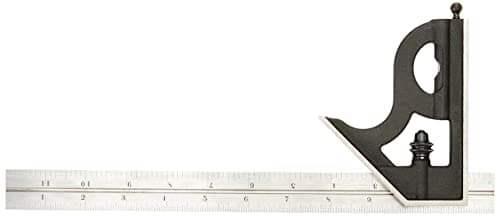
A combination square has a head that slides and locks anywhere along a graduated blade. That single feature buys four jobs: checking and marking 90 degrees, checking and marking 45, setting and transferring a depth, and running a line parallel to an edge with a pencil held at the blade end. It is the more useful tool and it has a moving part, which is the part that goes out of true.

A fixed squarehas no head to move and therefore nothing to drift. It does one job — 90 degrees — and it does it with a rigidity a sliding head cannot match. That is the trade the top pick on this page makes, and it is the reason it cannot be the only square you own.

The honest recommendation for most benches is one good combination square first, and a fixed square second once you have something worth checking it against. If you are assembling a first kit from nothing, the whole list is on the buy-it-for-life starter kit.

Every pick, in full

The write-ups

01The only square here guaranteed against going out of tolerance
Woodpeckers Woodpeckers Precision Woodworking Square, 12 in
Type
Fixed square, 12 in by 8 in
Body
One-piece machined core, cast and ground plate aluminum
Scale accuracy
Plus or minus 0.004 in total accumulated error (maker)
Origin
Strongsville, Ohio, USA
Warranty
Repair or replace any time it is out of tolerance

Woodpeckers Precision Woodworking Square, 12 in

Woodpeckers

A fixed square milled from one piece of cast and ground plate aluminum in Strongsville, Ohio, with laser-engraved scales published to plus or minus 0.004 in total accumulated error. What sets it apart is not the machining but the promise: Woodpeckers will repair or replace it any time you find it out of tolerance, in their words with no fine print and no disclaimers.

Cost per decade

$50.00

Horizon · tier A

30 years — Lifetime warranty, cited

The maker publishes an unconditional promise to repair or replace the square any time it is found to be out of tolerance, in its own words with 'no fine print, no disclaimers'. That covers the tool drifting rather than merely arriving faulty, which is the failure mode that actually retires a square, and almost nobody in layout tools offers it.

Rebuy risk

Medium

lifetime warranty, parts listed

Effectiveness
9.5
Handling
8.5
Coverage
8.0
Value
8.0

What it gets right

  • The only out-of-tolerance guarantee on this page, and it has no stated time limit
  • A published scale accuracy figure, which most square makers do not print at all
  • One-piece machined body has no head to work loose, so there is nothing to drift out of square
  • Made in the USA at the maker's own CNC shop

What it costs you

  • Fixed square: no sliding head, so it will not set a depth, gauge a mortise or find 45 degrees
  • Aluminum is softer than the hardened steel of a machinist square and will mark if you abuse it
  • The dearest tool on this page by a wide margin
  • Woodpeckers publishes the scale accuracy but not a squareness tolerance figure for this model

Skip this if…

you need one square to do everything. This does one job superbly and cannot do the three other jobs a combination square does, so for most benches it is a second square rather than a first.

$149.99See it on Amazon

Price as of Sep 6, 2026. Prices move; Amazon's is the one that counts.

#ad · we may earn a commission from this link to Woodpeckers Precision Woodworking Square, 12 in

02The reference every other tool is checked against
Starrett Starrett Combination Square, 12 in Blade
Blade
12 in, hardened steel
Head
Cast iron square head
Origin
Athol, Massachusetts, USA
Warranty
One year against defects

Starrett Combination Square, 12 in Blade

Starrett

Made in Athol, Massachusetts, where the combination square was invented in 1880. It is the tool you check other tools with, which means it is the one that has to be right.

Cost per decade

$42.63

Horizon · tier B

30 years — Finite stated warranty, cited

Starrett warrants against material and workmanship defects for ONE YEAR and states plainly that no manufacturer's precision tools are guaranteed to work for life. The 30-year horizon here comes from the other half of that statement: Starrett services and repairs precision tools passed between generations, and has manufactured in Athol, Massachusetts since 1880.

Rebuy risk

High

parts listed

Effectiveness
10.0
Handling
9.0
Coverage
8.0
Value
6.5

What it gets right

  • Accuracy that genuinely serves as a shop reference
  • US manufacture at the original works, continuously since 1880
  • Starrett services and repairs tools passed between generations

What it costs you

  • The warranty is ONE YEAR, not lifetime, contrary to its reputation
  • Starrett state plainly that no precision tool is guaranteed to work for life
  • Costs several times a hardware-store square

Skip this if…

you want a square to knock about a site with. Buy a cheap one for that and keep an accurate one at the bench.

$127.89See it on Amazon

Price as of Sep 6, 2026. Prices move; Amazon's is the one that counts.

#ad · we may earn a commission from this link to Starrett Combination Square, 12 in Blade

03Best combination square for most benches
iGaging iGaging Combination Square, Premium 2 Piece, 12 in 4R
Type
Combination square, 12 in blade
Graduations
4R: 8ths, 16ths, 32nds, 64ths
Head
Hardened and precision ground, lapped measuring faces
Blade
Chrome plated and etched
Accuracy
Not published on the pages we could reach

iGaging Combination Square, Premium 2 Piece, 12 in 4R

iGaging

Machinist construction at a woodworking price: a hardened, precision-ground and lapped cast head on a chrome-plated etched blade with 4R graduations in 8ths, 16ths, 32nds and 64ths. It does everything a combination square is supposed to do, and the reason it is not ranked first is that nobody publishes what it is accurate to.

Cost per decade

$22.89

Horizon · tier C

20 years — No lifetime warranty; parts purchasable and resharpenable

No lifetime warranty published at the date checked. A marking or measuring tool with no cutting edge; the wear part, where there is one, is a replaceable cutter that the maker lists.

Rebuy risk

High

parts listed

Effectiveness
8.5
Handling
8.0
Coverage
8.0
Value
8.5

What it gets right

  • Hardened, precision-ground head with lapped measuring faces, which is machinist practice rather than hardware-store practice
  • 4R graduations are the right scale for joinery layout, and etched marks do not wear off like printed ones
  • The sliding head does depth-setting, 45 degrees and edge-marking, so one tool covers four jobs
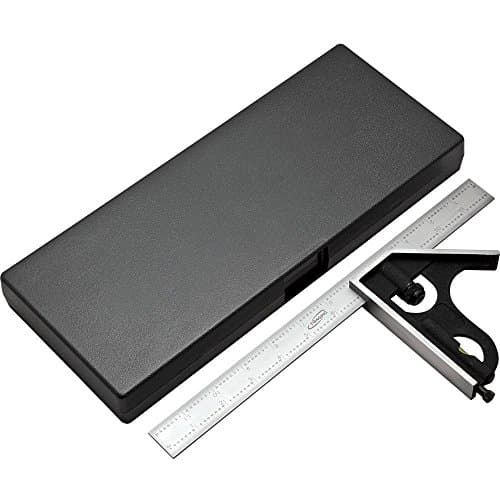
  • Ships in a fitted case, which is how a square stays square

What it costs you

  • No accuracy tolerance published anywhere we could find, which is the whole reason it is not our top pick
  • Chrome plating reduces glare and hides wear; it is a finish, not a hardness claim
  • No published warranty terms
  • A cast head can be knocked out of true, and you will not know unless you check it

Skip this if…

the square is going to be your shop reference. A reference has to be checkable against something, and a tool with no published tolerance cannot be that something.

$45.77See it on Amazon

Price as of Sep 6, 2026. Prices move; Amazon's is the one that counts.

#ad · we may earn a commission from this link to iGaging Combination Square, Premium 2 Piece, 12 in 4R

04Owning both lengths, which is what most people end up doing anyway
iGaging iGaging Combination Square Set, 6 in and 12 in 4R
Type
Two combination squares, 6 in and 12 in blades
Graduations
4R: 8ths, 16ths, 32nds, 64ths
Head
Hardened and precision ground, lapped measuring faces
Blade
Chrome plated and etched
Accuracy
Not published on the pages we could reach

iGaging Combination Square Set, 6 in and 12 in 4R

iGaging

The same construction in the two sizes a bench actually uses: a 6 in for joinery, dovetail layout and anything held in one hand, and a 12 in for panels, carcase work and checking a plane sole. Buying them together costs less than buying them twice, and the small one gets used more than people expect.

Cost per decade

$33.16

Horizon · tier C

20 years — No lifetime warranty; parts purchasable and resharpenable

No lifetime warranty published at the date checked. A marking or measuring tool with no cutting edge; the wear part, where there is one, is a replaceable cutter that the maker lists.

Rebuy risk

High

parts listed

Effectiveness
8.5
Handling
8.0
Coverage
8.5
Value
7.5

What it gets right

  • The 6 in is the one that lives on the bench; most people buy a 12 in first and then buy a 6 in anyway
  • Same hardened, lapped head construction as the single, in both sizes
  • A short blade is stiffer and easier to hold square against a narrow edge
  • Two squares means one can stay a reference while the other takes the knocks

What it costs you

  • Same missing accuracy figure as the single, doubled
  • Two heads is two things that can be dropped out of true
  • You may genuinely only need one size, in which case this is money spent on storage
  • No published warranty terms

Skip this if…

you already own a 12 in square you trust. Buy the 6 in on its own instead; the value here is in the pairing, not in replacing something that works.

$66.31See it on Amazon

Price as of Sep 6, 2026. Prices move; Amazon's is the one that counts.

#ad · we may earn a commission from this link to iGaging Combination Square Set, 6 in and 12 in 4R

05Checking a setup without walking back to the bench
Woodpeckers Woodpeckers Mini Square
Type
Fixed square, pocket size
Body
Machined aluminum
Origin
Made in the USA
Scale
Short; not a layout rule

Woodpeckers Mini Square

Woodpeckers

A pocket-sized fixed square from the same Ohio shop, for the checks you make constantly and never want to fetch a tool for: is the blade square to the sole, is the fence square to the table, is this shoulder true. It is a supplement to a real square, and it is honest about being one.

Cost per decade

$19.00

Horizon · tier C

20 years — No lifetime warranty; parts purchasable and resharpenable

No lifetime warranty published at the date checked. A marking or measuring tool with no cutting edge; the wear part, where there is one, is a replaceable cutter that the maker lists.

Rebuy risk

High

parts listed

Effectiveness
8.0
Handling
8.5
Coverage
5.5
Value
7.0

What it gets right

  • Small enough to live in an apron pocket, which means it actually gets used for the quick checks
  • Machined from the same stock and in the same shop as the full-size square
  • Nothing to adjust, so nothing to slip out of position
  • The cheapest way into this maker's tools

What it costs you

  • Too short for layout; this checks squareness, it does not mark a line across a board
  • No sliding head, so none of a combination square's other jobs
  • The out-of-tolerance guarantee Woodpeckers publishes is stated for the Precision Woodworking Square line, not for this
  • Costs more than a full-size budget combination square that does more

Skip this if…

you do not already own a square you trust. This is a second or third square by design, and buying it first leaves you unable to lay anything out.

$37.99See it on Amazon

Price as of Sep 6, 2026. Prices move; Amazon's is the one that counts.

#ad · we may earn a commission from this link to Woodpeckers Mini Square

06A metal-bodied combination square for very little money
Johnson Level Johnson Level 400EM-S Combination Square, 12 in
Type
Combination square, 12 in blade
Blade
Stainless, permanently stamped 1/8, 1/16, 1/32 in and mm
Head
Cast zinc, CNC machined, chip-resistant e-coating
Extras
Auto-Lock assembly, screw-in hardened scriber, acrylic vial
Warranty
One year, per the maker

Johnson Level 400EM-S Combination Square, 12 in

Johnson Level

The point at which a combination square stops being a toy. A CNC-machined cast zinc head, a stainless blade with permanently stamped inch and metric graduations, a screw-in hardened scriber that cannot fall out, and a stated one-year warranty. It is not a precision instrument and it does not pretend to be.

Cost per decade

$7.09

Horizon · tier C

20 years — No lifetime warranty; parts purchasable and resharpenable

No lifetime warranty published at the date checked. A marking or measuring tool with no cutting edge; the wear part, where there is one, is a replaceable cutter that the maker lists.

Rebuy risk

High

parts listed

Effectiveness
7.0
Handling
6.5
Coverage
6.5
Value
8.5

What it gets right

  • Johnson publishes the head material, the machining method, the graduations and a warranty term, which is more disclosure than most of this price band
  • Stamped rather than printed graduations survive years of handling
  • The screw-in scriber is the detail that stops you losing it in the first month
  • Metal head and stainless blade at a price where composite bodies are the norm

What it costs you

  • Cast zinc is softer than the cast iron of a machinist head and takes a knock less well
  • No accuracy tolerance published, so squareness out of the box is unverifiable
  • One year is a defect warranty, not a promise the tool stays square
  • Inch and metric on one blade means more clutter to read through in a layout

Skip this if…

you are laying out joinery to a knife line. This is a good site and shop square; the tools above it are noticeably finer to read and to trust.

$14.19See it on Amazon

Price as of Sep 6, 2026. Prices move; Amazon's is the one that counts.

#ad · we may earn a commission from this link to Johnson Level 400EM-S Combination Square, 12 in

07The one you keep in the toolbox and do not worry about
Swanson Swanson TC132 Combo Square, 12 in
Type
Combination square, 12 in rule
Body
Cast zinc
Rule
Stainless steel
Hardware
Brass locking bolt
Warranty
No terms published that we could find

Swanson TC132 Combo Square, 12 in

Swanson

A cast zinc body, a stainless rule and a brass locking bolt at the bottom of the metal-bodied market. It is the square to knock about a job site with so the accurate one stays on the bench, and treating it as anything more than that is how people end up with joints that do not close.

Cost per decade

$5.82

Horizon · tier C

20 years — No lifetime warranty; parts purchasable and resharpenable

No lifetime warranty published at the date checked. A marking or measuring tool with no cutting edge; the wear part, where there is one, is a replaceable cutter that the maker lists.

Rebuy risk

High

parts listed

Effectiveness
6.0
Handling
6.0
Coverage
6.0
Value
8.5

What it gets right

  • A metal body and a stainless rule at genuinely minimal cost
  • A brass bolt will not seize or rust into the head the way a plated steel one can
  • Cheap enough that you will use it for the rough work instead of your good square
  • Widely stocked, so replacing it is never a project

What it costs you

  • No accuracy figure and no warranty terms published anywhere we could find
  • Cast zinc heads are the commonest thing to go out of true after a drop
  • The lock relies on a single bolt, and a loose head is a square that lies to you
  • Nothing here is repairable; when it is out, it is out

Skip this if…

this will be your only square. A layout tool you cannot verify is worse than no layout tool, because you will trust it. Buy this as the second one.

$11.63See it on Amazon

Price as of Sep 6, 2026. Prices move; Amazon's is the one that counts.

#ad · we may earn a commission from this link to Swanson TC132 Combo Square, 12 in

What actually decides it

Buying guide

How to check a square, and why you must

You cannot take squareness on trust from a listing, and you do not need to. The test costs nothing and takes a minute.

Find a board with one edge you know is straight — jointed with a plane, or the factory edge of a sheet of MDF, which is dead straight and cheap. Hold the head of the square against that edge and scribe a fine line along the blade with a knife, not a pencil. Now flip the square over so the head registers on the same edge from the other side, line the blade up with the line you just cut, and scribe again.

If the square is true, the second line lands exactly on the first. If it is out, the two lines diverge by twice the error, which is what makes this test so much more sensitive than eyeballing it. A visible gap at the far end of a 12 in blade is a square you should not be laying out joinery with.

Do this the day the square arrives, and again any time it hits the floor. That last part is not fussiness: a drop is the single commonest way a square stops being a square, and nothing about the tool afterwards looks different.

Blade graduations, and why 4R keeps coming up

A 4R blade carries four rows of graduations: 8ths and 16ths on one side, 32nds and 64ths on the other. It is a machinist convention rather than a woodworking one, and it has migrated into woodworking squares for a practical reason — joinery layout regularly needs a 32nd, and a rule that stops at 16ths forces you to eyeball it.

What matters more than the scale, though, is how the marks were made. Etched or stamped graduations are cut into the metal and are still legible after decades of pocket wear. Printed graduations are ink on chrome and will not be. On any square you intend to keep, check that the maker says etched or stamped rather than simply saying the blade is marked.

Chrome plating on a blade is about glare and corrosion, not accuracy. It is genuinely useful — a bare steel rule under a work light is hard to read and rusts where your hand touches it — but it is a finish claim, not a hardness or a tolerance claim, and listings sometimes let it stand in for one.

What size, and why the answer is usually two

A 12 in blade is the default and the right first purchase. It reaches across a carcase side, checks a plane sole along most of its length, and marks a line across any board a hand-tool project is likely to use.

The 6 in is the one that surprises people. A short blade is stiffer, easier to hold flat against a narrow edge, and far quicker to handle for the checks you make constantly — is this shoulder square, is this tenon cheek flat, is the chisel registering. Most people buy a 12 in first and a 6 in within a year, which is the whole argument for the set on this page.

Longer than 12 in is a different tool for a different problem, and it is worth noting that a longer blade amplifies any error in the head. If your 24 in square disagrees with your 6 in square, the long one is more likely to be the liar.

Four phrases in square listings that mean nothing

This category is unusually full of language that sounds like a specification and is not. Knowing which is which is most of what separates a good purchase from a lucky one.

“Precision ground.”Describes a manufacturing operation, not a result. Grinding a face precisely says nothing about how square that face ended up relative to the blade. It is worth having — a ground and lapped head is genuinely better than a cast-and-shipped one — but it is not a tolerance.

“High precision.” A comparative with nothing to compare to. Any listing using it without a number after it is telling you the marketing department has been in the room and the engineering department has not.

“Hardened.”Real and relevant on a blade or a head, because a soft measuring face wears and a soft head deforms on a drop. It still is not an accuracy claim, and it is not a hardness figure either — the same objection this site raises about chisel steel on chisel steel explained.

“Lifetime warranty.” On a square, almost always a warranty against manufacturing defects for the life of the original purchaser. That covers the tool arriving wrong. It does not cover the tool becoming wrong, which is the only way squares actually fail. One maker on this page distinguishes between the two in writing; the rest do not address it.

The counter-test is simple: does the listing contain a number with a tolerance sign in front of it? If yes, the maker has committed to something. If no, you are buying a reputation, and you should check the tool yourself the day it arrives.

The reference square idea

The practice worth adopting from machinists is to designate one square as the reference and treat it differently from the rest. The reference lives in its case, never goes to a job site, never gets used to scrape glue, and exists so that every other square in the shop can be checked against it.

That is what makes the top two picks on this page make sense as purchases despite costing several times what a working square costs. You are not buying a better tool for the same job; you are buying the thing that tells you whether your working tools are still honest. And it is why the cheapest square here is not a bad purchase — it is the right purchase for the second square, the one you knock about with, provided you have something to check it against.

This is the same argument the site makes about tools generally on what makes a tool buy it for life: the objects worth paying up for are the ones with no consumable part and a documented commitment behind them.

Where squares sit in a hand-tool kit

A square gets used more often than any cutting tool in the shop and gets thought about less. It is worth putting it in context with the other layout tools, because they divide the work between them: the square establishes 90 and 45 degrees and transfers depths, a marking gauge runs a line parallel to an edge at a set distance, and a marking knife turns any of those lines into a physical registration for a chisel to drop into.

Those three cover essentially all hand-tool layout, and the square is the one that has to be right, because the other two reference off it. Where the whole kit fits together is on the starter kit, and the tools that survive longest across every category are on tools that last a lifetime.

One last note on origin, since two picks here are made in the USA and it is a common shopping filter. Country of manufacture is a useful signal mostly because it tends to come with published specifications and a maker you can telephone — not because geography hardens steel. The honest version of that argument is on made in USA hand tools.
Questions

Frequently asked

What is the best woodworking square?

For a bench reference, the Woodpeckers Precision Woodworking Square — it is the only one here whose maker publishes a scale accuracy figure and guarantees to repair or replace it any time it is found out of tolerance. For a square that also sets depths and marks 45 degrees, a good combination square is the more useful tool, and the iGaging is the pick most benches should make.

How do I know if my square is accurate?

Scribe a line along the blade with the head against a known straight edge, flip the square over on that same edge, and scribe again. A true square puts the second line exactly on the first. If it is out, the two lines diverge by twice the error, which makes the test far more sensitive than looking at it. Do it when the square arrives and after any drop.

Is a Starrett square worth it?

As a tool, yes — it is made in Athol, Massachusetts, where the combination square was invented, and Starrett services tools passed between generations. As a lifetime guarantee, no: Starrett warrants against defects for one year and states plainly that no manufacturer's precision tools are guaranteed to work for life. Buy it for the machining and the repair service, not for the warranty everyone assumes it has.

Combination square or fixed square?

A combination square first. The sliding head buys four jobs — 90 degrees, 45 degrees, setting a depth, and running a line parallel to an edge — where a fixed square does one. A fixed square is the better reference precisely because it has no moving part to drift, so it earns its place as the second square.

What size combination square do I need?

12 in for the first one: it reaches across a carcase side and along most of a plane sole. A 6 in is the one you will buy next, because a short blade is stiffer and much quicker for the constant checks — is this shoulder square, is this cheek flat. Most people end up with both.

What does 4R mean on a square blade?

Four rows of graduations: 8ths and 16ths on one face, 32nds and 64ths on the other. It is a machinist scale that suits joinery layout, because hand-cut work regularly needs a 32nd and a rule that stops at 16ths makes you guess. What matters more is that the marks are etched or stamped into the metal rather than printed on it.

Do woodworking squares go out of square?

Yes, and that is the failure mode that matters. A square rarely breaks; it gets dropped, the head shifts a fraction on the blade, and it goes on looking correct while being wrong. This is why a guarantee against being out of tolerance is worth more than a defect warranty, and why checking a square after any fall is a habit rather than a chore.

Are cheap combination squares any good?

As a second square, yes. A metal-bodied square with a stainless stamped blade is a perfectly good tool for rough work, and having one means your accurate square stays on the bench. As your only square, no — a layout tool you cannot verify is worse than none, because you will trust it.

Receipts

Sources

We have not handled these tools. Nobody here has tested one, owned one, or taken one apart. Specifications come from the manufacturer or the retailer listing; warranty terms come from the maker's own warranty page; the cost-per-decade arithmetic is ours and reproducible. Where we could not verify a figure we say so on the page rather than quietly leaving it out. Read the full method.

Keep reading