Skip to content
PLANE & PATINA
Menu

Buy It For Life

The Best Woodworking Clamps

Three of these makers publish the words lifetime warranty. All three exclude normal wear and tear. So the question that separates them is which one sells you the part that wears.

By Stephen V.Last reviewed How we pick
#ad

We earn a commission when you buy through our Amazon links, at no extra cost to you. It never decides a ranking, and where the best tool in a class is one we earn nothing on, we say so and link it anyway. How this works.

The short answer

Quick picks

#ToolBest forPer decadeScorePrice
01
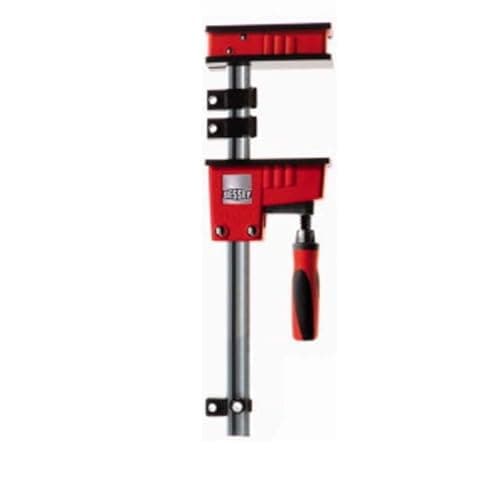
Bessey Bessey KRE3531 K Body REVO Parallel Clamp, 31 in, 2-Pack
Bessey KRE3531 K Body REVO Parallel Clamp, 31 in, 2-Pack

The only clamp on this page whose maker publishes a part number for every piece that wears: jaw pads, rail protection pieces and the end clip are all catalog items. Buy it for that rather than for the 1700 lb figure, which you will almost never need.

The glue-up that has to come out square without persuasion$46.53tier A$139.59Amazon
02
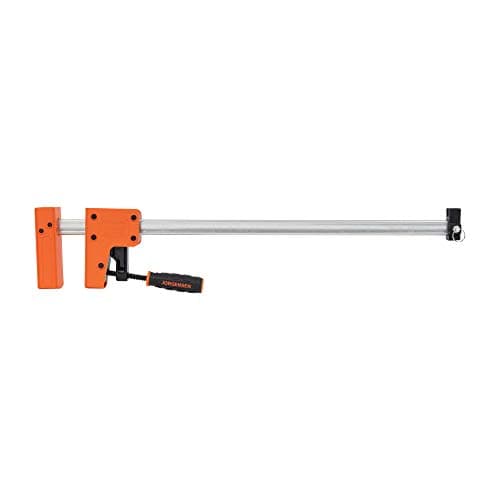
Jorgensen Jorgensen 8024 Cabinet Master 90 Degree Parallel Bar Clamp, 24 in
Jorgensen 8024 Cabinet Master 90 Degree Parallel Bar Clamp, 24 in

A parallel jaw, 1,500 lb of published force and a steel bar, backed by the only lifetime warranty here that does not ask for a receipt. The jaws are plastic, and that is the honest catch.

Parallel clamping without the parallel-clamp price$14.33tier A$42.99Amazon
03
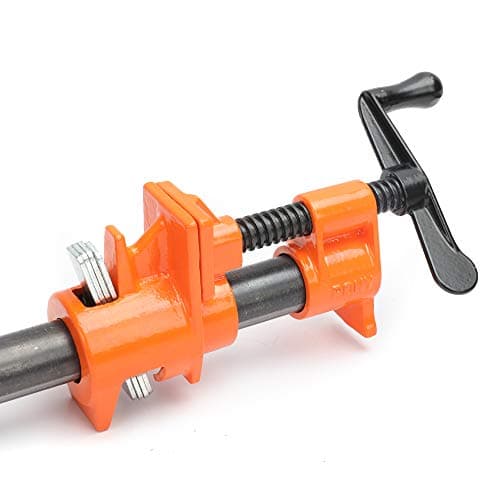
Pony Jorgensen Pony 50 Clamp Fixture for 3/4 in Black Pipe
Pony 50 Clamp Fixture for 3/4 in Black Pipe

A cast iron head with a multiple-disc clutch that grips any length of 3/4 in black pipe. The genuinely generational clamp on this page, and the cheapest thing on it.

Any length of clamp, for the price of the pipe$6.50tier A$19.49Amazon
04
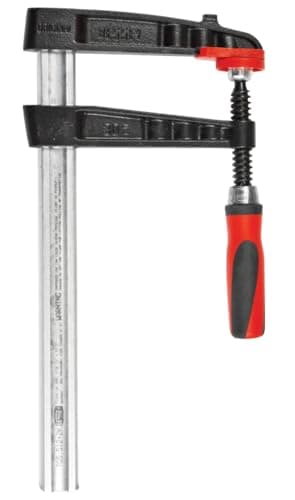
Bessey Bessey TG5.512+2K F-Style Clamp, 5-1/2 x 12 in
Bessey TG5.512+2K F-Style Clamp, 5-1/2 x 12 in

1320 lb through malleable cast iron jaws on a profiled German rail, with pressure plates Bessey specifies as replaceable. This is what an F-clamp is supposed to be, and what the hardware store version is not.

Deep-reach clamping that will still be here in thirty years$14.48tier A$43.45Amazon
05
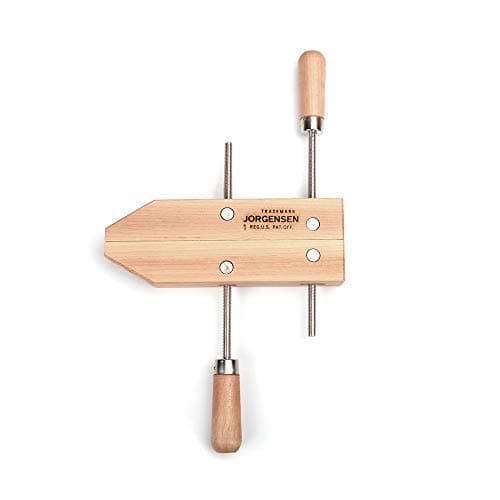
Jorgensen Jorgensen 10 in Adjustable Handscrew
Jorgensen 10 in Adjustable Handscrew

Hard maple jaws on cold-drawn steel spindles with double-lead threads. The jaws tilt to whatever angle the work is, which no other clamp on this page can do, and they cannot mark a finished surface.

Anything that is not two flat parallel faces$6.86tier A$20.59Amazon
06
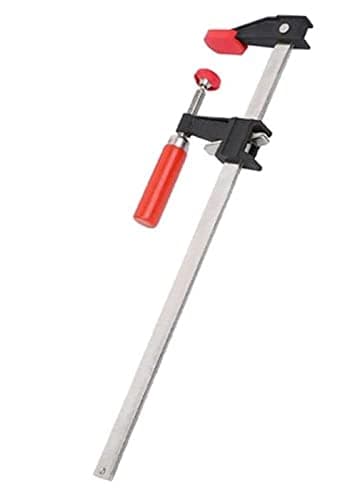
Bessey Bessey GSCC2.524 Clutch Style Bar Clamp, 24 in
Bessey GSCC2.524 Clutch Style Bar Clamp, 24 in

Cast iron jaws and a slip-clutch on a nickel-plated serrated rail, at the price of a disposable trigger clamp. 600 lb is modest, and it is enough for most of what a bench actually does.

The clamp you buy six of and stop thinking about$5.03tier A$15.09Amazon
07
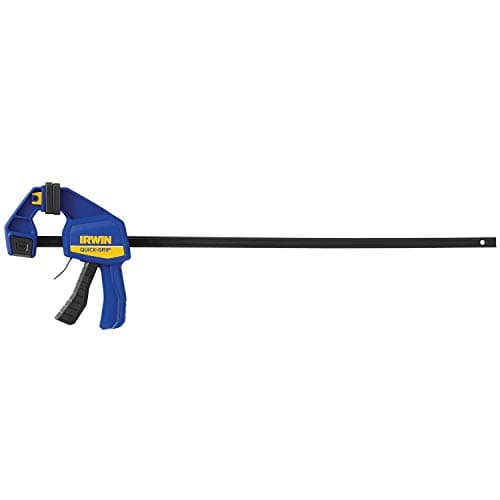
Irwin Irwin Quick-Grip One-Handed Bar Clamp, 24 in
Irwin Quick-Grip One-Handed Bar Clamp, 24 in

The one-handed trigger clamp everybody owns, and the only tool on this page we would not describe as a lifetime purchase. It is here because the convenience is real and the trade should be stated rather than hidden.

Holding a stop or a jig while your other hand is busy$17.99tier C$26.99Amazon

#ad· Live prices from the Amazon Product API, as of Sep 10, 2026. Where we have no verified live price we show none, and the cost-per-decade figure is suppressed with it — we would rather leave a gap than print a number that has rotted.

Clamps are the tools nobody plans and everybody ends up owning too few of. They do no cutting, they leave no mark on the finished piece, and they are the reason a carcase comes out of a glue-up square instead of a parallelogram you discover the next morning when the glue has gone off.

Here is the finding that decided the order below: three of the makers on this page publish the words “lifetime warranty” on their clamps, and all three exclude normal wear and tear. On a clamp, normal wear and tear is the pads, the spindle thread and the bar — which is to say, everything that actually fails. So the promise is close to identical across a $15 clamp and a $70 one, and what genuinely separates them is whether the maker publishes a part number for the piece that wears out.

One maker here lists four of them. One will replace the whole tool with no receipt and no time limit. And one sells a cast iron head that clamps a length of hardware-store pipe, so the part most likely to bend is a commodity you replace for a few dollars rather than a reason to buy another clamp.

How we ranked these

Four things decide the order, and they are the same four for every clamp on the page. None of them is how the tool feels in the hand, because we have not handled these — the notice above this page says so, and our methodology sets out what we do instead.

1. Published clamping force.Every figure on this page comes from the maker's own literature rather than a retail listing, and that distinction turned out to matter: retailers quote the same Bessey parallel clamp at both 1500 lb and 1700 lb, and Bessey's own K Body brochure says 1700 lb across the whole KRE range. Two picks here publish no force figure at all, and we say so on the card rather than borrowing a number from somewhere else.

2. Jaw and bar construction.This is where the money goes. Cast iron jaws and a drawn or profiled steel rail behave differently under load from resin jaws on a flat bar — not because iron is romantic, but because a bar that flexes puts its pressure somewhere other than where you aimed it, and a jaw that deflects stops being parallel at exactly the moment you need it to be.

3. Rebuildability. The criterion this site exists for, and the one that reorders this category against every other clamp roundup. Are the pads a part number? Is the bar a component or a commodity? Is the mechanism serviceable or sealed? A clamp with a lifetime warranty and no parts list is a clamp you throw away and claim on; a clamp with a parts list is one you keep.

4. Cost per decade. Every card carries the arithmetic. One caution on reading it here that does not apply on other pages: check what is in the box. The top pick ships as a pair, so its cost-per-decade figure covers two clamps and the rest cover one. The tier table and the method are on cost per decade.

The lifetime warranty problem, stated plainly

Bessey warrants its clamping products under what it calls a Limited Lifetime program: free from defects in material and workmanship for the life of the tool, replaced, refunded or repaired. It then excludes abuse, misuse, negligence, alteration and normal wear and tear. Worth knowing too: Bessey states that c-clamps and some specialty clamps are guaranteed for one year, not for life, so the program does not cover the whole catalog.

Irwin publishes a Lifetime Limited Warranty on the Quick-Grip at the bottom of this page, and excludes product that fails through normal wear and tear. Same words, same exclusion. The difference is that Bessey publishes replacement pads and rail protectors by part number and Irwin publishes nothing for the trigger mechanism, so the identical promise buys you a repairable tool in one case and a replaceable one in the other.

Pony Jorgensen takes the third route and it is the most quietly generous of the three: a limited lifetime warranty with no time limit on when the tool was bought and no receipt required, with the maker paying the shipping on the replacement. That clause is the difference between a warranty and a warranty you can actually claim, forty years after the hardware store that sold it closed. It is the reason two Jorgensen tools and a Pony fixture sit high on this page despite not being the most refined objects here. The wider research is on warranties and repairability.

How many clamps, and of what

The honest answer to “how many clamps do I need” is more than you have and fewer than the internet says. For hand-tool furniture work the useful shape of a collection is roughly this: four bar or pipe clamps long enough to span your widest panel, four to six shorter clamps for joinery and holding work to the bench, and one or two specialists for the shapes the others cannot hold.

What that costs depends entirely on which route you take, and the spread is enormous. Four parallel clamps is a serious purchase — comparable to a good bench plane. Four pipe clamp fixtures plus four lengths of black pipe is a fraction of that, gets you longer capacity, and gives up the parallel jaw that keeps a carcase square without help.

If you are assembling a shop from nothing and want to know where clamps sit against everything else you have to buy, the sequence is on the buy-it-for-life starter kit, and the version of that argument for a tight budget is on building a hand tool kit on a budget.

Every pick, in full

The write-ups

01The glue-up that has to come out square without persuasion
Bessey Bessey KRE3531 K Body REVO Parallel Clamp, 31 in, 2-Pack
Capacity
31 in clamping, 10-1/2 to 36-1/2 in spreading
Throat depth
3-3/4 in
Clamping force
1700 lbs nominal (Bessey figure)
Rail
Cold drawn steel, made at Bessey's own mills
Warranty
Bessey limited lifetime on clamping products

Bessey KRE3531 K Body REVO Parallel Clamp, 31 in, 2-Pack

Bessey

The only clamp on this page whose maker publishes a part number for every piece that wears: jaw pads, rail protection pieces and the end clip are all catalog items. Buy it for that rather than for the 1700 lb figure, which you will almost never need.

Cost per decade

$46.53

Horizon · tier A

30 years — Lifetime warranty, cited

BESSEY warrants clamping products under a Limited Lifetime program — free from defects in material and workmanship for the life of the tool, replaced, refunded or repaired — excluding abuse, misuse, negligence, alteration and normal wear and tear. The parts that wear are catalog items: BESSEY's own K Body REVO literature lists replacement jaw pads (KR-JP), rail protection pieces (KRE-RPP) and an end clip (KRE-EC) by part number. A warranty is a promise; a parts list is a standing commitment.

Rebuy risk

Medium

lifetime warranty, parts listed

Clamping force
9.5
Jaw & bar
9.5
Rebuildability
9.5
Value
7.0

What it gets right

  • Jaws stay parallel and perpendicular to the rail, so a carcase comes out square instead of racked
  • Bessey lists the wear parts by part number: KR-JP jaw pads, KRE-RPP rail protectors, KRE-EC end clip
  • Three removable pressure caps that Bessey specifies as repellent to glue and resistant to paint and grease solvents
  • Reverses to a spreader without tools, and accepts the KBX20 extender to join two clamps into one long one

What it costs you

  • The most expensive way on this page to buy two clamps, and glue-ups want four
  • Bessey's lifetime cover explicitly excludes normal wear and tear, which is what happens to the pads
  • 6.86 lbs each: heavy to hold in position one-handed while you find the handle
  • Single-clamp listings come and go on Amazon, so the pair is often the only sane way to buy them

Skip this if…

you are buying your first four clamps on a fixed budget. Four parallel clamps at this price is most of a plane, and the pipe clamp lower down does the same job less precisely for a fifth of the money.

$139.59See it on Amazon

Price as of Sep 10, 2026. Prices move; Amazon's is the one that counts.

#ad · we may earn a commission from this link to Bessey KRE3531 K Body REVO Parallel Clamp, 31 in, 2-Pack

02Parallel clamping without the parallel-clamp price
Jorgensen Jorgensen 8024 Cabinet Master 90 Degree Parallel Bar Clamp, 24 in
Capacity
24 in maximum opening
Reach
3-7/8 in
Clamping force
1,500 lb (Pony Jorgensen figure)
Bar
Steel, 1-3/16 x 3/8 in
Warranty
Limited lifetime, no receipt required

Jorgensen 8024 Cabinet Master 90 Degree Parallel Bar Clamp, 24 in

Jorgensen

A parallel jaw, 1,500 lb of published force and a steel bar, backed by the only lifetime warranty here that does not ask for a receipt. The jaws are plastic, and that is the honest catch.

Cost per decade

$14.33

Horizon · tier A

30 years — Lifetime warranty, cited

Pony Jorgensen publishes a limited lifetime warranty against deficiencies in material and workmanship with no time limit on when the tool was bought, no receipt required, and replacement shipping paid by the maker; it excludes improper use, abuse, alteration and damage from improper repair. The no-receipt clause is the part that matters — a lifetime warranty you cannot claim on a clamp bought in 1994 is not a lifetime warranty, and this is the only maker on the page that says so in writing.

Rebuy risk

Medium

lifetime warranty, parts listed

Clamping force
9.0
Jaw & bar
7.5
Rebuildability
8.5
Value
9.5

What it gets right

  • Pony Jorgensen's warranty has no time limit and requires no receipt, and they pay the return shipping
  • Jaws stay parallel, which is the whole reason to buy this rather than an F-clamp
  • Built-in clamp stand lets it sit on the bench jaws-up while you place the workpiece
  • Sliding head reverses into a spreader

What it costs you

  • The jaws are plastic where the top pick's are cast and faced — the same job, a less durable material
  • 1,500 lb against 1700 lb, and a shallower 3-7/8 in reach than a deep-throat F-clamp
  • No replacement jaws or pads published, so a cracked jaw is a warranty claim rather than a repair
  • The bar takes a set if you overtighten it on a long panel, and a bent bar is a clamp that racks

Skip this if…

your work is heavy laminations rather than casework. Parallel jaws buy you squareness, not brute force, and a cast-jaw F-clamp gives you more of the second for less money.

$42.99See it on Amazon

Price as of Sep 10, 2026. Prices move; Amazon's is the one that counts.

#ad · we may earn a commission from this link to Jorgensen 8024 Cabinet Master 90 Degree Parallel Bar Clamp, 24 in

03Any length of clamp, for the price of the pipe
Pony Jorgensen Pony 50 Clamp Fixture for 3/4 in Black Pipe
Fits
3/4 in-14 NPT black pipe, any length
Clamping face
Approx. 1-3/4 in square
Body
Iron casting
Mechanism
Steel multiple-disc clutch
Warranty
Limited lifetime, no receipt required

Pony 50 Clamp Fixture for 3/4 in Black Pipe

Pony Jorgensen

A cast iron head with a multiple-disc clutch that grips any length of 3/4 in black pipe. The genuinely generational clamp on this page, and the cheapest thing on it.

Cost per decade

$6.50

Horizon · tier A

30 years — Lifetime warranty, cited

Pony Jorgensen publishes a limited lifetime warranty against deficiencies in material and workmanship with no time limit on when the tool was bought, no receipt required, and replacement shipping paid by the maker; it excludes improper use, abuse, alteration and damage from improper repair. The no-receipt clause is the part that matters — a lifetime warranty you cannot claim on a clamp bought in 1994 is not a lifetime warranty, and this is the only maker on the page that says so in writing.

Rebuy risk

Medium

lifetime warranty, parts listed

Clamping force
7.5
Jaw & bar
7.5
Rebuildability
9.5
Value
9.5

What it gets right

  • The bar is not part of the tool: capacity is whatever pipe you buy, and Pony's own instruction is pipe seven inches longer than the workpiece
  • A bent or rusted pipe is a hardware-store part, not a reason to retire the clamp
  • Cast iron and a disc clutch, with no plastic and nothing sealed
  • Cheap enough to own eight of, which is the number a real glue-up wants

What it costs you

  • Jaws are not parallel and will rack a carcase if you are careless about where the pressure lands
  • Bare steel pipe stains oak and other tannin-rich woods black wherever glue and moisture reach it
  • The pipe flexes under load on long spans, so pressure is never as even as a parallel clamp's
  • Pony publishes no clamping force figure for this fixture, so there is no number to compare

Skip this if…

you want the clamp to hold the assembly square for you. It will not — it applies pressure along a line and leaves squareness entirely to you.

$19.49See it on Amazon

$20.957% off

Price as of Sep 10, 2026. Prices move; Amazon's is the one that counts.

#ad · we may earn a commission from this link to Pony 50 Clamp Fixture for 3/4 in Black Pipe

04Deep-reach clamping that will still be here in thirty years
Bessey Bessey TG5.512+2K F-Style Clamp, 5-1/2 x 12 in
Capacity
12 in
Throat depth
5-1/2 in
Clamping force
1320 lbs (Bessey figure)
Jaws
Corrugated malleable cast iron
Origin
Bessey states made in Germany of European steel

Bessey TG5.512+2K F-Style Clamp, 5-1/2 x 12 in

Bessey

1320 lb through malleable cast iron jaws on a profiled German rail, with pressure plates Bessey specifies as replaceable. This is what an F-clamp is supposed to be, and what the hardware store version is not.

Cost per decade

$14.48

Horizon · tier A

30 years — Lifetime warranty, cited

Covered by BESSEY's Limited Lifetime program for clamping products, which excludes normal wear and tear — worth reading carefully, because on a bar clamp the pad is the part that wears. BESSEY publishes the wear part for both series: the clutch-style literature lists replacement pads as GSCC2.5-PADS, and the TG series is specified with replaceable pressure plates. Cast iron jaws and a rolled steel rail have no consumable in them at all.

Rebuy risk

Medium

lifetime warranty, parts listed

Clamping force
8.5
Jaw & bar
9.0
Rebuildability
8.5
Value
7.5

What it gets right

  • A 5-1/2 in throat reaches well in from an edge, where a parallel clamp cannot go at all
  • Bessey specifies replaceable pressure plates, so the part that contacts the work is renewable
  • Profiled rail from Bessey's own steel plant, shaped to resist torsion rather than just bending
  • Acme-threaded spindle, with a set screw in the sliding arm that interlocks with the rail serration

What it costs you

  • One jaw pivots, so it does not hold a panel flat the way a parallel clamp does
  • 12 in of capacity is a joinery clamp, not a panel clamp
  • Costs about what a 24 in parallel clamp costs, for less capacity
  • Bessey's lifetime cover excludes normal wear and tear, and on this clamp that is the spindle thread

Skip this if…

you are gluing up flat panels. The pivoting jaw is exactly wrong for that job; buy parallel clamps or pipe clamps instead.

$43.45See it on Amazon

Price as of Sep 10, 2026. Prices move; Amazon's is the one that counts.

#ad · we may earn a commission from this link to Bessey TG5.512+2K F-Style Clamp, 5-1/2 x 12 in

05Anything that is not two flat parallel faces
Jorgensen Jorgensen 10 in Adjustable Handscrew
Jaw length
10 in (Jorgensen #1)
Maximum opening
6 in
Reach
5 in
Jaws
Seasoned straight-grain hard maple
Spindles
Cold-drawn steel, double-lead threads

Jorgensen 10 in Adjustable Handscrew

Jorgensen

Hard maple jaws on cold-drawn steel spindles with double-lead threads. The jaws tilt to whatever angle the work is, which no other clamp on this page can do, and they cannot mark a finished surface.

Cost per decade

$6.86

Horizon · tier A

30 years — Lifetime warranty, cited

Pony Jorgensen publishes a limited lifetime warranty against deficiencies in material and workmanship with no time limit on when the tool was bought, no receipt required, and replacement shipping paid by the maker; it excludes improper use, abuse, alteration and damage from improper repair. The no-receipt clause is the part that matters — a lifetime warranty you cannot claim on a clamp bought in 1994 is not a lifetime warranty, and this is the only maker on the page that says so in writing.

Rebuy risk

Medium

lifetime warranty, parts listed

Clamping force
7.0
Jaw & bar
8.0
Rebuildability
9.0
Value
9.0

What it gets right

  • The jaws close on tapers and odd shapes, because the angle between them is adjustable
  • Wooden jaws distribute pressure over a broad area and will not bruise a finished surface
  • Nothing on it is sealed: jaws, spindles and nuts are pieces you can take apart
  • When the jaws get glue-scarred you plane or re-face them, which is a repair no metal clamp allows

What it costs you

  • Slow. Two spindles to set means it is the least convenient clamp here by a distance
  • Pony Jorgensen publishes no clamping force figure for handscrews, so there is nothing to compare
  • Learning to set the jaws parallel takes a few tries and the technique is not obvious
  • 6 in of opening on a 10 in clamp: reach is generous, capacity is not

Skip this if…

you want one clamp for everything. This is a specialist that solves the jobs other clamps cannot, and it is a poor substitute for a bar clamp on a panel.

$20.59See it on Amazon

Price as of Sep 10, 2026. Prices move; Amazon's is the one that counts.

#ad · we may earn a commission from this link to Jorgensen 10 in Adjustable Handscrew

06The clamp you buy six of and stop thinking about
Bessey Bessey GSCC2.524 Clutch Style Bar Clamp, 24 in
Capacity
24 in
Throat depth
2-1/2 in
Clamping force
600 lbs (Bessey figure)
Jaws
Powder-coated cast iron, non-marring pads
Rail
Nickel plated, drawn and serrated

Bessey GSCC2.524 Clutch Style Bar Clamp, 24 in

Bessey

Cast iron jaws and a slip-clutch on a nickel-plated serrated rail, at the price of a disposable trigger clamp. 600 lb is modest, and it is enough for most of what a bench actually does.

Cost per decade

$5.03

Horizon · tier A

30 years — Lifetime warranty, cited

Covered by BESSEY's Limited Lifetime program for clamping products, which excludes normal wear and tear — worth reading carefully, because on a bar clamp the pad is the part that wears. BESSEY publishes the wear part for both series: the clutch-style literature lists replacement pads as GSCC2.5-PADS, and the TG series is specified with replaceable pressure plates. Cast iron jaws and a rolled steel rail have no consumable in them at all.

Rebuy risk

Medium

lifetime warranty, parts listed

Clamping force
7.0
Jaw & bar
8.0
Rebuildability
8.5
Value
9.0

What it gets right

  • Cast iron jaws at a price where almost everything else is resin
  • Bessey lists replacement pads as GSCC2.5-PADS, two sets per pack
  • Two-piece slip-clutch plates hold the sliding jaw without a screw to tighten first
  • Light at about 2.27 lbs, so it stays where you put it while you work the handle

What it costs you

  • 600 lb is a third of what the parallel clamps here deliver
  • 2-1/2 in of throat is shallow; it clamps near an edge and nowhere else
  • One pivoting jaw, so it holds pressure rather than holding square
  • The wooden handle is comfortable and is the first thing that will look tired

Skip this if…

this will be your only clamp. It is a supporting clamp — excellent in numbers, insufficient alone for a glue-up that has to come out square.

$15.09See it on Amazon

$17.9916% off

Price as of Sep 10, 2026. Prices move; Amazon's is the one that counts.

#ad · we may earn a commission from this link to Bessey GSCC2.524 Clutch Style Bar Clamp, 24 in

07Holding a stop or a jig while your other hand is busy
Irwin Irwin Quick-Grip One-Handed Bar Clamp, 24 in
Capacity
24 in
Clamping force
Up to 300 lbs sustained (Irwin figure)
Bar
I-beam section, to reduce flex
Converts
Clamp to spreader without tools
Warranty
Irwin Lifetime Limited Warranty

Irwin Quick-Grip One-Handed Bar Clamp, 24 in

Irwin

The one-handed trigger clamp everybody owns, and the only tool on this page we would not describe as a lifetime purchase. It is here because the convenience is real and the trade should be stated rather than hidden.

Cost per decade

$17.99

Horizon · tier C

15 years — No lifetime warranty; parts purchasable and resharpenable

IRWIN publishes a Lifetime Limited Warranty on this clamp, the same words the cast-iron clamps on this page carry, and the same exclusion for product that fails through normal wear and tear. On a trigger clamp that exclusion covers the whole tool: the mechanism, the resin body and the pads are one sealed assembly with no replacement parts published, so when the clutch stops holding there is nothing to buy and nothing to rebuild.

Rebuy risk

High

none of the three met

Clamping force
5.5
Jaw & bar
6.0
Rebuildability
4.0
Value
7.5

What it gets right

  • Genuinely one-handed, which no other clamp on this page is
  • Converts to a spreader without tools, which is how most people knock a joint apart
  • The I-beam bar flexes noticeably less than the flat-bar trigger clamps it competes with
  • Cheap enough to leave clamped to a jig permanently

What it costs you

  • 300 lb against 1700 lb: this is a holding clamp, not a glue-up clamp
  • Irwin's lifetime cover excludes product that fails through normal wear and tear, which on a trigger clamp is the mechanism
  • No replacement parts published — body, trigger and pads are one sealed assembly
  • The pads compress and go glazed, and there is no listed way to renew them

Skip this if…

you are buying clamps for glue-ups. Buy pipe clamps with the same money and you will get four times the pressure and a tool your grandchildren can still use.

$26.99See it on Amazon

$41.9836% off

Price as of Sep 10, 2026. Prices move; Amazon's is the one that counts.

#ad · we may earn a commission from this link to Irwin Quick-Grip One-Handed Bar Clamp, 24 in

What actually decides it

Buying guide

Four kinds of clamp, and what each one is for

These are not seven versions of the same tool. Four distinct patterns share this page and each solves a problem the others cannot, which is why the ranking is a ranking of quality within a category rather than an instruction to buy the top one seven times.

Parallel clamps have large flat jaws that stay square to the bar. That single property is what keeps a carcase square while the glue sets, because pressure applied perpendicular to the joint does not try to rack the assembly. They are the most expensive pattern and the correct answer for casework and flat panels.

Pipe clamps are a cast head and a tail stop that grip a length of threaded pipe. They apply enormous pressure along a line, cost very little, and come in whatever length you are willing to buy pipe in. They do not hold anything square. Used with cauls they do most of what a parallel clamp does for a fraction of the money.

F-style clamps have a fixed jaw and a sliding arm on a rail, with a deeper throat than a parallel clamp. The reach is the point: an F-clamp gets pressure several inches in from an edge, which is where a jig, a stop or a repair usually needs it. One jaw pivots, so they hold pressure rather than holding square.

Handscrewsare two wooden jaws on two spindles, and the angle between the jaws is adjustable. That makes them the only clamp here that closes properly on a taper, a curve or anything else that is not two parallel faces — and the wooden jaws cannot bruise a surface you have already finished.

How much clamping force you actually need

Less than the numbers suggest, and this is the single most oversold specification in the category. Modern PVA wood glue makes a joint stronger than the wood around it, and it does that at modest pressure — the clamp's job is to close the joint and hold the two surfaces in contact while the glue cures, not to squeeze the wood.

What high force buys is the ability to close a joint that does not want to close: a panel with a slight bow, a laminated bend, a shooting-in of parts that are not quite mating. If you find yourself reaching for 1700 lb to shut a joint, the joint is telling you something about the fit, and the fix is at the saw and the plane rather than at the clamp. A well-fitted joint from hand-cut dovetails barely needs a clamp at all.

Squeeze-out is the practical test, not a number. A joint that beads glue evenly along its length under moderate pressure is clamped correctly. A joint you have starved by overtightening is a real failure mode, and it is invisible until the piece comes apart in a few years.

Reading a clamping force figure honestly

Every force figure on this page is described by its maker as nominal, and that word is doing work. It is the force the mechanism can generate under test, not the force you will apply, and it says nothing about how evenly that force is distributed. The 1700 lb parallel clamp on this page spreads its load across a large flat jaw that Bessey specifies as perpendicular to the rail; the 1320 lb F-clamp concentrates a comparable figure on a single small pressure plate. The larger number is not doing the same job.

Two picks here publish no figure at all. The pipe clamp's clutch mechanism is not rated by Pony Jorgensen in any document we could find, and neither are handscrews. We could have filled those rows from a retailer's guess. Instead the card says the figure is not published, which is the same policy this site applies to hardness numbers on chisel steel and to accuracy claims on woodworking squares.

Cauls, and why they save you buying more clamps

A caul is a stick of wood laid across the work, between the clamp and the piece, so that a point of pressure becomes a line of it. Give the caul a very slight crown — plane a gentle curve along one face, high in the middle — and clamping its ends drives the center down first, distributing pressure across the whole panel.

This is the technique that closes most of the gap between a set of pipe clamps and a set of parallel clamps, and it costs offcuts and twenty minutes with a plane. It is also how you keep a wide panel flat while it dries, which is a job no clamp does on its own regardless of what it cost.

Wax the cauls or cover them in packing tape, or you will glue them to the work. Everyone learns this once.

What actually ends a clamp

Almost never the thing the warranty covers. Four failure modes account for most retired clamps, and knowing them is most of what tells you which pick on this page suits you.

The pads. Glue builds up, the pad glazes or tears, and the clamp starts marking work. This is the commonest failure and it is explicitly excluded from every lifetime warranty on this page as normal wear and tear. It is also trivially fixable if the maker sells pads, which is why the parts list matters more than the warranty does.

The bar. Overtighten a long clamp and the bar takes a permanent set. A bent bar no longer holds its jaws in line, and on a parallel clamp that means it has lost the one property you paid for. On a pipe clamp the bent part costs a few dollars at the hardware store.

The spindle.A thread packed with dried glue and grit wears fast and eventually strips. Keeping the threads clean and lightly oiled costs nothing and roughly doubles the life of the mechanism — the same argument as the rest of the hand tool maintenance checklist.

The mechanism. On trigger clamps, the clutch that grips the bar wears until it slips under load. There is no fix and, on the sealed designs, no part to buy. This is the whole reason the Quick-Grip sits last here rather than being left off the page.

Rust, and why clamps get it worse than anything else

Clamps live under a bench collecting sawdust and moisture, get handled with glue-covered hands, and are the tools least likely to be wiped down when a job finishes. Bare steel bars and pipe rust readily, and on oak, walnut, cherry and other tannin-rich woods the reaction between iron and tannin leaves a black stain that goes deep enough to survive sanding.

The practical defenses are simple: keep glue off the bar, wax the bars occasionally, and put paper or a caul between a steel bar and a wet glue line on any tannin-rich wood. The full version of that routine is on rust removal and prevention.

Where clamps sit in a buy-it-for-life shop

Clamps are an unusually clean example of this site's whole argument, because there is nothing on a clamp to sharpen and nothing that has to be consumed. A cast iron head, a steel bar and an Acme-threaded spindle have no expiry date. Vintage pipe clamp fixtures and handscrews turn up at estate sales in working condition after fifty or sixty years, which is more than can be said for most of what a modern shop contains.

That is exactly the test set out on what makes a tool buy it for life: no consumable part, a documented commitment behind it, and a repair path that does not depend on the maker still existing. Three of the seven picks here pass all three. One passes none of them and is on the page anyway, clearly labeled, because it does a job the others cannot and pretending otherwise would be dishonest.

The categories that survive longest across the whole shop are collected on tools that last a lifetime.
Questions

Frequently asked

What are the best woodworking clamps?

For casework and panels, parallel clamps — the Bessey K Body REVO is the pick here, because it is the only clamp on the page whose maker publishes a part number for every piece that wears. For the same job at a fraction of the money, Pony 50 pipe clamp fixtures on lengths of black pipe, used with cauls. Most shops end up with both, plus a few F-style clamps for holding work down.

How many clamps do I need for woodworking?

For hand-tool furniture work, roughly four bar or pipe clamps long enough to span your widest panel, four to six shorter clamps for joinery and bench work, and one or two specialists such as a handscrew. Buy the long ones first: you can improvise a short clamp and you cannot improvise a long one.

Are parallel clamps worth the money?

For casework, yes — the parallel jaw is what keeps a carcase square while the glue cures, and nothing else on this page does that without help. For edge-gluing panels, less so: pipe clamps plus a pair of crowned cauls achieve much the same result for a fifth of the cost. Buy parallel clamps for the work where squareness is the hard part.

Are pipe clamps as good as parallel clamps?

For pressure and capacity, yes and arguably better: the fixture takes any length of pipe and applies enormous force. For squareness, no. Pipe clamp jaws are not parallel and will rack an assembly if you are careless, which is why they are usually paired with cauls. The fixture itself is the more durable object of the two, because its bar is a hardware-store commodity you can replace for a few dollars.

How much clamping pressure do I need for wood glue?

Far less than the numbers on the box suggest. Modern PVA glue makes a joint stronger than the surrounding wood at modest pressure; the clamp's job is to close the joint and hold the surfaces in contact while it cures. Even squeeze-out along the whole joint is the test to use. If a joint needs enormous force to close, the fit is the problem and the clamp is not the fix.

Do clamps come with a lifetime warranty?

Bessey, Irwin and Pony Jorgensen all publish lifetime cover on clamps, and all three exclude normal wear and tear — which on a clamp is the pads, the thread and the bar. Read past the phrase to two things: whether replacement parts are published, and whether a claim needs a receipt. Pony Jorgensen requires no receipt and sets no time limit on the purchase date, which is the most useful clause of the three.

Why do my clamps leave black marks on oak?

Iron reacting with the tannin in the wood, accelerated by the moisture in glue. It is not dirt and it does not sand out easily, because it penetrates. Keep bare steel bars off wet glue lines on oak, walnut and cherry — a strip of paper, a caul or waxed bars all work — and wipe the bars down when the job is done.

Are trigger clamps any good?

As holding clamps, genuinely useful: one-handed operation is something no other clamp here offers, and a stop or a jig held with one is a real convenience. As glue-up clamps, no. The one on this page delivers 300 lb against 1700 lb from a parallel clamp, and its mechanism is a sealed assembly with no published replacement parts, so when the clutch stops holding there is nothing to repair.

Receipts

Sources

We have not handled these tools. Nobody here has tested one, owned one, or taken one apart. Specifications come from the manufacturer or the retailer listing; warranty terms come from the maker's own warranty page; the cost-per-decade arithmetic is ours and reproducible. Where we could not verify a figure we say so on the page rather than quietly leaving it out. Read the full method.

Keep reading