Hand Planes
Shoulder Plane vs Rabbet Plane
Both cut right into a corner, but one is built to trim a joint to fit and the other to cut the joint in the first place.
We earn a commission when you buy through our Amazon links, at no extra cost to you. It never decides a ranking, and where the best tool in a class is one we earn nothing on, we say so and link it anyway. How this works.
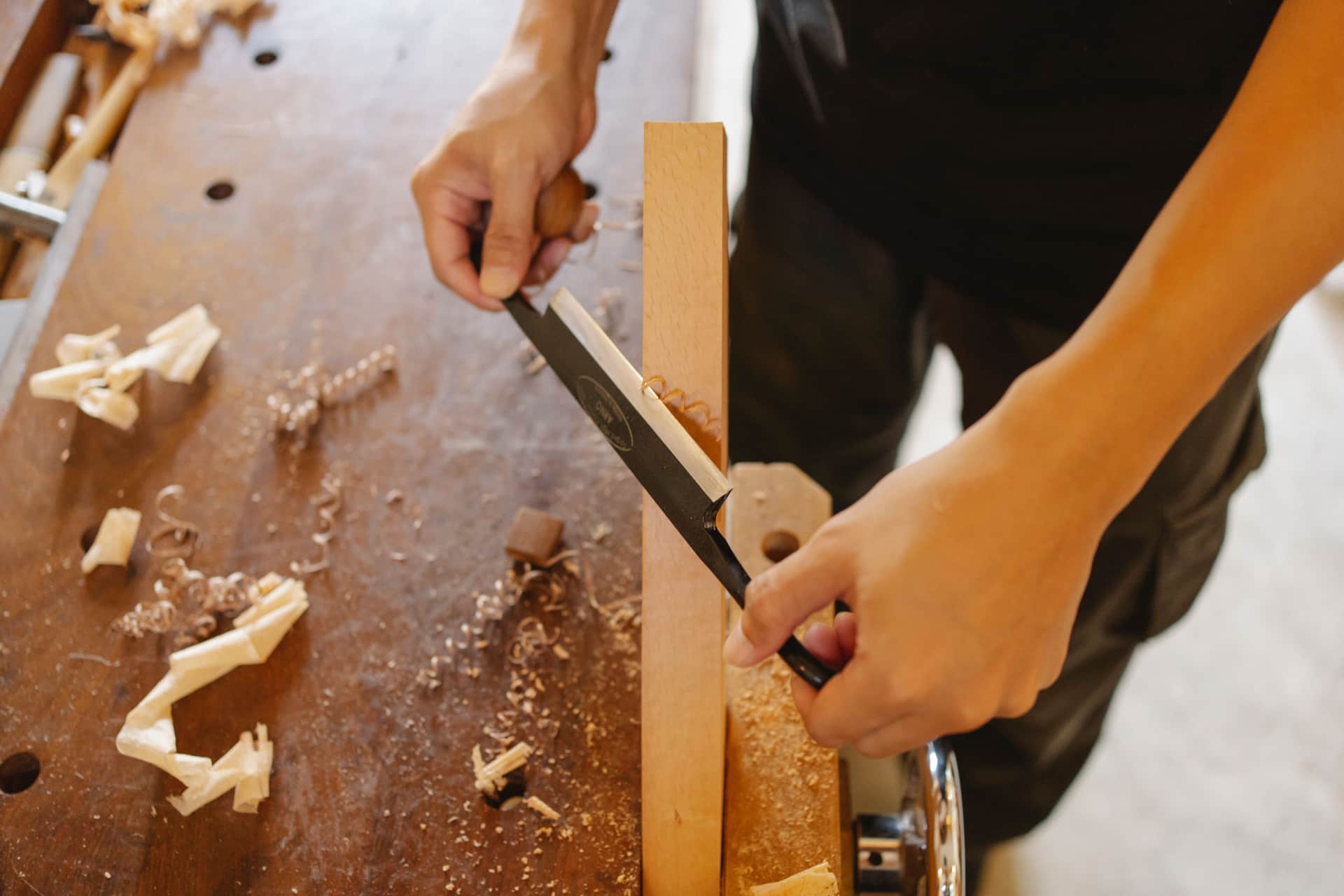
Shoulder planes and rabbet planes look like cousins and are often confused, because both share the one feature that defines the family: the iron runs the full width of the body, edge to edge, so the plane can cut right into an inside corner with no margin left uncut. That is what lets either one work in a rabbet or against a shoulder where a normal bench plane, with its iron set in from the sides, physically cannot reach. From that shared starting point they diverge into two different jobs.
The short version
A rabbet plane (also spelled rebate) is for cuttinga rabbet — a step-shaped recess along the edge of a board. A shoulder plane is for trimming and fittinga joint that is already cut, most classically paring a tenon's shoulder and cheeks to a perfect fit. One makes the joint; the other tunes it. They overlap — a shoulder plane can clean up a rabbet, and a rabbet plane can trim a shoulder — but each is optimized for its own end of the work.
| Rabbet plane | Shoulder plane | |
|---|---|---|
| Main job | Cutting rabbets and grooves along an edge | Trimming tenon shoulders and cheeks to fit |
| Blade | Full width; often with nicker and depth stop and fence | Full width; bedded low, very finely adjustable |
| Bed angle | Usually higher (bevel-down, bench-style) | Low, bevel-up, for end grain on cheeks |
| Mass and precision | Built to remove material along a length | Heavy for its size; built to take a whisper |
| Fitting a joint | Adequate | What it is made for |
What the shoulder plane is really for
The classic job is a tenon that is a hair too fat to seat in its mortise. You need to shave the cheeks (the broad faces, which are usually end-grain-adjacent long grain) and true up the shoulders(the square step the rail meets the stile against) so the joint closes tight with no gap showing. A shoulder plane is built for exactly this: bedded at a low angle so it slices cleanly across the grain of a shoulder, dense and heavy for its size so it tracks steadily, with the sides machined dead square to the sole so it references against the work. The precision is the point — you are removing thousandths to sneak up on a fit, not hogging material. It sets up much like any plane, with the same attention to a flat, sharp iron covered in how to set up a hand plane.
What the rabbet plane is really for
A rabbet plane cuts the recess in the first place — the step along a board edge that receives a back panel, a glass pane, or a mating board. The better ones carry the apparatus to do it accurately: a fence to set the width, a depth stop to set how deep, and a nicker (a small spur ahead of the iron) that scores the cross-grain fibers so the shoulder of the rabbet stays crisp instead of tearing. That extra hardware is what separates a plane built to cut a feature from one built to fitone. A basic rabbet plane without a fence is really a general edge-work plane; a fenced “moving fillister” is the dedicated rabbet-cutter.
The bullnose and the corner problem
A related tool, the bullnose plane, places the iron very close to the front of the body so it can work almost into a blind corner — the end of a stopped rabbet, a spot a longer-nosed plane cannot reach. Many shoulder planes are convertible: remove the nose section and the same tool becomes a bullnose, and on some, a chisel plane with the iron right at the leading edge. If you are choosing one small joinery plane, this convertibility is a genuine reason to lean toward a shoulder plane — it covers more of the fitting work you actually meet than a single-purpose rabbet plane does.
Using a shoulder plane well
A shoulder plane rewards a light touch and a specific technique. Because the iron runs the full width of the body, one edge of the sole rides on the work while the blade cuts right up against the vertical face of the joint — so you register the plane against the flat and let it pare the shoulder square. Take fine shavings; the tool is built to remove thousandths, and forcing a heavy cut on a low-angle plane across the grain is how you tear the shoulder you were trying to perfect. Advance the iron a hair at a time, test the fit often, and sneak up on it. Trimming a tenon cheek is the same discipline turned flat: pare a little, offer the joint up, pare again, until it slides home with friction rather than force. The general setup principles — a flat, keen iron above all — are the ones in how to set up a hand plane.
The nicker, and why cross-grain is the hard part
The reason rabbet planes carry a nicker and shoulder planes are bedded low comes down to the same enemy: cross-grain. When you cut across the grain — which you do on a tenon shoulder and on the cross-grain wall of a rabbet — the fibers want to tear out at the edge of the cut rather than shear cleanly. A nicker is a small knife ahead of the iron that severs those fibers first, so the cut leaves a crisp wall; it is the feature that separates a rabbet plane that leaves a clean shoulder from one that leaves a ragged one. The low bed angle on the shoulder plane attacks the same cross-grain with a slicing action for the same clean result. Knowing that both features exist to fight cross-grain tear-out tells you when each tool is worth having.
Sizes, and the full-width iron
Shoulder planes come in a range of widths, usually described as small, medium and large, and the width you want is the one that matches the joints you cut — a medium shoulder plane is the versatile middle choice that handles most furniture-scale tenons. Whatever the size, the defining detail is that the iron must be honed exactly the full width of the body and square to it: because the plane cuts into a corner, an iron ground even slightly narrow leaves an uncut sliver in the corner, and an iron out of square trims the shoulder out of square. That squareness is fussier to maintain than on a bench plane iron and is the main sharpening discipline these planes demand.
A note on plow and combination planes
Cutting grooves and dados along the grain is a related job that neither of these planes does best; that work belongs to a plow plane or a combination plane, which carry a fence, a depth stop and interchangeable irons of different widths. It is worth knowing they exist so you do not try to force a rabbet plane into cutting a deep groove it was never meant for. For most people the buying order is a shoulder plane first for fitting, a rabbet or fillister next if they cut many rabbets, and a plow only if grooved joinery becomes routine.
Which to buy for fitting joints
If your question is “I cut my joinery and I want it to fit perfectly,” the answer is a shoulder plane, in a medium size, and it is the more useful first buy for hand-cut joinery. It trims tenons, cleans up rabbets and dadoes, squares up shoulders, and converts to a bullnose for tight corners. The ones you can buy are ranked on the best shoulder planes, on published iron steel and hardness, bed angle, sole flatness, and whether the maker sells a replacement iron — which on this class is the question, because a shoulder-plane iron is ground wider than its own body and so has no aftermarket. If your question is “I cut a lot of rabbets and want them accurate off the plane,” a fenced rabbet plane (or a plow for grooves) is the specialist to add. Most hand-tool joinery kits start with a shoulder plane and grow a rabbet plane later. For the small-plane category more broadly — including the block planes that handle nearby end-grain work — see the best block planes; for the specialist that shapes curves the flat planes cannot, see what is a spokeshave; and for how these specialists sit alongside the bench planes, the overview in jack vs smoother vs jointer.
Questions
Frequently asked
What is the difference between a shoulder plane and a rabbet plane?
Both have a full-width iron so they can cut into a corner, but a rabbet plane is made to cut a rabbet along an edge, while a shoulder plane is made to trim and fit a joint that is already cut — classically a tenon's shoulders and cheeks. One makes the joint; the other tunes it.
What is a shoulder plane used for?
Fitting joinery. It pares the cheeks and squares the shoulders of a tenon so it seats tight in its mortise with no gap, and it cleans up rabbets and dadoes. Its low bed angle handles the cross-grain of a shoulder, and it is built to remove thousandths at a time.
Can a shoulder plane cut a rabbet?
It can clean up or deepen one, but it is not the efficient way to cut a rabbet from scratch — it has no fence or depth stop. For cutting rabbets accurately, a fenced rabbet plane (moving fillister) or a plow plane is the right tool.
What is a bullnose plane?
A small plane with the iron set very close to the front of the body so it can work almost into a blind corner, such as the end of a stopped rabbet. Many shoulder planes convert to a bullnose by removing the nose section, which is part of why they are so versatile.
Which should I buy first for hand-cut joinery?
A medium shoulder plane. It trims tenons, squares shoulders, cleans rabbets and dadoes, and many convert to a bullnose for tight corners — so it covers more fitting work than a single-purpose rabbet plane. Add a fenced rabbet plane later if you cut a lot of rabbets.
Keep reading
Related
- The best shoulder planesSeven ranked on published metallurgy and whether a spare iron exists.
- Jack vs smoother vs jointerHow the joinery planes sit alongside the bench planes.
- The best block planesThe other small plane most joinery benches keep within reach.
- How to set up a hand planeGetting a flat, sharp iron on a plane that has to trim to a line.
- What is a spokeshave?Another specialist plane, for the shaping the flat ones cannot do.
Back to Hand Planes · how we pick · editorial policy