Hand Planes
The Best Hand Planes for Cutting Boards
A cutting board is a glue-up of end grain, which is the one surface that punishes a dull iron immediately and shows every mistake.
We earn a commission when you buy through our Amazon links, at no extra cost to you. It never decides a ranking, and where the best tool in a class is one we earn nothing on, we say so and link it anyway. How this works.
The short answer
Quick picks
| # | Tool | Best for | Per decade | Score | Price |
|---|---|---|---|---|---|
| 01 | 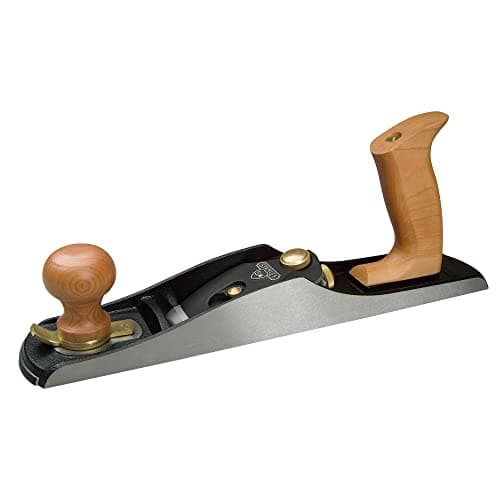 Stanley No. 62 Sweetheart Low Angle Jack Plane Bevel-up at a 12 degree bed, which means the bevel you grind sets the cutting angle. Grind three irons at three angles and one plane covers end grain, general work and figured hardwood. | The one plane to own if you only own one | —tier A | 8.2/10 | Check price → |
| 02 | 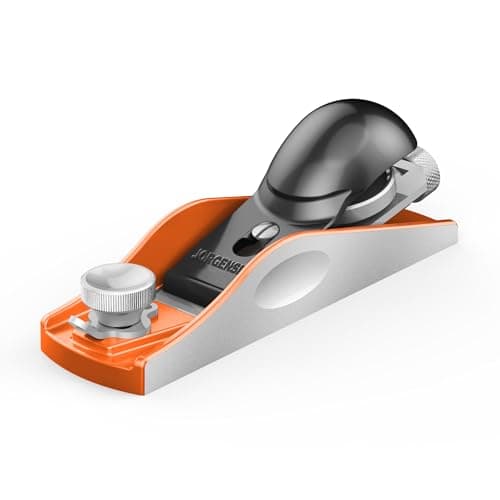 Jorgensen No. 60-1/2 Low Angle Block Plane A ductile-iron 60-1/2 with an adjustable mouth and a 3 mm O1 iron, at a fraction of what that combination costs anywhere else on this page. The mouth adjustment is the feature this list is ranked on, and this is the cheapest honest way to get it. | The adjustable mouth at the lowest price it exists for | $21.49tier C | 7.7/10 | $42.98Amazon |
| 03 | 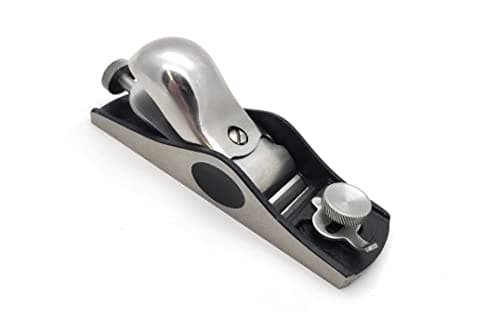 Taytools #9-1/2 Low Angle Block Plane Adjustable mouth, stainless knuckle cap and adjustment screws, and a bed low enough to handle end grain properly. The stainless hardware is the detail that matters in a tool that lives in a pocket. | Best block plane overall | $46.49tier C | 8.0/10 | $92.99Amazon |
| 04 | 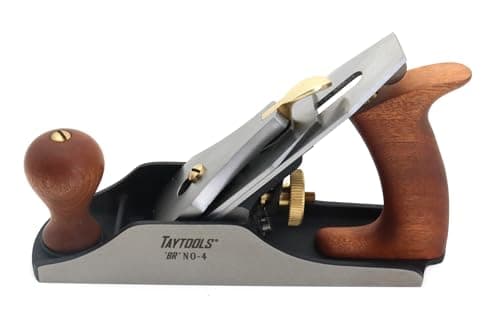 Taytools #4 Bedrock-Style Smoothing Plane A Bedrock-pattern frog on a ductile cast body at roughly half the price of the premium options. The frog design is the meaningful part: it beds the iron along its full length, which is what kills chatter. | Best plane per dollar if you sharpen your own | $59.99tier C | 8.0/10 | $119.99Amazon |
#ad· Live prices from the Amazon Product API, as of October 16, 2026. Where we have no verified live price we show none, and the cost-per-decade figure is suppressed with it — we would rather leave a gap than print a number that has rotted.
For an end-grain cutting board, use a low-angle bevel-up plane with a freshly honed iron and a mouth closed down tight — the Stanley No. 62 if you are buying one tool for the job. For an edge-grain board, a well-set No. 4 smoother is the better choice, because the surface behaves like ordinary long grain and the shorter plane is easier to steer. The thing that will decide your result is not which of these you own. It is how sharp the iron is when you start and whether you backed up the exit corners.
A cutting board is two quite different jobs wearing the same name, and the first thing to do is work out which one you have.
An edge-grain board is strips glued face to face with the grain running along the length. Planing it is normal long-grain work, interrupted by a glue line every inch or two.
An end-grain board is those strips cut into blocks and re-glued so the fiber ends face up. It is the premium construction, it is kinder to knives, and it is the single most demanding surface a hand plane will ever meet. Every square inch is the cut ends of thousands of fibers with nothing holding them to each other sideways.
Why end grain is this hard
There is no fiber running along the cut to carry the shaving. On long grain the shaving is a continuous ribbon because the fibers hold together. On end grain each fiber is severed individually and there is nothing to hold the result together, so the shaving comes off as dust, and an iron that is merely sharp crushes the fibers instead of cutting them. The surface then looks polished and feels fuzzy, and it raises when it gets wet.
The glue lines are harder than the wood. A cutting board is mostly glue line by the time you have a hundred blocks in it, and cured PVA is abrasive. An iron that would last a week in solid cherry will need honing partway through one board.
The corners blow out. Where the iron exits at the far edge, there is nothing behind the last fibers and they break away below the surface. On an end-grain board that happens at all four corners and it is the most common way a board gets ruined at the last step.
What to look for in the plane
A low effective cutting angle. End grain wants a low angle, and the way to get one is a bevel-up plane bedded at 12 degrees: a 25 degree bevel gives roughly 37 degrees at the wood against a bevel-down bench plane's fixed 45. Bevel up vs bevel down has the arithmetic.
An adjustable mouth you can close. Tearout on end grain is a support problem. The closer the front edge of the mouth sits to the iron, the more the fibers are held down as they are severed. On a cutting board this is worth more than any other adjustment on the plane.
A long enough sole to flatten, if the board is cupped. A thick end-grain glue-up usually comes out of the clamps slightly cupped. A block plane cannot flatten it; a No. 4 or longer can. Plane numbers explained covers what each length is for.
An iron you do not mind resharpening often. This is the rare job where a premium iron is not obviously the right answer: you will be back at the stones before the board is done either way, and the glue is going to abrade whatever you put in front of it.
Four planes that suit the work
These four are the picks from our registry for this job, and the Quick Picks table above carries the live price for each. They are not ranked as a roundup, because the honest answer is that two of them do the same thing at different prices and which you buy depends on what else you own.
Stanley No. 62 Sweetheart low angle jack— the one tool to buy if you are buying a tool for this. A 12 degree bevel-up bed, an adjustable mouth, an A2 iron and fourteen inches of sole, so it flattens a cupped glue-up and then finishes it.
Jorgensen No. 60-1/2 low angle block plane— the cheapest adjustable mouth here, with a 3 mm O1 iron. The right tool for easing the edges and chamfering the corners of a finished board, and far too short to flatten one.
Taytools No. 9-1/2 low angle block plane— the same role with stainless hardware and an adjustable mouth. A block plane is what you will actually pick up for the chamfers, which is the last step on every board you make.
Taytools No. 4 Bedrock-style smoother— the pick for an edge-grain board, where the surface is ordinary long grain. A published 0.120 in cryo-treated O1 iron and a frog whose mouth closes with the iron in place. The best smoothing planes ranks it against the field.
What actually decides it
Buying guide
Doing the job without ruining the board
- Sharpen immediately before you start, and again partway through. This is not optional on end grain, and it is the single thing that separates a glassy surface from a fuzzy one. How to sharpen a plane iron is the routine; a strop between passes buys you a little more time.
- Chamfer the exit corners first. Take a small bevel off all four corners with a block plane before you flatten the face. Then when the iron exits, it exits into the chamfer rather than into unsupported fiber, and the blowout has nowhere to start.
- Work from both ends toward the middle. Plane in from one end, stop short, then come in from the other. Never run off the far edge on a full-width pass.
- Close the mouth and set the iron fine. A thousandth at a time. It is slower and it is the difference between a cut surface and a crushed one.
- Skew the plane slightly. Turning the plane a few degrees off the direction of travel lowers the effective cutting angle a little further and makes end grain noticeably easier.
- Accept that you may finish with a scraper. A card scraper on end grain is forgiving in a way a plane is not, and there is no shame in using one for the last thousandth.
The finish question, briefly and honestly
This is a woodworking tools site and not a food safety authority, so here is the limit of what we will say. A planed surface takes oil differently from a sanded one: it is burnished rather than abraded, so it absorbs less and more evenly, and a board you plane will usually want a slightly thinner first coat than one you sand to 220.
What goes on the board is a decision to make from the finish manufacturer's own labelling, not from us. What we will note is the tool-side consequence: none of the rust preventives and waxes we recommend elsewhere on this site belong on a food surface. Cleaning and waxing hand tools is about protecting the plane, and the plane is the thing those products are for. Wipe the sole before you plane a board that will hold food.
Where this leaves you
If you already own a smoother and a block plane, you own enough. Hone the smoother properly, chamfer the corners with the block plane, work from both ends and the board will come out well. The No. 62 is an upgrade that genuinely helps on end grain and it is not a requirement.
And if you make end-grain boards in quantity, the thing to buy is not a better plane. It is a second iron, so that honing partway through a board is a thirty-second swap instead of a trip to the stones — the best replacement plane irons is where that comes from, and cost per decade is why we keep saying the iron is the consumable and the plane is not.
Questions
Frequently asked
Can you plane an end-grain cutting board?
Yes, and the result is better than sanding if you do it properly. You need a genuinely sharp iron, a tight mouth, a low cutting angle and chamfered exit corners. What you cannot do is plane end grain with an iron that is merely acceptable — it will crush the fibers rather than cut them and the surface will raise when it gets wet.
What plane should I use on a cutting board?
A low-angle bevel-up plane with an adjustable mouth for an end-grain board; a No. 4 smoother for an edge-grain board. A block plane is the tool for the chamfers and edge treatments on either, and that is the step most people skip and then regret.
Why does my cutting board blow out at the corners when I plane it?
Because the iron is exiting into unsupported end grain. Chamfer all four corners with a block plane before you flatten the face, work inward from both ends rather than running off the far edge, and set the iron fine. Those three habits remove the problem almost entirely.
Does planing dull the iron faster on a cutting board?
Much faster, and the glue is the reason rather than the wood. A board with a hundred glue lines in it is substantially cured adhesive by area, and cured PVA abrades steel in a way wood fiber does not. Expect to hone partway through one board, and keep a second iron if you make them regularly.
Should I sand or plane a cutting board?
Plane it if your iron is sharp and you are willing to chamfer the corners first, because a cut surface is cleaner and takes oil more evenly. Sand it if the board is a complicated end-grain pattern with grain running in several directions at once, where a plane will tear out somewhere no matter which way you push. Hand plane vs power tools covers the trade in general.
Receipts
Sources
- Stanley — Sweetheart No. 62 Low Angle Jack Plane 1-12-137 ('manufactured from extra-thick, 4.75mm A2 steel, providing excellent edge retention'; replacement plane iron listed separately as 0-12-142). Retrieved 2026-08-26.
- Stanley Tools — Warranty Information (limited lifetime on hand tools; excludes consumables including 'any blade'). Retrieved 2026-07-24.
- Pony Jorgensen — No. 60-1/2 Low Angle Adjustable Mouth Block Plane, model 70710 (ductile iron body, stress relieved so 'the machined casting will stay flat over time'; O1 steel blade 35 mm / 1.38 in wide by 3 mm / 1/8 in thick). Retrieved 2026-08-28.
- Taylor Tools — Taytools replacement plane blades for Stanley, Record and other bench hand planes (five sizes from 1.2 in to 2-3/8 in wide; the #6 / #7 blade is listed at 2-3/8 in wide, 7-5/8 in long and 0.125 in thick, bevel ground to 25 degrees; stated to also fit WoodRiver planes 'as well as some non-vintage Stanley and Record planes' and stated NOT to fit Taytools Bedrock planes; no steel grade is published on the page). Retrieved 2026-08-28.
- Taylor Toolworks — Refund Policy ("you may return them within 90 days of delivery" with items "in their original, new, unopened packaging"; "We currently do not offer exchanges."; a fee may be deducted from the refund for products returned without their original package; original shipping charges non-refundable. No product warranty is stated). Retrieved 2026-10-02.
- Amazon listing for Stanley No. 62 Sweetheart Low Angle Jack Plane — specifications and price basis, retrieved via the Amazon Product API on 2026-07-24 and refreshed on the daily price check.
- Amazon listing for Jorgensen No. 60-1/2 Low Angle Block Plane — specifications and price basis, retrieved via the Amazon Product API on 2026-07-24 and refreshed on the daily price check.
- Amazon listing for Taytools No. 9-1/2 Low Angle Block Plane — specifications and price basis, retrieved via the Amazon Product API on 2026-07-24 and refreshed on the daily price check.
- Amazon listing for Taytools No. 4 Bedrock-Style Smoothing Plane — specifications and price basis, retrieved via the Amazon Product API on 2026-07-24 and refreshed on the daily price check.
We have not handled these tools. Nobody here has tested one, owned one, or taken one apart. Specifications come from the manufacturer or the retailer listing; warranty terms come from the maker's own warranty page; the cost-per-decade arithmetic is ours and reproducible. Where we could not verify a figure we say so on the page rather than quietly leaving it out. Read the full method.
Keep reading
Related
- The best hand planes for end grainThe full ranking for the surface a cutting board is made of.
- The best block planesThe plane that does the chamfers and the edge treatments.
- The best hand planes for shooting boardsThe other end-grain job, squared by a jig.
- The best smoothing planesWhat to use on an edge-grain board instead.
Back to Hand Planes · how we pick · editorial policy