Chisels
Chisel Handle Materials
Wood, plastic, or a hooped hardwood billet: the part you hold thousands of times, and the kinds that survive.
We earn a commission when you buy through our Amazon links, at no extra cost to you. It never decides a ranking, and where the best tool in a class is one we earn nothing on, we say so and link it anyway. How this works.
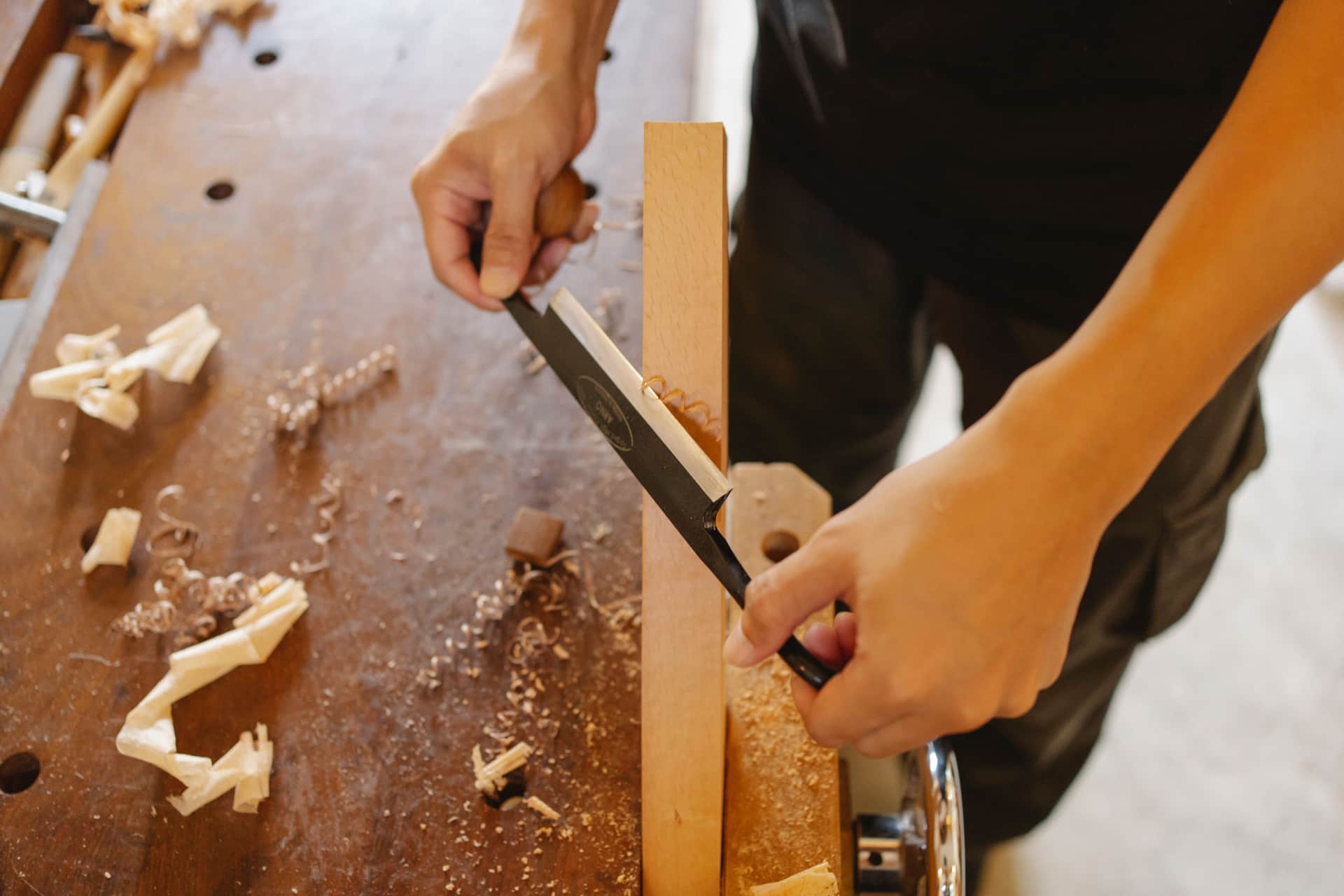
The handle is the part of a chisel you actually touch, thousands of times, and it is the part makers vary most freely — the same blade appears with beech, hornbeam, ash, boxwood or several kinds of plastic depending on price and market. None of it changes how the chisel cuts, but it changes how the chisel feels, how it survives abuse, and whether you can fix it in thirty years, which for a buy-it-for-life tool is not a small thing.
The honest summary is that there is no single best material, only materials suited to different lives. A handle that is perfect at a bench with a wooden mallet is the wrong handle for a tool bag on a job site, and vice versa. Here is what each is genuinely good and bad at. The other half of the handle question — how it attaches to the blade — is on socket versus tang chisels.
The traditional hardwoods
Beech is the workhorse. Cheap, reasonably hard, easy to turn, and entirely adequate; most mid-price Western chisels wear beech and it lasts for decades of ordinary use. It is not glamorous and it does not need to be.
Hornbeam is the upgrade wood, and a real one. It is significantly denser and harder than beech, so it resists the slow mushrooming and denting that repeated mallet blows cause, and it feels solid in a way beech does not. When a premium Western chisel costs more partly for its handle, hornbeam is often why.
Ashis tough and shock-absorbing rather than merely hard — it is what tool handles and axe hafts have traditionally used because it takes impact without cracking. It flexes a little and soaks up a blow, which is a genuine virtue on a struck tool. Boxwood is the fine-grained, dense, historically prized choice, close-grained enough to take a smooth finish and hold a crisp shape; it is more common on paring and carving tools where feel matters and blows are gentle. Where handle wood is part of what you are paying for is discussed across the best wood chisels.
The plastics
Plastic handles are not a downgrade; they are a different engineering answer, and on the right tool they are the correct one.
Cellulose acetateis the traditional “clear” or amber chisel plastic — the material of the classic yellow-handled marking and bench chisels. It is tough, takes a mallet without splitting, and is warmer and less slippery than it looks. Polypropylene and the modern impact-resistant compounds are the go-anywhere choice: effectively unbreakable, often with a struck cap molded to take a steel hammer, impervious to damp, and cheap. A wooden handle hit with a claw hammer splits; a struck-capped plastic one shrugs it off.
The case for plastic is entirely about abuse tolerance. If a chisel will live in a bag, be lent out, get hit with whatever is nearest, and see rain, plastic is the right material and wood is sentiment. The case against is feel and repairability, which we come to below — a plastic handle that does eventually fail is thrown away, not re-handled.
Hooped Japanese handles
Japanese chisels take a different approach again: a wooden handle — commonly red or white oak — fitted with a steel hoop around the striking end. The hoop is the clever part. It rings the top of the handle so that mallet blows cannot split or mushroom the wood, giving you the feel and repairability of wood with much of the impact resistance of a capped plastic handle.
There is a catch that the box rarely mentions: the hoop must be seated before first use. As shipped it sits proud of the wood; you compress the wood down, tap the hoop below the surface, and peen the exposed wood over the ring so it cannot fly off under a mallet. An unseated hoop works loose and can come off in your hand. This ritual, and the rest of what makes Japanese chisels different, is covered on Japanese versus Western chisels.
Comfort
Comfort is real and personal, and it is worth taking seriously because a handle you enjoy holding is a tool you use more. Dense hardwoods like hornbeam and boxwood have a solid, warm, slightly grippy feel that many people find hard to give up once they have used it. Ash has a lively, shock-absorbing feel under the mallet. Acetate is warmer and less slippery than modern plastic; bare polypropylene can feel hard and a touch slick, especially with sweaty or cold hands.
Shape matters as much as material. An oval or octagonal handle stops the chisel rolling on the bench and tells your hand the edge's orientation without looking; a fat London-pattern handle fills the palm for chopping; a slim handle suits fine paring. Material sets the feel of the surface, but the profile sets how the tool sits in your hand, and both are worth trying if you can.
Durability
Under the mallet, ranked honestly: impact plastic and a properly seated hooped Japanese handle are the most abuse-proof; hornbeam and ash are excellent and effectively permanent under a wooden mallet; beech is very good; boxwood is fine on gently used tools but not the choice for heavy chopping. Bare, unhooped softwood or low-density hardwood handles on the cheapest chisels are the ones that mushroom and split, and they are a real reason to avoid the bottom of the market.
The important qualifier is what you hit the tool with. Almost any wooden handle survives a wooden or urethane mallet indefinitely; almost any wooden handle suffers under a steel hammer. Most handle “durability” complaints are really a mismatch between a wooden handle and a steel face — the right mallet solves more handle problems than the right material does, a point made in the technique guide on how to use a chisel.
Repairability
This is where wood pulls decisively ahead, and it is the reason a serious buy-it-for-life buyer leans toward it. A wooden handle can be replaced — turned, whittled, or bought — for as long as the blade exists, which on a chisel is decades. A cracked hornbeam handle is a lathe afternoon, not a dead tool. A hooped Japanese handle can be re-made and re-hooped. Even a beech handle on a cheap chisel can be replaced with a better one, upgrading the tool.
A plastic handle is generally not repairable. Most are molded onto or around the tang and are meant to outlast the user rather than be replaced; when one does finally fail, the practical answer is a new chisel. For a disposable-resistant buyer that is the mark against plastic, even though a plastic handle is statistically less likely to need replacing in the first place. How the handle attaches decides how easy any of this is — see socket versus tang chisels.
What to prefer for a lifetime tool
For a bench chisel used at a bench with a wooden mallet — which is most people's situation — a dense hardwood handle is the buy-it-for-life choice: hornbeam or ash if you have the option, beech if not, all of them repairable forever and pleasant to hold. A hooped hardwood handle, Japanese-style, is the most abuse-tolerant version of the wooden answer.
For a chisel that will be knocked about — site work, a shared shop, a tool bag, damp — impact-resistant plastic is the honest choice, and preferring wood there is nostalgia rather than engineering. The two are answers to different questions, and a workshop can reasonably own both: wooden-handled chisels for the bench, a beater or two in plastic for the jobs that would ruin them. If you are buying one set to keep for life and it will live at a bench, buy dense hardwood and a proper mallet, and it will outlast you.
Questions
Frequently asked
What is the best wood for a chisel handle?
For durability under the mallet, hornbeam and ash: hornbeam is dense and resists mushrooming, ash is tough and shock-absorbing. Beech is the very good and cheaper standard. Boxwood is prized on gently used paring and carving tools.
Are plastic chisel handles bad?
No. Impact-resistant plastic is effectively unbreakable, often takes a steel hammer via a struck cap, and shrugs off damp and rough handling. The trade is feel and repairability: a wooden handle can be replaced for life, a plastic one is generally thrown away.
Why do Japanese chisels have a steel hoop?
The hoop rings the striking end so mallet blows cannot split or mushroom the wood. It must be seated before first use — compress the wood, tap the hoop below the surface, and peen the wood over it — or it works loose and can come off.
Wood or plastic chisel handle for a lifetime tool?
For a bench with a wooden mallet, dense hardwood: it feels better and can be re-handled forever. For a tool bag, site work or damp, impact plastic, which tolerates abuse a wooden handle cannot. Many shops keep both.
Can you replace a chisel handle?
A wooden one, yes, for the life of the blade — turn, whittle or buy a new one and fit it. A molded plastic handle usually cannot be replaced, so a failed one means a new chisel. Socket construction makes re-handling easiest.
Keep reading
Related
- Socket vs tang chiselsHow the handle joins the blade, and which re-handles easily.
- The best woodworking malletsThe other end of the blow, matched to the handle you own.
- Japanese vs western chiselsHooped handles in the full Japanese-versus-Western trade.
- The best wood chiselsWhich sets pay for their handles, ranked.
- How to restore a chiselRe-handling as part of bringing an old chisel back.
Back to Chisels · how we pick · editorial policy