We earn a commission when you buy through our Amazon links, at no extra cost to you. It never decides a ranking, and where the best tool in a class is one we earn nothing on, we say so and link it anyway. How this works.
Our top pick
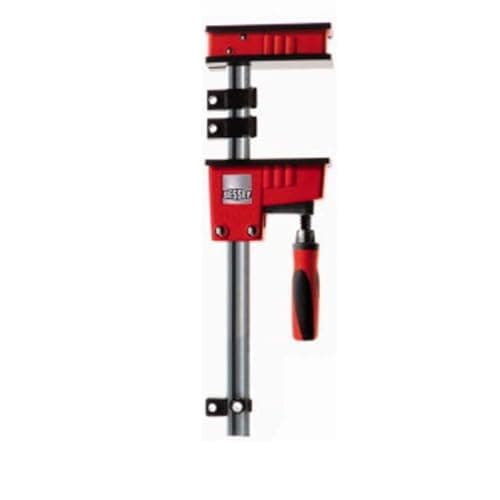
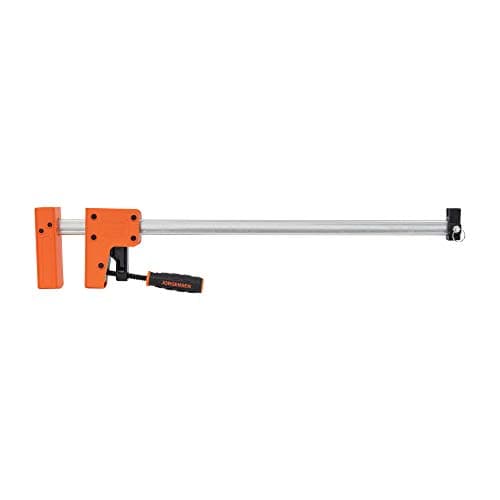
Jorgensen 8024 Cabinet Master 90 Degree Parallel Bar Clamp, 24 in
Parallel clamping without the parallel-clamp price
A parallel jaw, 1,500 lb of published force and a steel bar, backed by the only lifetime warranty here that does not ask for a receipt. The jaws are plastic, and that is the honest catch.
Parallel clamping without the parallel-clamp price
The only clamp on this page whose maker publishes a part number for every piece that wears: jaw pads, rail protection pieces and the end clip are all catalog items. Buy it for that rather than for the 1700 lb figure, which you will almost never need.
The glue-up that has to come out square without persuasion
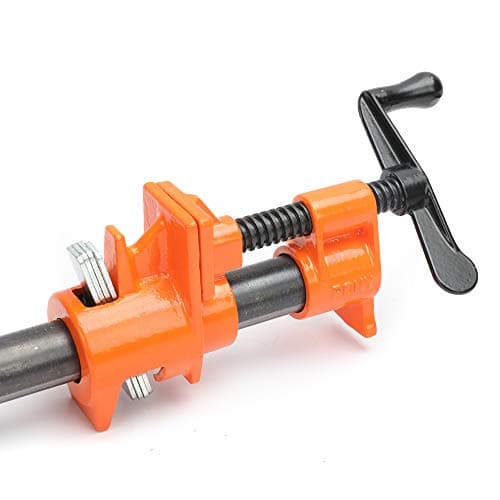
A cast iron head with a multiple-disc clutch that grips any length of 3/4 in black pipe. The genuinely generational clamp on this page, and the cheapest thing on it.
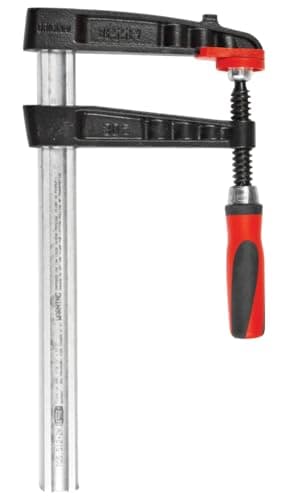
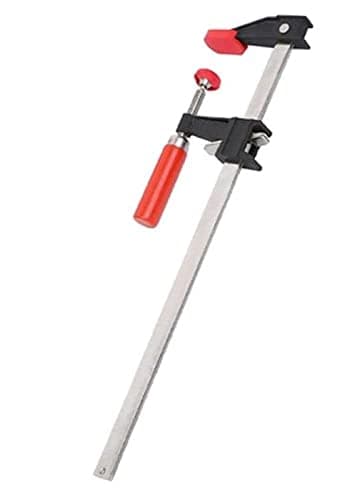
1320 lb through malleable cast iron jaws on a profiled German rail, with pressure plates Bessey specifies as replaceable. This is what an F-clamp is supposed to be, and what the hardware store version is not.
Deep-reach clamping that will still be here in thirty years
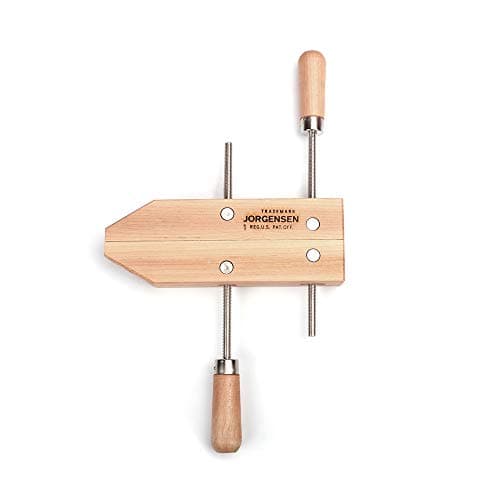
Hard maple jaws on cold-drawn steel spindles with double-lead threads. The jaws tilt to whatever angle the work is, which no other clamp on this page can do, and they cannot mark a finished surface.
Cast iron jaws and a slip-clutch on a nickel-plated serrated rail, at the price of a disposable trigger clamp. 600 lb is modest, and it is enough for most of what a bench actually does.
#ad· Live prices from the Amazon Product API, as of November 22, 2026. Where we have no verified live price we show none, and the cost-per-decade figure is suppressed with it — we would rather leave a gap than print a number that has rotted.
The verdict: buy Jorgensen Cabinet Master 24 in parallel clamps, and buy six. Parallel jaws are what pull a carcass square instead of racking it out of square, 24 in is the length that spans a standard cabinet, Pony Jorgensen publishes 1,500 lb of clamping force, and the limited lifetime warranty has no time limit and does not ask for a receipt — they even pay return shipping. At this price you can own enough of them to do the job, which is the real criterion. The budget pick is the Bessey GSCC clutch-style bar clamp, the cheapest clamp here, for the secondary pressure a glue-up needs once the parallel clamps have set the geometry. Prices below are live, with the date they were checked.
This page is ranked differently from the best woodworking clamps and the best bar clamps, both of which rank clamps against each other on force, jaw construction and rebuildability and are won by the same premium parallel clamp. Casework changes the arithmetic, because a cabinet glue-up is a quantity problem.
Why cabinet making is a quantity problem
A four-sided carcass with a back needs pressure at both ends of every joint, which in practice means six to eight clamps on the bench at the same time, all applied inside the open time of the glue. A panel glue-up of three boards needs four. A door frame needs two per joint.
That turns the buying decision upside down. The best single clamp in the world, owned twice, cannot glue up a cabinet; a merely good clamp, owned eight times, can. So the ranking criterion on this page is cost per clamp at the quantity the job needs, and the three things that decide it:
Do the jaws stay parallel? A pivoting F-clamp jaw contacts at an angle and pushes the assembly out of square as you tighten. Parallel jaws apply pressure square to the work, which is the single most useful property in casework and the reason the top two picks are parallel clamps.
Is it long enough? 24 in handles a standard base cabinet; 31 in handles a wide panel glue-up. Buying short is the commonest mistake and the one you cannot work around.
What does it cost times six? Multiply before you buy. The answer changes which clamp is correct more often than any specification does.
Note what is deliberately last: peak clamping force. A glue joint needs enough pressure to close it and no more; over-clamping starves the joint and bows the parts. Force is the specification clamp makers advertise and the one that matters least in casework.
The clamp to buy six of: Jorgensen Cabinet Master 24 in
Parallel jaws on a steel bar, a published 1,500 lb, a built-in stand so the clamp sits on the bench jaws-up while you place the workpiece, and a sliding head that reverses into a spreader for knocking a carcass back apart. The warranty is the best in this list on paper: no time limit, no receipt, return shipping paid.
The honest catch is the jaws. They are plastic where the premium clamp’s are cast and faced — same job, less durable material — and no replacement jaws or pads are published, so a cracked jaw is a warranty claim rather than a repair. The bar will also take a set if you overtighten it on a long panel, and a bent bar racks. Those are real limitations and they are the price of being able to own six.
The clamp to buy two of: Bessey K Body REVO
The best clamp on this page and not the right one to buy in quantity. Cast, faced jaws, a published 1,700 lb, Bessey’s own parts available by part number, and the rebuildability that makes it the winner of our main clamp roundup. In casework its job is the two or three positions where squareness is critical — the front corners of a carcass, the final panel glue-up — with the cheaper parallel clamps doing the rest.
Buying a mixed set like this is the genuinely practical answer and almost nobody recommends it, because it does not make a tidy article. It is what most working shops actually own.
The cheapest way to long capacity: pipe clamp fixtures
A Pony 50 fixture plus a length of 3/4 in black pipe from a plumbing counter is the cheapest long clamp in existence, and for a wide panel or a tall bookcase it is the sensible answer. You buy the fixture once and choose your own length; you can also buy a longer pipe later without buying another clamp.
The trades: the jaws pivot rather than staying parallel, so it will rack an assembly if you let it, and pipe flexes under high pressure. Use pipe clamps for length and parallel clamps for squareness. Nothing here will hurt a finished surface unless you let the pipe touch it, so cauls are worth the five minutes.
The deep-throat clamp, and the one for shaped work
The Bessey TG 5-1/2 x 12 in is a deep-throat F-style clamp and it solves a problem no bar clamp can: reaching 5-1/2 in in from the edge of a panel, which is what you need when gluing a stretcher to the middle of a carcass side or clamping a batten across a wide board. Every cabinet shop needs two and no cabinet shop needs eight.
The Jorgensen 10 in handscrew is the oldest pattern here and the one that holds a tapered or non-parallel part, because the two wooden jaws can be set to any angle relative to each other. It is also the only clamp on this page whose faces are wood, so it will not bruise a finished surface. It is a specialist and it is cheap.
The budget pick: Bessey GSCC clutch-style bar clamp
The cheapest clamp here and the right one to buy in a handful. A clutch-style clamp applies moderate pressure quickly with one hand, which is exactly what you want for the third through eighth clamp in a glue-up — the ones holding things still while the parallel clamps do the geometry. Bessey publishes its warranty terms.
Do not try to build a cabinet from these alone: the jaws pivot and the pressure is lower than a parallel clamp’s. Bought as supporting cast they are the best value on the page, and if you are assembling a first kit the whole sequence is on building a hand tool kit on a budget.
What is not on this page, and why
Corner and 90-degree assembly clamps. They are a real answer to the squareness problem in casework and we cannot recommend one: no corner clamp, box clamp or 90-degree assembly clamp of any brand exists in our product registry with a verified listing, so none is ranked. We would rather say that than link something we have not verified.
Band clamps and strap clamps. Same reason. Not in the registry, not ranked.
Clamping force league tables. Deliberately omitted from the ranking for the reason given above. The numbers are on the individual cards where they are published, and the reasoning behind weighing warranties and parts over specifications is on warranties and repairability.
Every pick, in full
The write-ups
01Parallel clamping without the parallel-clamp price
Capacity
24 in maximum opening
Reach
3-7/8 in
Clamping force
1,500 lb (Pony Jorgensen figure)
Bar
Steel, 1-3/16 x 3/8 in
Warranty
Limited lifetime, no receipt required
Jorgensen 8024 Cabinet Master 90 Degree Parallel Bar Clamp, 24 in
Jorgensen
8.6/10
A parallel jaw, 1,500 lb of published force and a steel bar, backed by the only lifetime warranty here that does not ask for a receipt. The jaws are plastic, and that is the honest catch.
Cost per decade
$11.39
Horizon · tier A
30 years — Lifetime warranty, cited
Pony Jorgensen publishes a limited lifetime warranty against deficiencies in material and workmanship with no time limit on when the tool was bought, no receipt required, and replacement shipping paid by the maker; it excludes improper use, abuse, alteration and damage from improper repair. The no-receipt clause is the part that matters — a lifetime warranty you cannot claim on a clamp bought in 1994 is not a lifetime warranty, and this is the only maker on the page that says so in writing.
Rebuy risk
Medium
lifetime warranty, parts listed
Clamping force
9.0
Jaw & bar
7.5
Rebuildability
8.5
Value
9.5
What it gets right
+Pony Jorgensen's warranty has no time limit and requires no receipt, and they pay the return shipping
+Jaws stay parallel, which is the whole reason to buy this rather than an F-clamp
+Built-in clamp stand lets it sit on the bench jaws-up while you place the workpiece
+Sliding head reverses into a spreader
What it costs you
−The jaws are plastic where the top pick's are cast and faced — the same job, a less durable material
−1,500 lb against 1700 lb, and a shallower 3-7/8 in reach than a deep-throat F-clamp
−No replacement jaws or pads published, so a cracked jaw is a warranty claim rather than a repair
−The bar takes a set if you overtighten it on a long panel, and a bent bar is a clamp that racks
Skip this if…
…your work is heavy laminations rather than casework. Parallel jaws buy you squareness, not brute force, and a cast-jaw F-clamp gives you more of the second for less money.
Price as of November 22, 2026. Prices move; Amazon's is the one that counts.
#ad · we may earn a commission from this link to Jorgensen 8024 Cabinet Master 90 Degree Parallel Bar Clamp, 24 in
02The glue-up that has to come out square without persuasion
Capacity
31 in clamping, 10-1/2 to 36-1/2 in spreading
Throat depth
3-3/4 in
Clamping force
1700 lbs nominal (Bessey figure)
Rail
Cold drawn steel, made at Bessey's own mills
Warranty
Bessey limited lifetime on clamping products
Bessey KRE3531 K Body REVO Parallel Clamp, 31 in, 2-Pack
Bessey
8.9/10
The only clamp on this page whose maker publishes a part number for every piece that wears: jaw pads, rail protection pieces and the end clip are all catalog items. Buy it for that rather than for the 1700 lb figure, which you will almost never need.
Cost per decade
$50.02
Horizon · tier A
30 years — Lifetime warranty, cited
BESSEY warrants clamping products under a Limited Lifetime program — free from defects in material and workmanship for the life of the tool, replaced, refunded or repaired — excluding abuse, misuse, negligence, alteration and normal wear and tear. The parts that wear are catalog items: BESSEY's own K Body REVO literature lists replacement jaw pads (KR-JP), rail protection pieces (KRE-RPP) and an end clip (KRE-EC) by part number. A warranty is a promise; a parts list is a standing commitment.
Rebuy risk
Medium
lifetime warranty, parts listed
Clamping force
9.5
Jaw & bar
9.5
Rebuildability
9.5
Value
7.0
What it gets right
+Jaws stay parallel and perpendicular to the rail, so a carcase comes out square instead of racked
+Bessey lists the wear parts by part number: KR-JP jaw pads, KRE-RPP rail protectors, KRE-EC end clip
+Three removable pressure caps that Bessey specifies as repellent to glue and resistant to paint and grease solvents
+Reverses to a spreader without tools, and accepts the KBX20 extender to join two clamps into one long one
What it costs you
−The most expensive way on this page to buy two clamps, and glue-ups want four
−Bessey's lifetime cover explicitly excludes normal wear and tear, which is what happens to the pads
−6.86 lbs each: heavy to hold in position one-handed while you find the handle
−Single-clamp listings come and go on Amazon, so the pair is often the only sane way to buy them
Skip this if…
…you are buying your first four clamps on a fixed budget. Four parallel clamps at this price is most of a plane, and the pipe clamp lower down does the same job less precisely for a fifth of the money.
Price as of November 22, 2026. Prices move; Amazon's is the one that counts.
#ad · we may earn a commission from this link to Bessey KRE3531 K Body REVO Parallel Clamp, 31 in, 2-Pack
03Any length of clamp, for the price of the pipe
Fits
3/4 in-14 NPT black pipe, any length
Clamping face
Approx. 1-3/4 in square
Body
Iron casting
Mechanism
Steel multiple-disc clutch
Warranty
Limited lifetime, no receipt required
Pony 50 Clamp Fixture for 3/4 in Black Pipe
Pony Jorgensen
8.5/10
A cast iron head with a multiple-disc clutch that grips any length of 3/4 in black pipe. The genuinely generational clamp on this page, and the cheapest thing on it.
Cost per decade
$6.50
Horizon · tier A
30 years — Lifetime warranty, cited
Pony Jorgensen publishes a limited lifetime warranty against deficiencies in material and workmanship with no time limit on when the tool was bought, no receipt required, and replacement shipping paid by the maker; it excludes improper use, abuse, alteration and damage from improper repair. The no-receipt clause is the part that matters — a lifetime warranty you cannot claim on a clamp bought in 1994 is not a lifetime warranty, and this is the only maker on the page that says so in writing.
Rebuy risk
Medium
lifetime warranty, parts listed
Clamping force
7.5
Jaw & bar
7.5
Rebuildability
9.5
Value
9.5
What it gets right
+The bar is not part of the tool: capacity is whatever pipe you buy, and Pony's own instruction is pipe seven inches longer than the workpiece
+A bent or rusted pipe is a hardware-store part, not a reason to retire the clamp
+Cast iron and a disc clutch, with no plastic and nothing sealed
+Cheap enough to own eight of, which is the number a real glue-up wants
What it costs you
−Jaws are not parallel and will rack a carcase if you are careless about where the pressure lands
−Bare steel pipe stains oak and other tannin-rich woods black wherever glue and moisture reach it
−The pipe flexes under load on long spans, so pressure is never as even as a parallel clamp's
−Pony publishes no clamping force figure for this fixture, so there is no number to compare
Skip this if…
…you want the clamp to hold the assembly square for you. It will not — it applies pressure along a line and leaves squareness entirely to you.
04Deep-reach clamping that will still be here in thirty years
Capacity
12 in
Throat depth
5-1/2 in
Clamping force
1320 lbs (Bessey figure)
Jaws
Corrugated malleable cast iron
Origin
Bessey states made in Germany of European steel
Bessey TG5.512+2K F-Style Clamp, 5-1/2 x 12 in
Bessey
8.4/10
1320 lb through malleable cast iron jaws on a profiled German rail, with pressure plates Bessey specifies as replaceable. This is what an F-clamp is supposed to be, and what the hardware store version is not.
Cost per decade
$16.10
Horizon · tier A
30 years — Lifetime warranty, cited
Covered by BESSEY's Limited Lifetime program for clamping products, which excludes normal wear and tear — worth reading carefully, because on a bar clamp the pad is the part that wears. BESSEY publishes the wear part for both series: the clutch-style literature lists replacement pads as GSCC2.5-PADS, and the TG series is specified with replaceable pressure plates. Cast iron jaws and a rolled steel rail have no consumable in them at all.
Rebuy risk
Medium
lifetime warranty, parts listed
Clamping force
8.5
Jaw & bar
9.0
Rebuildability
8.5
Value
7.5
What it gets right
+A 5-1/2 in throat reaches well in from an edge, where a parallel clamp cannot go at all
+Bessey specifies replaceable pressure plates, so the part that contacts the work is renewable
+Profiled rail from Bessey's own steel plant, shaped to resist torsion rather than just bending
+Acme-threaded spindle, with a set screw in the sliding arm that interlocks with the rail serration
What it costs you
−One jaw pivots, so it does not hold a panel flat the way a parallel clamp does
−12 in of capacity is a joinery clamp, not a panel clamp
−Costs about what a 24 in parallel clamp costs, for less capacity
−Bessey's lifetime cover excludes normal wear and tear, and on this clamp that is the spindle thread
Skip this if…
…you are gluing up flat panels. The pivoting jaw is exactly wrong for that job; buy parallel clamps or pipe clamps instead.
Hard maple jaws on cold-drawn steel spindles with double-lead threads. The jaws tilt to whatever angle the work is, which no other clamp on this page can do, and they cannot mark a finished surface.
Cost per decade
$6.86
Horizon · tier A
30 years — Lifetime warranty, cited
Pony Jorgensen publishes a limited lifetime warranty against deficiencies in material and workmanship with no time limit on when the tool was bought, no receipt required, and replacement shipping paid by the maker; it excludes improper use, abuse, alteration and damage from improper repair. The no-receipt clause is the part that matters — a lifetime warranty you cannot claim on a clamp bought in 1994 is not a lifetime warranty, and this is the only maker on the page that says so in writing.
Rebuy risk
Medium
lifetime warranty, parts listed
Clamping force
7.0
Jaw & bar
8.0
Rebuildability
9.0
Value
9.0
What it gets right
+The jaws close on tapers and odd shapes, because the angle between them is adjustable
+Wooden jaws distribute pressure over a broad area and will not bruise a finished surface
+Nothing on it is sealed: jaws, spindles and nuts are pieces you can take apart
+When the jaws get glue-scarred you plane or re-face them, which is a repair no metal clamp allows
What it costs you
−Slow. Two spindles to set means it is the least convenient clamp here by a distance
−Pony Jorgensen publishes no clamping force figure for handscrews, so there is nothing to compare
−Learning to set the jaws parallel takes a few tries and the technique is not obvious
−6 in of opening on a 10 in clamp: reach is generous, capacity is not
Skip this if…
…you want one clamp for everything. This is a specialist that solves the jobs other clamps cannot, and it is a poor substitute for a bar clamp on a panel.
06The clamp you buy six of and stop thinking about
Capacity
24 in
Throat depth
2-1/2 in
Clamping force
600 lbs (Bessey figure)
Jaws
Powder-coated cast iron, non-marring pads
Rail
Nickel plated, drawn and serrated
Bessey GSCC2.524 Clutch Style Bar Clamp, 24 in
Bessey
8.1/10
Cast iron jaws and a slip-clutch on a nickel-plated serrated rail, at the price of a disposable trigger clamp. 600 lb is modest, and it is enough for most of what a bench actually does.
Cost per decade
$5.03
Horizon · tier A
30 years — Lifetime warranty, cited
Covered by BESSEY's Limited Lifetime program for clamping products, which excludes normal wear and tear — worth reading carefully, because on a bar clamp the pad is the part that wears. BESSEY publishes the wear part for both series: the clutch-style literature lists replacement pads as GSCC2.5-PADS, and the TG series is specified with replaceable pressure plates. Cast iron jaws and a rolled steel rail have no consumable in them at all.
Rebuy risk
Medium
lifetime warranty, parts listed
Clamping force
7.0
Jaw & bar
8.0
Rebuildability
8.5
Value
9.0
What it gets right
+Cast iron jaws at a price where almost everything else is resin
+Bessey lists replacement pads as GSCC2.5-PADS, two sets per pack
+Two-piece slip-clutch plates hold the sliding jaw without a screw to tighten first
+Light at about 2.27 lbs, so it stays where you put it while you work the handle
What it costs you
−600 lb is a third of what the parallel clamps here deliver
−2-1/2 in of throat is shallow; it clamps near an edge and nowhere else
−One pivoting jaw, so it holds pressure rather than holding square
−The wooden handle is comfortable and is the first thing that will look tired
Skip this if…
…this will be your only clamp. It is a supporting clamp — excellent in numbers, insufficient alone for a glue-up that has to come out square.
Multiply by six before you decide. A carcass glue-up needs six to eight clamps at once. The clamp you can afford six of beats the clamp you can afford two of, every time, for this job.
Parallel jaws for squareness, pipe for length, F-clamps for reach. Those three sentences are the whole buying guide. A mixed set of clamps is correct and a matched set is a magazine photograph.
Buy 24 in as the default length. It spans a standard base cabinet and a three-board panel. Go to 31 in only when you know you need it, because long clamps are clumsy on small work.
Do not over-tighten. A joint needs enough pressure to close and no more. Starved glue lines and bowed panels are caused by force, not by cheap clamps.
Check who publishes a warranty and who asks for a receipt. One clamp on this page has a lifetime warranty with no receipt required and pays return shipping. On a tool you will own forty of, that is worth more than 200 lb of clamping force.
Questions
Frequently asked
What clamps do I need for cabinet making?+
Six to eight parallel-jaw bar clamps at 24 in as the core, two deep-throat F-clamps for reaching in from an edge, and a couple of pipe clamp fixtures for anything longer than a cabinet. Parallel jaws are the one feature that matters, because they pull the carcass square instead of racking it.
How many clamps do I need for a cabinet?+
Six as a working minimum for a four-sided carcass, eight comfortably. You need pressure at both ends of every joint, applied inside the glue’s open time, which is why quantity beats quality on this particular purchase.
Are parallel clamps worth it for casework?+
Yes, and it is the one place they clearly earn the premium. A pivoting jaw contacts at an angle and pushes an assembly out of square as it tightens. If you can only afford parallel clamps in part of the set, use them at the corners that have to be square.
Are pipe clamps good enough for cabinets?+
For length, yes, and nothing is cheaper. For squareness, no: the jaws pivot and the pipe flexes. The standard answer is pipe clamps for wide panels and long carcasses with parallel clamps setting the geometry at the critical joints.
What length clamp should I buy?+
24 in covers a standard base cabinet and most panel glue-ups and is the right default. 31 in is for wide panels. Buying everything long is a mistake: a long clamp is awkward and heavy on a drawer or a door frame.
We have not handled these tools. Nobody here has tested one, owned one, or taken one apart. Specifications come from the manufacturer or the retailer listing; warranty terms come from the maker's own warranty page; the cost-per-decade arithmetic is ours and reproducible. Where we could not verify a figure we say so on the page rather than quietly leaving it out. Read the full method.