We earn a commission when you buy through our Amazon links, at no extra cost to you. It never decides a ranking, and where the best tool in a class is one we earn nothing on, we say so and link it anyway. How this works.
Our top pick
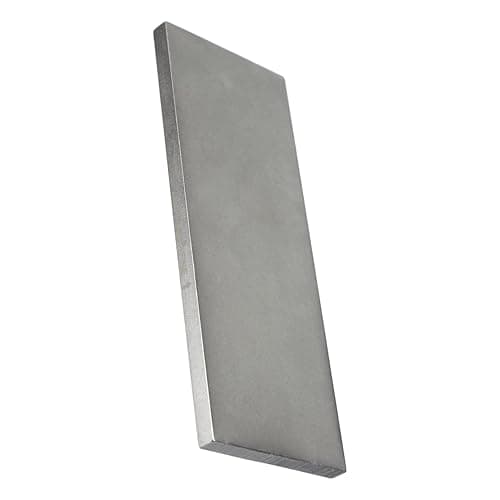
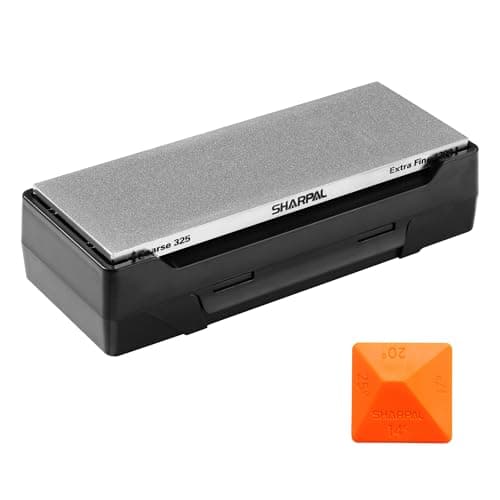
Sharpal 162N Double-Sided Diamond Sharpening Stone, 8 x 3 in
Two grits, a large working surface, and a non-slip base, at a price that makes the maintenance-free argument affordable. It will not last like a DMT and it costs accordingly.
Diamond bonded to a steel plate: it cannot dish, it never needs flattening, and it works dry. For someone who wants sharpening to be a task rather than a hobby, this is the answer.
Coarse and fine on opposite faces of one plate. It is the complete diamond sharpening answer in a single object, and it will still be flat in thirty years.
The coarse plate in the range, and the grit Atoma itself puts on stone flattening. The diamond sits in raised clusters with channels between them, so slurry has somewhere to go instead of clogging the plate — which is the entire problem with cheaper flatteners.
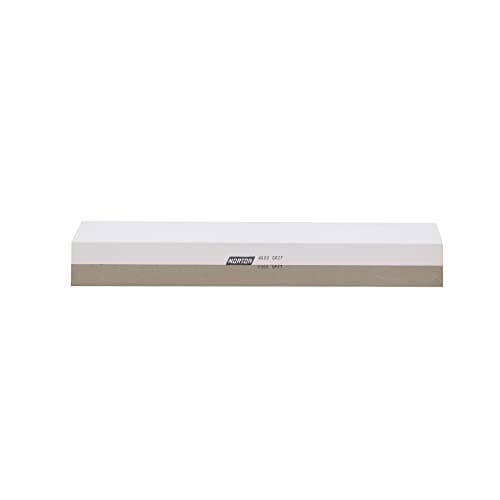
Norton's waterstones are harder than the King equivalents: slower to cut, slower to dish. If flattening is the part you hate, this is the trade to make.
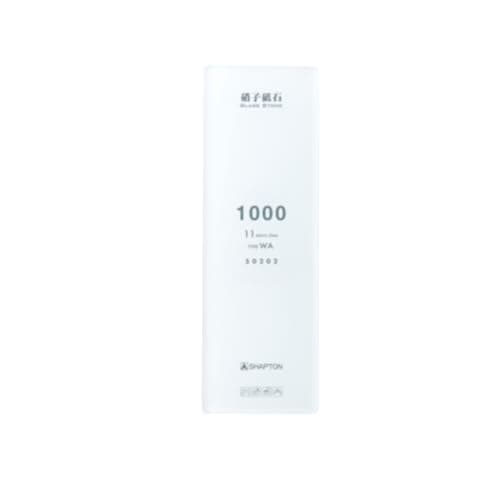
A thin abrasive layer bonded to a glass plate. It stays flat far longer than a conventional waterstone, cuts fast, and needs only a spritz of water rather than a soak.
#ad· Live prices from the Amazon Product API, as of November 22, 2026. Where we have no verified live price we show none, and the cost-per-decade figure is suppressed with it — we would rather leave a gap than print a number that has rotted.
The verdict: buy the Sharpal 162N. It is a double-sided 8 x 3 in diamond plate: coarse on one face for a chipped edge or a stubborn back, fine on the other for the working edge, on a substrate that does not dish. For a chisel that combination is the whole job in one purchase, and the 8 x 3 in surface is large enough to lap a back without running off the end of the stone. It is for anyone whose first sharpening setup has to handle chisels. The budget pick is the Shapton GlassStone 1000, the cheapest stone here and the one to buy if your chisels are already flat-backed and you only need to maintain them. Prices below are live, with the date they were checked.
This page is narrower than the best sharpening stones, which ranks the whole field and is won by a combination waterstone. A chisel is a harder case than a plane iron for one specific reason, and once you see it the ranking order below follows automatically.
Why a chisel is harder on a stone than a plane iron is
A plane iron is honed at the bevel. You can get a plane working with a ruler trick and barely touch the back. A chisel cannot: the back of a chisel is a reference surface, it registers against the work when you pare, and it has to be flat and polished near the edge or the tool will not cut to a line. That means you will be rubbing a wide flat piece of steel across the stone, repeatedly, for the life of the chisel.
First criterion: does the surface stay flat? A soft waterstone dishes in the middle, and a dished stone transfers its curve to the back of your chisel — you get a belly, and the edge stops registering. Diamond plates do not dish, which is why every plate on this page ranks above every waterstone on it. The waterstone answer is to flatten the stone constantly; that works and it is one more consumable and one more step.
Second criterion: does one stone cover repair and honing? Chisels get chipped. Dropping one on a concrete floor, hitting a nail, or inheriting a set with rounded backs all put you in coarse-grit territory, and getting back from there on a 1000 grit stone takes an hour you will not spend. A double-sided plate with a coarse face makes that a ten-minute job.
Third criterion: is the surface big enough? An 8 x 3 in plate lets you work a 1 in chisel back across the full width with the stroke running the long way. A small stone forces short strokes and short strokes round the back over.
What is not a criterion: the finest grit available. A chisel is a cutting tool, not a razor, and the polish that matters is on the last half millimetre. The grit ladder in full is on sharpening grits explained.
The stone to buy: Sharpal 162N
Coarse and fine diamond faces on a single 8 x 3 in plate. It covers the whole chisel job: the coarse side takes a chipped edge back and flattens a factory-rough back in minutes; the fine side puts on a working edge. It does not need soaking, it does not need flattening, and there is nothing to store wet.
The honest limits. A diamond plate’s finest grit is not as fine as a finishing waterstone, so if you want a mirror polish on the bevel you will finish on a strop or add a fine stone later. And every diamond plate loses a little aggression in its first few uses as the proudest crystals break in — that is normal, not a defect, and it is why a plate feels different after the first month.
The flattest option: DMT D8F
A single-grit fine DMT bench stone, made in Marlborough, Massachusetts, with a published warranty behind it. If your chisels are already in good order and what you want is one plate that will never dish and will still be true in twenty years, this is it — the most conservative buy on the page.
It is single-sided and fine only, so it is the wrong tool for a chipped edge. Buy it as the second stone in a two-stone setup, or buy the double-sided DuoSharp below instead.
The two kits, and the big plate
The Trend 8 x 3 in double-sided kit is the direct alternative to the Sharpal at a similar size and covers the same coarse-plus-fine ground. The DMT DuoSharp is the largest surface here and the one to buy if you also sharpen plane irons — a wide iron is much happier on a wide plate — and it carries DMT’s published warranty and US manufacture.
The Atoma #140 is on this page for one job only: the coarse one. It is sold for aggressive material removal, reshaping edges and flattening stones, with precisely placed clusters of monocrystalline diamond and channels between them for swarf, and its diamond sheet is replaceable in four grits. For a set of neglected secondhand chisels with rounded, pitted backs it is the fastest thing in the registry. It is far too coarse to finish on.
The waterstone case, and the budget pick
The Norton 1000/4000 combination waterstone is the best non-diamond answer here: two useful grits in one stone and a finish a diamond plate cannot match. It is ranked below the plates because it dishes and because flattening it is a separate purchase and a separate habit — see how to flatten a waterstone and the best waterstone flatteners.
The Shapton GlassStone 1000 is the cheapest stone on this page and the budget pick for a specific situation: chisels whose backs are already flat, where all you need is to maintain the edge. A thin abrasive layer on a glass plate stays far flatter than a conventional waterstone, needs no soaking, and 1000 grit is the single most useful grit to own if you are only owning one. What it will not do is fix a chipped edge or lap a bad back, which is why it is the budget pick and not the main one.
What you still need besides a stone
A honing guide, probably. Freehand honing is a skill and a chisel is the hardest place to learn it, because the bevel is narrow and the feedback is poor. The guides are on the best honing guides and the argument is on freehand vs honing guide.
A strop, eventually. A charged strop takes the wire edge off and puts a polish on the last fraction of a millimetre for a few dollars. It is the cheapest improvement available and the one people skip.
Patience with the first chisel. Flattening a factory back takes far longer than you expect and you only do it once per chisel. The method is on how to flatten a chisel back, and the angles for each chisel type are on sharpening angles explained.
Every pick, in full
The write-ups
01Diamond plate capability at half the DMT price
Size
8 x 3 in
Grits
Coarse / fine, double sided
Base
Non-slip holder
Warranty
Not published
Sharpal 162N Double-Sided Diamond Sharpening Stone, 8 x 3 in
Sharpal
7.9/10
Two grits, a large working surface, and a non-slip base, at a price that makes the maintenance-free argument affordable. It will not last like a DMT and it costs accordingly.
Cost per decade
$29.75
Horizon · tier C
20 years — No lifetime warranty; parts purchasable and resharpenable
No lifetime warranty published by the manufacturer at the date checked. Monolithic edge tool: no separately consumable part, and the edge is renewable by sharpening for as long as there is steel left.
Rebuy risk
Medium
parts listed, resharpenable
Cut rate
8.0
Maintenance
9.5
Finish
6.5
Longevity
6.5
Value
9.0
What it gets right
+Large enough surface for plane irons, which many budget plates are not
+Two grits and a base in one purchase
+No flattening or soaking
What it costs you
−Diamond retention over years is not in the same class as DMT
−No published warranty terms
−Cutting rate drops off faster than the premium plates
Skip this if…
…this is the last stone you intend to buy. For a genuine one-time purchase the DMT is the one with the manufacturing record behind it.
Price as of November 22, 2026. Prices move; Amazon's is the one that counts.
#ad · we may earn a commission from this link to Sharpal 162N Double-Sided Diamond Sharpening Stone, 8 x 3 in
02The stone that never needs maintaining
Size
8 in continuous surface
Grit
Fine (600 mesh)
Origin
Manufactured in Marlborough, MA
Maintenance
None; never needs flattening
DMT D8F Dia-Sharp Bench Stone, Fine
DMT
8.5/10
Diamond bonded to a steel plate: it cannot dish, it never needs flattening, and it works dry. For someone who wants sharpening to be a task rather than a hobby, this is the answer.
Cost per decade
$26.17
Horizon · tier C
20 years — No lifetime warranty; parts purchasable and resharpenable
DMT publishes a warranty page and manufactures its bench stones in Marlborough, Massachusetts. We did not retrieve the specific term, so we do not rate it tier A. Diamond is bonded to a steel substrate: the plate never needs flattening and has no consumable element.
Rebuy risk
Medium
parts listed, resharpenable
Cut rate
8.5
Maintenance
10.0
Finish
7.0
Longevity
9.5
Value
7.5
What it gets right
+Zero maintenance: no soaking, no flattening, no storage precautions
+Continuous surface handles narrow chisels without dropping in
+US manufacture, with a published warranty page
What it costs you
−Cannot reach the polish a fine waterstone gives
−Diamond plates lose their initial aggression in the first weeks of use
−Expensive for one grit
Skip this if…
…you want a mirror polish. A diamond plate gets you sharp, not shiny, and the two are not the same goal.
Trend Diamond Sharpening Stone Kit, 8 x 3 in Double Sided
Trend
7.9/10
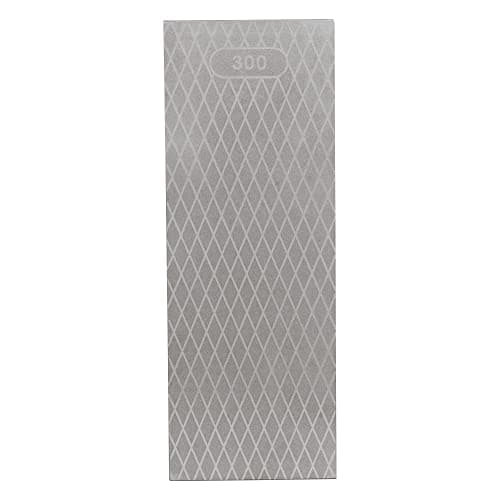
300 and 1000 on opposite faces with a holder, which is close to a complete sharpening setup in one box for anyone who does not want a polishing stage.
Cost per decade
$24.44
Horizon · tier C
20 years — No lifetime warranty; parts purchasable and resharpenable
No lifetime warranty published by the manufacturer at the date checked. Monolithic edge tool: no separately consumable part, and the edge is renewable by sharpening for as long as there is steel left.
Rebuy risk
Medium
parts listed, resharpenable
Cut rate
8.5
Maintenance
9.5
Finish
6.0
Longevity
7.0
Value
8.5
What it gets right
+Grit pair covers repair and honing sensibly
+Holder included, so nothing slides on the bench
+No maintenance, no soaking
What it costs you
−1000 is not a finishing grit; you will want a strop at minimum
−No published warranty
−Diamond retention is mid-tier
Skip this if…
…you want a polished edge. Add a strop and compound, or add a fine waterstone.
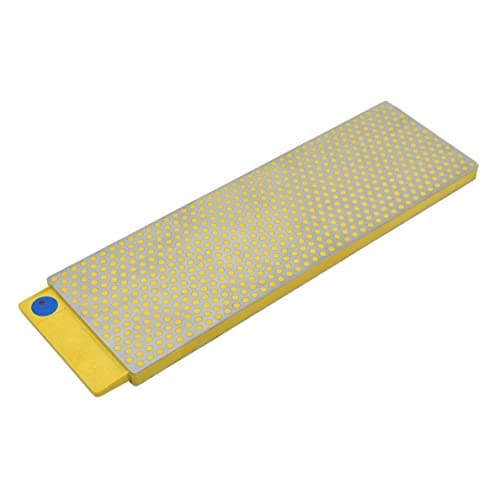
Coarse and fine on opposite faces of one plate. It is the complete diamond sharpening answer in a single object, and it will still be flat in thirty years.
Cost per decade
$46.48
Horizon · tier C
20 years — No lifetime warranty; parts purchasable and resharpenable
DMT publishes a warranty page and manufactures its bench stones in Marlborough, Massachusetts. We did not retrieve the specific term, so we do not rate it tier A. Diamond is bonded to a steel substrate: the plate never needs flattening and has no consumable element.
Rebuy risk
Medium
parts listed, resharpenable
Cut rate
9.0
Maintenance
10.0
Finish
7.0
Longevity
9.5
Value
8.0
What it gets right
+Covers repair and honing in one plate
+Interrupted surface clears swarf, so it keeps cutting
+Genuinely a lifetime object with no consumable element
What it costs you
−The interrupted surface can catch a very narrow chisel
−Higher up-front cost than a combination waterstone
−Cannot polish to the level a 6000 waterstone reaches
Skip this if…
…most of your chisels are under 1/4 inch. The interrupted surface is a real nuisance at that width; buy the continuous Dia-Sharp instead.
Price as of November 22, 2026. Prices move; Amazon's is the one that counts.
#ad · we may earn a commission from this link to DMT DuoSharp Double-Sided Diamond Whetstone, Fine/Coarse
05Flattening waterstones properly
Grit
#140 coarse
Size
210 x 75 mm plate
Construction
1 mm stainless diamond sheet on 10 mm aluminium
Warranty
Not published
Atoma Diamond Sharpener, #140 Coarse
Atoma
7.5/10
The coarse plate in the range, and the grit Atoma itself puts on stone flattening. The diamond sits in raised clusters with channels between them, so slurry has somewhere to go instead of clogging the plate — which is the entire problem with cheaper flatteners.
Cost per decade
$37.45
Horizon · tier C
20 years — No lifetime warranty; parts purchasable and resharpenable
No warranty terms published for the US market at the date checked. Monocrystalline diamond clusters on a 1 mm stainless sheet bonded to a 10 mm machined aluminium base: the plate never needs flattening, and Tsuboman sells the diamond sheet on its own in all four grits, so when the abrasive is spent the base is re-surfaced rather than replaced.
Rebuy risk
Medium
parts listed, resharpenable
Cut rate
9.5
Maintenance
9.0
Finish
3.0
Longevity
9.0
Value
7.0
What it gets right
+Atoma's own guidance puts #140 on aggressive removal and flattening stones, which is what you are buying it for
+Clustered diamond pattern clears swarf instead of loading up with it
+Tsuboman sells the diamond sheet separately in all four grits, so the machined base outlives the abrasive
What it costs you
−Expensive for what is a maintenance accessory rather than a sharpening stone
−No warranty terms published for the US market
−Far too coarse to finish on; this is a flattener that can rough-grind, not a bench stone
Skip this if…
…you sharpen only on diamond plates. There is nothing to flatten and this is a solution to a problem you do not have.
Norton's waterstones are harder than the King equivalents: slower to cut, slower to dish. If flattening is the part you hate, this is the trade to make.
Cost per decade
$60.77
Horizon · tier C
20 years — No lifetime warranty; parts purchasable and resharpenable
A waterstone is its own consumable: the binder releases spent abrasive, which is why it cuts fast and why it dishes. Rated on realistic service life for occasional workshop use with periodic flattening, not on a warranty — none is published.
Rebuy risk
Medium
parts listed, resharpenable
Cut rate
7.0
Maintenance
8.0
Finish
8.0
Longevity
8.5
Value
7.0
What it gets right
+Dishes noticeably slower than the softer Japanese stones
+4000 is a genuinely usable working polish
+Long service life for a waterstone
What it costs you
−Cuts slower than a King or a Shapton
−Still needs soaking and flattening
−Costs more than twice the King combination
Skip this if…
…you want the fastest possible cut. Harder binder means slower, and that is the deal you are making.
A thin abrasive layer bonded to a glass plate. It stays flat far longer than a conventional waterstone, cuts fast, and needs only a spritz of water rather than a soak.
Cost per decade
$28.35
Horizon · tier C
20 years — No lifetime warranty; parts purchasable and resharpenable
A waterstone is its own consumable: the binder releases spent abrasive, which is why it cuts fast and why it dishes. Rated on realistic service life for occasional workshop use with periodic flattening, not on a warranty — none is published.
Rebuy risk
Medium
parts listed, resharpenable
Cut rate
9.5
Maintenance
9.0
Finish
8.5
Longevity
7.0
Value
7.0
What it gets right
+Glass substrate means it dishes far less than a conventional stone
+No soaking, so sharpening is a two-minute interruption rather than a ritual
+Cuts noticeably faster than a King at the same nominal grit
What it costs you
−Thin abrasive layer: this stone has a finite and visible life
−Expensive per usable millimeter of abrasive
−Still needs occasional flattening despite the substrate
Skip this if…
…you sharpen twice a year. The value of a fast, always-ready stone is proportional to how often you reach for it.
Buy a plate that will not dish. A chisel back is a reference surface. A dished stone puts its curve into that surface, and nothing downstream fixes it.
Get a coarse face in the first purchase. Chipped edges and rough factory backs are not rare events, and a 1000 grit stone is the slowest possible way to deal with either.
8 x 3 in is the minimum useful size. Short strokes on a small stone round a chisel back over. Surface area is cheap insurance.
Do not chase the finest grit. A working chisel edge is finished at around 6000 grit or on a charged strop. Everything beyond that is a hobby, not a requirement.
Budget a honing guide with the stone. A repeatable angle is worth more than a better abrasive, and on a narrow chisel bevel it is worth a great deal more.
Questions
Frequently asked
What is the best sharpening stone for wood chisels?+
The Sharpal 162N: a double-sided 8 x 3 in diamond plate with a coarse face for chipped edges and rough backs and a fine face for the working edge, on a surface that does not dish. If your chisels are already flat-backed and you only need maintenance, the Shapton GlassStone 1000 is cheaper and enough.
What grit do I need to sharpen a chisel?+
A coarse grit around 300 to 400 for repair and back-flattening, and a fine grit around 1000 to 1200 for the working edge. A finishing stone at 4000 to 6000 or a charged strop adds polish. More ladder than that is optional.
Diamond plate or waterstone for chisels?+
Diamond, for chisels specifically. The deciding factor is that a chisel back has to be lapped flat and a waterstone dishes while you do it. Waterstones give a better finish and need flattening as a routine; plates give a slightly coarser finish and need nothing.
Do I need to flatten the back of a new chisel?+
Yes, every time, on every chisel at every price. Only the first inch or so behind the edge matters. It is a one-off job per chisel and it is the single biggest difference between a chisel that pares to a line and one that does not.
Can I sharpen chisels and plane irons on the same stone?+
Yes, and most people should. A wider plate is better for plane irons, which is the argument for the 8 x 4 in DuoSharp over the 8 x 3 in plates if you own both. The abrasive and the angles are the same.
We have not handled these tools. Nobody here has tested one, owned one, or taken one apart. Specifications come from the manufacturer or the retailer listing; warranty terms come from the maker's own warranty page; the cost-per-decade arithmetic is ours and reproducible. Where we could not verify a figure we say so on the page rather than quietly leaving it out. Read the full method.