We earn a commission when you buy through our Amazon links, at no extra cost to you. It never decides a ranking, and where the best tool in a class is one we earn nothing on, we say so and link it anyway. How this works.
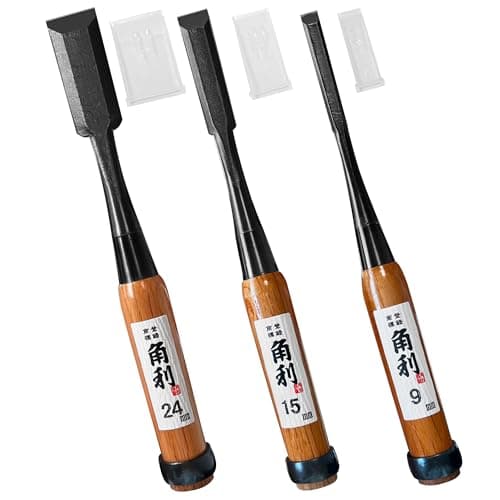
Laminated hard steel over soft iron, hollow-ground backs, hooped handles, made in Japan, at a price where the western equivalents are still using chrome-vanadium.
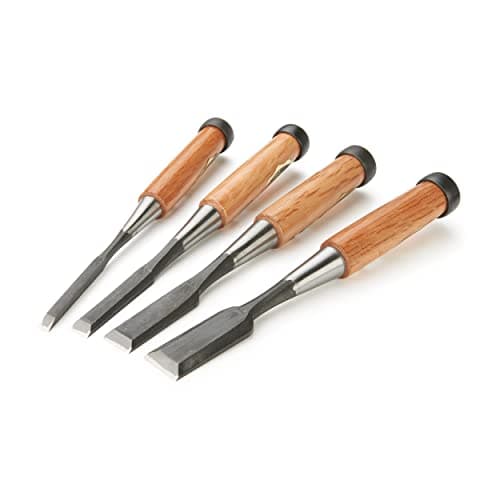
Hand-forged in Miki by one smith rather than pressed out in a factory, in the four widths that cover most joinery. On western retail there is nothing between the three-piece KAKURI sets and this, and the gap is what the forge costs.
A smith-forged Japanese set rather than a factory one
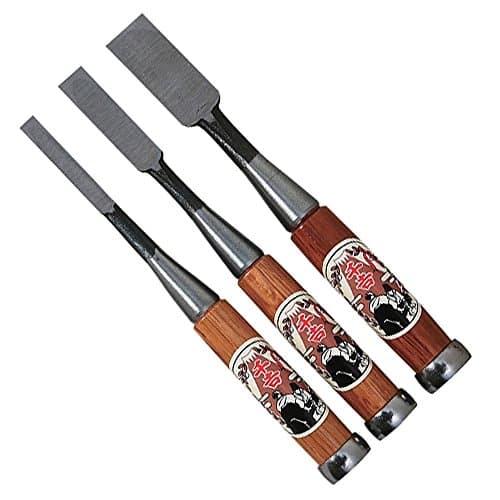
A working Japanese carpentry set rather than a woodworking-catalog one, in three narrow sizes. Less refined than the KAKURI sets and priced accordingly.
A Japanese-market carpentry set at an honest price
#ad· Live prices from the Amazon Product API, as of October 21, 2026. Where we have no verified live price we show none, and the cost-per-decade figure is suppressed with it — we would rather leave a gap than print a number that has rotted.
A Japanese bench chisel — oire nomi— is a genuinely different object from a western one, not a stylistic variation. Understanding the difference is most of deciding whether you want one.
What laminated construction actually is
A western chisel is a single piece of steel, hardened throughout. A Japanese chisel is two steels forge-welded together: a very hard, high-carbon cutting layer (hagane) laminated onto a soft, tough iron body (jigane).
That construction solves a real problem. Steel hard enough to take a superb edge is brittle enough to shatter under a mallet. Laminating a thin hard layer onto a soft backing gives you the edge of the hard steel and the shock resistance of the soft one. It is a genuinely elegant answer and it is why these chisels take a keener edge and hold it longer in hardwood than mass-market western chisels do.
The hollow back, which saves you an hour
Japanese chisel backs are ground with a hollow (ura), leaving a narrow flat land around the perimeter. When you lap the back you are only flattening that land, not the whole surface.
The practical effect is large: setting up a Japanese chisel takes a fraction of the time of setting up a western one, because there is far less steel to remove. For anyone who has spent twenty minutes flattening the back of a budget western chisel, this alone is persuasive.
What the box does not tell you
The handle is hooped, and the hoop must be seated before first use. As shipped, the steel ring sits slightly proud of the wooden handle. You are expected to compress the wood down, tap the hoop below the wood surface, and then peen the exposed wood over the ring so it cannot fly off under a mallet.
Almost none of these sets ship with English instructions saying so. A hoop used unseated will work loose, split the handle, or come off in your hand. It is a ten-minute job, it is not optional, and it is the single most common reason a first Japanese chisel goes wrong.
The second thing nobody mentions: do not lever with these.The hard laminate that gives the edge its quality will chip if you twist it in the cut. Japanese bench chisels pare and chop; they are not prybars. Use a mortise chisel for levering waste — see chisel types compared.
An honest note about the selection
This roundup has four entries rather than seven, and that is a finding rather than a gap. The Japanese chisel selection available through mainstream western retail is genuinely thin, and most of it comes from a small number of exporters aiming at the western market rather than from the blacksmiths whose work makes the reputation.
The chisels that made that reputation — individually forged, by named smiths, in sizes and steels chosen per commission — are bought from specialist Japanese retailers, cost considerably more, and are not on this page because we cannot show you a live price for them. If you want those, the specialist importers are the route, and we earn nothing from telling you so.
What is on this page is the honest working tier: real Japanese-made laminated chisels, at prices where western equivalents are still using chrome-vanadium. That is a good place to be.
Every pick, in full
The write-ups
01Best Japanese chisels for the money
Set
3 pieces
Construction
Laminated hagane over jigane
Back
Hollow ground (ura)
Origin
Listing states Made in Japan
KAKURI Japanese Wood Chisel Set, 3 Piece (Oire Nomi)
KAKURI
8.2/10
Laminated hard steel over soft iron, hollow-ground backs, hooped handles, made in Japan, at a price where the western equivalents are still using chrome-vanadium.
Cost per decade
$27.90
Horizon · tier C
20 years — No lifetime warranty; parts purchasable and resharpenable
No warranty terms published for the US market at the date checked. A laminated hagane-over-jigane edge is renewable by sharpening until the hard layer runs out, which on a full-size chisel or plane iron is a working lifetime.
Rebuy risk
Medium
parts listed, resharpenable
Steel & edge
9.0
Back flatness
9.0
Handle
8.0
Sizes covered
6.5
Value
8.5
What it gets right
+Hollow-ground back means lapping touches only a narrow land, so setup is fast
+Laminated edge takes a keener edge than a homogeneous western chisel
+Hooped handles are made to be struck
What it costs you
−The hoop must be seated properly before first use, and the instructions assume you know
−Hard laminate chips if you twist it in the cut
−Three sizes only
Skip this if…
…you lever waste out of mortises. A Japanese bench chisel is a paring and chopping tool, not a prybar, and the hard laminate will tell you so.
Price as of October 21, 2026. Prices move; Amazon's is the one that counts.
#ad · we may earn a commission from this link to KAKURI Japanese Wood Chisel Set, 3 Piece (Oire Nomi)
02A smith-forged Japanese set rather than a factory one
Set
4 pieces — 6, 12, 18, 24 mm
Construction
Hard cutting layer forge-welded to soft iron
Back
Hollow ground (ura)
Origin
Hand forged in Miki, Japan
Ioroi Japanese Bench Chisel Set, 4 Piece (Oire Nomi)
Ioroi
8.1/10
Hand-forged in Miki by one smith rather than pressed out in a factory, in the four widths that cover most joinery. On western retail there is nothing between the three-piece KAKURI sets and this, and the gap is what the forge costs.
Cost per decade
$106.99
Horizon · tier C
20 years — No lifetime warranty; parts purchasable and resharpenable
No warranty terms published for the US market at the date checked. A laminated hagane-over-jigane edge is renewable by sharpening until the hard layer runs out, which on a full-size chisel or plane iron is a working lifetime.
Rebuy risk
Medium
parts listed, resharpenable
Steel & edge
9.5
Back flatness
9.0
Handle
8.5
Sizes covered
7.0
Value
6.5
What it gets right
+Four widths covers ordinary joinery without buying a second set
+Metric widths, which is what Japanese joinery layout actually works in
+Hollow-ground backs, so lapping touches a narrow land and setup is quick
What it costs you
−Roughly four times the entry KAKURI set, for a difference you only feel once you can sharpen well
−No warranty terms published for the US market
−Hoops arrive unseated as they do on every Japanese chisel, and nothing in the box says so
Skip this if…
…you have never sharpened a Japanese chisel. Start with a three-piece set; a hard laminated edge punishes a beginner's technique and this is an expensive place to find that out.
Price as of October 21, 2026. Prices move; Amazon's is the one that counts.
#ad · we may earn a commission from this link to Ioroi Japanese Bench Chisel Set, 4 Piece (Oire Nomi)
03Paring, where the extra handle length does the work
Set
3 pieces
Handle
Long pattern
Construction
Laminated
Origin
Listing states Made in Japan
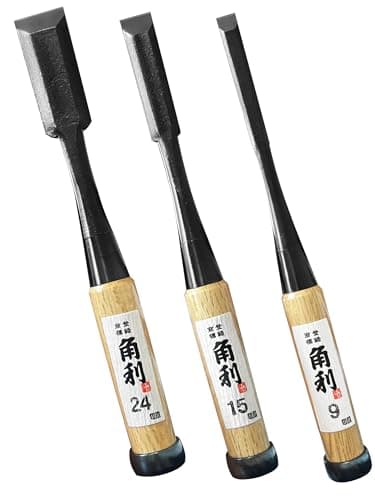
KAKURI Japanese Chisel Set, 3 Piece Long Handle
KAKURI
8.1/10
The same laminated construction with a longer handle, which changes what the tool is for: controlled two-handed paring rather than mallet work.
Cost per decade
$33.90
Horizon · tier C
20 years — No lifetime warranty; parts purchasable and resharpenable
No warranty terms published for the US market at the date checked. A laminated hagane-over-jigane edge is renewable by sharpening until the hard layer runs out, which on a full-size chisel or plane iron is a working lifetime.
Rebuy risk
Medium
parts listed, resharpenable
Steel & edge
9.0
Back flatness
9.0
Handle
8.5
Sizes covered
6.5
Value
7.5
What it gets right
+Length gives genuine two-handed control for paring
+Same laminated edge quality as the standard set
+Reaches into joints a short chisel cannot
What it costs you
−Longer handle is worse for accurate mallet chopping
−Costs more than the standard set for a narrower use case
−Three sizes
Skip this if…
…this is your only Japanese set. Buy the standard-length one first; it is the more general tool.
Price as of October 21, 2026. Prices move; Amazon's is the one that counts.
#ad · we may earn a commission from this link to KAKURI Japanese Chisel Set, 3 Piece Long Handle
04A Japanese-market carpentry set at an honest price
Set
3 pieces
Blade widths
0.39, 0.6, 0.9 in
Type
Carpentry chisel, blade only
Warranty
Not published
Senkichi Carpentry Chisels, Set of 3
Senkichi
7.4/10
A working Japanese carpentry set rather than a woodworking-catalog one, in three narrow sizes. Less refined than the KAKURI sets and priced accordingly.
Cost per decade
$36.28
Horizon · tier C
20 years — No lifetime warranty; parts purchasable and resharpenable
No warranty terms published for the US market at the date checked. A laminated hagane-over-jigane edge is renewable by sharpening until the hard layer runs out, which on a full-size chisel or plane iron is a working lifetime.
Rebuy risk
Medium
parts listed, resharpenable
Steel & edge
8.0
Back flatness
8.0
Handle
7.0
Sizes covered
6.0
Value
8.0
What it gets right
+Three narrow sizes, which is what joinery actually needs
+Priced below the woodworking-catalog Japanese sets
+Straightforward, unpretentious tools
What it costs you
−Documentation for the US market is essentially nonexistent
−Finish is a working finish, not a display one
−No published steel specification
Skip this if…
…you want wide chisels. This set stops well short of the sizes you need for paring a tenon cheek.
Japanese chisels are traditionally sized in bu (roughly 3mm each) and are sold into the western market variously in millimeters and inches. The sizes rarely map neatly onto imperial-planned joinery. Buy on the figure the listing actually gives, and expect a set to land near, not exactly on, the sizes you know.
Sharpening them
The hard laminate wants a stone that can cut it. Waterstones are the traditional answer and they work extremely well; the very hard hagane is slower on a diamond plate than western steel is. The hollow back means you only work the perimeter land, which is quick.
One thing to watch over years: repeatedly lapping the back eventually consumes the hollow near the edge. Traditionally you tap the back out (uradashi) to restore it. That is a real skill and it is decades away for most people, but it is why an old Japanese chisel with no hollow left is a chisel at the end of its life rather than a bargain.
Should you buy Japanese first?
Probably not as your only set. They are less forgiving of misuse, the setup expects knowledge that does not ship in the box, and if you chip one on your first mortise you will conclude the tools are fragile rather than that you used them wrongly.
As a second set, once you can sharpen, they are a genuine step up in edge quality that no amount of money spent on western chisels buys. The comparison in full is on Japanese versus western chisels.
Questions
Frequently asked
Are Japanese chisels better than western chisels?+
They take a keener edge and hold it longer in hardwood, because of the laminated hard-steel construction. They are also less forgiving: the hard layer chips if you twist it, and the hooped handle needs seating before first use. Better at their job, worse at tolerating misuse.
What is oire nomi?+
The standard Japanese bench chisel: a laminated hard-steel edge on a soft iron body, with a hollow-ground back and a hooped handle designed to be struck. The general-purpose chisel of Japanese joinery.
Do I need to do anything before using a Japanese chisel?+
Yes — seat the hoop. Compress the wooden handle, tap the steel ring below the wood surface, and peen the exposed wood over it. An unseated hoop works loose and can come off under a mallet. Almost no set ships with English instructions saying this.
Why is the back of a Japanese chisel hollow?+
So that lapping only touches a narrow land around the perimeter rather than the whole surface. It makes setup dramatically faster than on a flat-backed western chisel. Over decades of sharpening the hollow can be consumed, at which point the chisel is near the end of its life.
Why are there only four Japanese chisel sets in this roundup?+
Because that is roughly what is available through mainstream western retail with a live price. The individually forged chisels that make the reputation are mostly bought from specialist importers and cost considerably more; the Ioroi set here is the one of those we can show a verified price for, and for the rest we cannot — so we say that rather than padding the list.
We have not handled these tools. Nobody here has tested one, owned one, or taken one apart. Specifications come from the manufacturer or the retailer listing; warranty terms come from the maker's own warranty page; the cost-per-decade arithmetic is ours and reproducible. Where we could not verify a figure we say so on the page rather than quietly leaving it out. Read the full method.