We earn a commission when you buy through our Amazon links, at no extra cost to you. It never decides a ranking, and where the best tool in a class is one we earn nothing on, we say so and link it anyway. How this works.
Our top pick
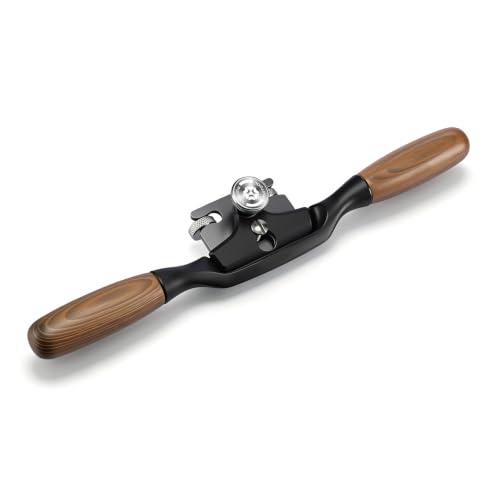
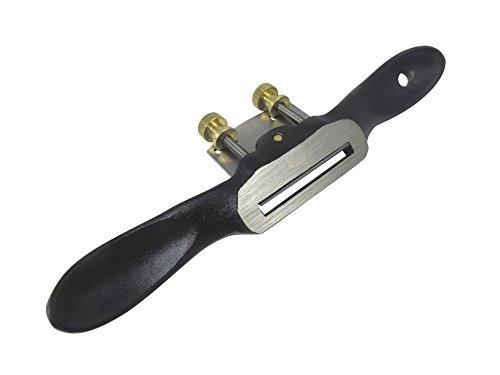
Taytools 469560 Flat Bottom Spokeshave
The only spokeshave here that publishes how hard its blade is
A 2 in high-carbon blade at RC 55-60, fine adjusters on both sides of the cut, and a 9-1/2 in frame. It is the one flat-bottom shave in this field whose maker publishes the number that decides how long an edge lasts.
The only spokeshave here that publishes how hard its blade is
The only spokeshave on this page whose listing publishes blade thickness AND body material: a 3 mm 65Mn blade at HRC 56-64 in a ductile iron body. A 3 mm blade is the difference between cutting and chattering.
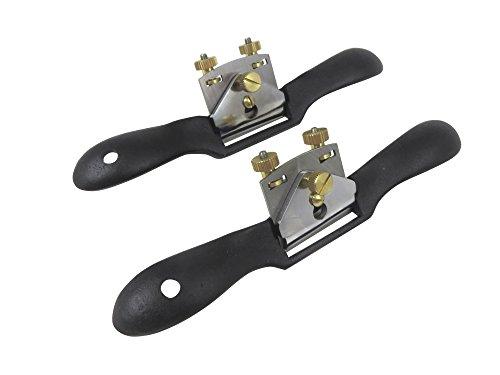
The same 2 in RC 55-60 blade and the same fine adjusters in a curved sole, which is the only way to cut a hollow. Not an upgrade on the flat shave — a different tool that most chair and spoon work eventually needs.
Inside curves, where a flat sole simply cannot reach
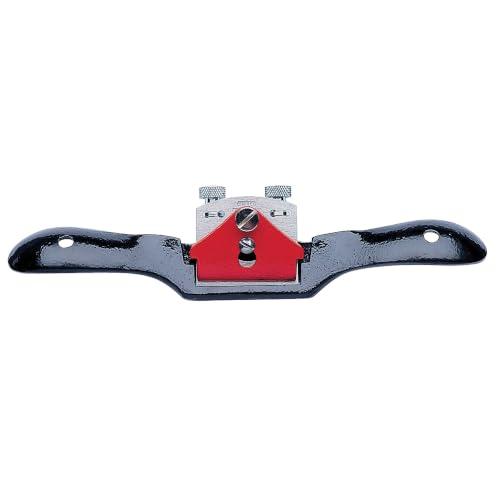
The surviving Stanley flat-base shave, a 2-1/8 in cutter in a roughly 10 in frame, and the only tool in this field carrying a published limited lifetime warranty. Read that warranty closely: it excludes blades, which on this tool is the part that does the work.
The cheapest way into the pattern that defined the tool
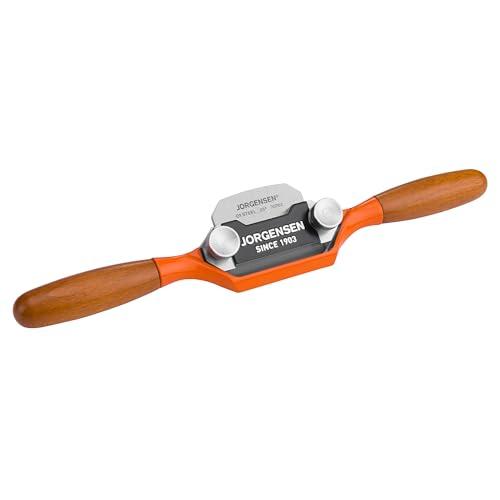
A stainless-bodied flat shave with beech handles from the one maker in this field that publishes a no-receipt limited lifetime warranty. What it does not publish is anything about the blade.
The one with a warranty you can claim without a receipt
The flat and the round-bottom shave together, same 2 in RC 55-60 blades and same fine adjusters. Buying the pair costs less than buying the two singles, which is the entire argument for it.
Both soles in one purchase, for less than buying them separately
#ad· Live prices from the Amazon Product API, as of November 24, 2026. Where we have no verified live price we show none, and the cost-per-decade figure is suppressed with it — we would rather leave a gap than print a number that has rotted.
The verdict: buy the Taytools 469560 flat-bottom spokeshave. It is the only flat shave in this field whose maker publishes the hardness of the blade — a 2 in high-carbon iron at RC 55-60 — and it sets its cut with adjustment screws rather than by tapping the blade with a hammer and hoping. The budget pick is the Stanley 12-951, the cheapest tool here, the widest cutter here at 2-1/8 in, and the only one carrying a published warranty — a warranty that excludes blades, which is the joke this whole page is built around. Prices below are live from the Amazon Product API with the date they were checked.
If you are not sure you need one at all, or you do not know which sole shape your work wants, read what is a spokeshave first. It covers the tool itself, flat versus round soles, and sharpening the short iron. This page assumes you have decided and are choosing between the things you can actually buy.
Why this page is ranked on disclosure rather than on warranties
Every other plane roundup on this site is decided partly by two questions: what does the maker warrant, and can you buy the iron again when this one is used up. On spokeshaves both questions collapse.
A spokeshave is a casting two or three inches long with a handle on each side and one flat blade held down by a cap or a pair of thumbscrews. There is nothing else in it. The casting has no bearing surfaces, no spring, no adjuster rack to strip; left dry in a damp shop it will rust and that is the only thing that can happen to it. So warranty cover on the body is nearly meaningless — the body does not fail.
And not one maker in this field publishes a replacement blade. We checked all six: no part numbers, no spares, nothing. That is worth knowing before you buy anything, and it also means the usual parts-availability criterion cannot separate them, because they are all equally bad at it.
What is left is the blade itself, and that is what this page ranks on, in this order.
Is the steel and its hardness published? A spokeshave blade is a short piece of carbon steel taking an interrupted cut across grain that changes direction under it. If it is soft, it rolls in an afternoon; if it is brittle, it chips on the first knot. Two makers here publish a hardness figure. Three do not publish anything at all.
How thick is the blade? Thickness is what stops the chatter that makes people give up on spokeshaves. The thinner the blade, the more it flexes behind the edge as the cut loads up. Exactly one listing in this field publishes a thickness.
Is the cut set by screws or by hand? On a shave with adjusters you turn two knurled screws and watch the edge come out of the mouth. On one without, you loosen the cap, nudge the blade, tighten, test, repeat. Both work. One of them you will still be doing willingly in five years.
What is the body made of? Ductile iron survives being knocked off a bench; grey cast iron can crack and a stainless casting is generally softer. One maker here says which it used, one says stainless, and the rest are silent.
Sole shape, which is not a ranking at all. A flat sole cannot cut a hollow and a round sole cannot fair a flat. If your work is inside curves, the round-bottom shave is not fifth best, it is the only option on the page.
Flat sole first, round sole when a job demands it
The one decision that matters more than brand: buy a flat-bottom shave first. It handles convex curves, chamfers, straight sections and the rounding-over that is most of what a spokeshave gets used for — chair arms, table edges, tool handles, the outside of a bow limb. A round-bottom shave reaches into concave work a flat sole physically rides straight over: the hollow of a seat, the inside of a curved rail, the waist of a spoon.
Roughly nine jobs in ten are convex or straight, which is why both Taytools soles appear on this page but the flat one is ranked above the round one. If you already know your work is hollow — spoon carving especially — skip straight to the round-bottom pick or the two-piece set, which costs less than the two singles together.
The picks, and what each one is actually for
Taytools 469560, flat bottom. RC 55-60 on a 2 in blade, fine adjustment screws, a 9-1/2 in frame. The hardness figure is the reason it wins: it is in the range where a carbon-steel blade holds an edge without chipping out, and it is published rather than implied. Taylor Toolworks publishes no warranty — its policy is a 90-day return window on unopened goods, which is not a warranty and we do not describe it as one. The body material is not published either, which is a real gap on a tool you will drop.
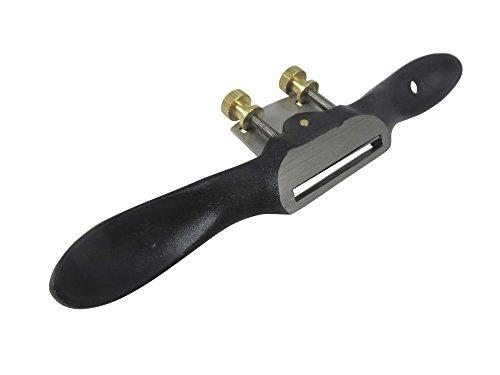
RUITOOL flat. The most disclosed spec sheet here and the cheapest shave that publishes anything: 65Mn steel, HRC 56-64, 3 mm thick, in a ductile iron body with beech handles. The 3 mm figure is the one to notice — it is a genuinely thick blade for this class and thickness is what kills chatter. The catch is that HRC 56-64 is an eight-point range, which describes a tolerance rather than a promise, and there is no catalog, no parts list and no warranty behind the name. You are buying the published numbers and nothing else, and at this price that is a reasonable trade.
Taytools 469577, round bottom. The same blade and the same adjusters in a curved sole. Ranked third because it is a second tool for most people, not because it is worse: for hollow work it is the best thing on this page and nothing above it can do the job at all. Stock on this listing has run thin at past price checks, which is the practical risk with it.
Stanley 12-951. The surviving Stanley flat-base shave, and the pattern every other tool here is a copy of. A 2-1/8 in cutter in a roughly 10 in frame makes it the widest on the page, and it is the cheapest thing here. Stanley publishes a limited lifetime warranty on hand tools — and that warranty explicitly excludes consumables including “any blade”. On a plane that means the casting is covered and the iron is not, which is annoying. On a spokeshave, where the casting is a lump of iron that cannot fail, it means the warranty covers the part that was never going to break and excludes the part that wears. It is still the right buy for someone who wants to find out whether they like the tool before spending more.
Jorgensen No. 59F. A stainless-bodied flat shave with beech handles, and the only tool here from a maker publishing a lifetime warranty you can claim without a receipt. A stainless body genuinely will not rust in a damp shop, which nothing else here can say. What sinks it to fifth is that the listing publishes nothing whatsoever about the blade — no steel, no hardness, no thickness — on a tool that is essentially a blade holder, and that a lifetime warranty excluding normal wear does not cover an edge.
Taytools 469553, the two-piece set. Both soles, the same RC 55-60 blades, the same adjusters, for less than the two singles cost separately at the prices checked. Last on the list for one reason only: most readers do not need the round sole yet, and this is the most money on the page. If you know you need both, it is the cheapest route to both.
What we are not linking, and why
The two spokeshaves most often recommended by people who use them daily are made by Veritas and by Lie-Nielsen, and both companies sell direct rather than through any program we are on. We earn nothing on either and we are not going to quote figures for tools we did not price-check, so there is no card, no link and no spec table for them here. If you have already worn out a cheap shave and know you want the next thing, go and look at both directly — that is the honest advice and it costs us money to give it. The same reasoning, applied to bench planes, is on Lie-Nielsen alternatives and premium plane brands compared.
Whatever you buy, budget an hour for the blade
Every shave on this page arrives with a factory grind, and a factory grind on a 2 in blade is not an edge. The back needs flattening and the bevel needs honing before the tool will take a shaving rather than a scrape — the same job as any plane iron, on a smaller and more awkward piece of steel. The method is in what is a spokeshave, the stones to do it on are ranked on the best sharpening stones, and if you want the angle settled before you start, sharpening angles explained has the chart. A short blade is also the one case where a honing guide earns its money fastest, because there is almost nothing to hold on to by hand.
And keep it dry. A spokeshave is small, it lives in a drawer, and a drawer is where tools rust. A wipe of camellia oil on the blade costs nothing and is covered on the best rust prevention for hand tools. If the shave you have just bought is a rusty secondhand one, the cheap ways to deal with that — and when the expensive bath is worth it — are on Evapo-Rust alternatives.
Every pick, in full
The write-ups
01The only spokeshave here that publishes how hard its blade is
Base
Flat
Blade
2 in wide, high carbon steel, RC 55-60
Adjustment
Fine adjustment screws
Overall length
9-1/2 in
Body material
Not published
Taytools 469560 Flat Bottom Spokeshave
Taytools
8.1/10
A 2 in high-carbon blade at RC 55-60, fine adjusters on both sides of the cut, and a 9-1/2 in frame. It is the one flat-bottom shave in this field whose maker publishes the number that decides how long an edge lasts.
Cost per decade
$16.34
Horizon · tier C
20 years — No lifetime warranty; parts purchasable and resharpenable
No defect warranty and no replacement-blade listing found for this maker at the date checked. What sets the horizon instead is the tool's shape: a spokeshave is a casting and one flat blade, the casting has no consumable in it, and the blade is a plain tanged piece of carbon steel that hones on any stone until there is nothing left to hold — decades of hand work on a 2 in blade. The gap is that if you break or lose the blade, there is no published part number to order.
Rebuy risk
Medium
parts listed, resharpenable
Sole & body
8.0
Iron & edge
8.5
Adjustment
9.0
Out of box
8.0
Parts & repair
6.5
Value
8.5
What it gets right
+Publishes the blade hardness (RC 55-60), which no other maker in this field does
+Fine adjustment screws set the cut without tapping the blade
+A 2 in blade is wide enough for chair legs and table edges, not just small work
What it costs you
−Body material is not published anywhere on the listing
−No replacement blade is listed, so a lost blade is a lost tool
−No warranty terms published
Skip this if…
…the work is hollow — a flat sole cannot follow a concave curve. Buy the round-bottom version for that, or the two-piece set.
02The most-disclosed spec sheet for the least money
Base
Flat
Blade
65Mn steel, HRC 56-64, 3 mm thick
Body
Ductile iron
Handles
Beechwood
Warranty
None published
RUITOOL Flat Spokeshave
RUITOOL
7.9/10
The only spokeshave on this page whose listing publishes blade thickness AND body material: a 3 mm 65Mn blade at HRC 56-64 in a ductile iron body. A 3 mm blade is the difference between cutting and chattering.
Cost per decade
$14.99
Horizon · tier C
20 years — No lifetime warranty; parts purchasable and resharpenable
No defect warranty and no replacement-blade listing found for this maker at the date checked. What sets the horizon instead is the tool's shape: a spokeshave is a casting and one flat blade, the casting has no consumable in it, and the blade is a plain tanged piece of carbon steel that hones on any stone until there is nothing left to hold — decades of hand work on a 2 in blade. The gap is that if you break or lose the blade, there is no published part number to order.
Rebuy risk
Medium
parts listed, resharpenable
Sole & body
8.5
Iron & edge
8.5
Adjustment
8.0
Out of box
7.5
Parts & repair
6.0
Value
9.0
What it gets right
+Publishes blade thickness (3 mm) as well as hardness, which almost nothing in this category does
+Ductile iron rather than grey cast iron, so a drop off the bench is survivable
+Cheapest of the three shaves here that publish any steel specification at all
What it costs you
−HRC 56-64 is an eight-point range, which is a tolerance rather than a promise
−No catalog, no parts listing and no warranty behind the brand
−No replacement blade published, same as the rest of this field
Skip this if…
…you want a maker you can call. There is no service history behind this one; you are buying the published numbers and nothing else.
03Inside curves, where a flat sole simply cannot reach
Base
Round / curved
Blade
2 in wide, high carbon steel, RC 55-60
Adjustment
Fine adjustment screws
Overall length
9-1/2 in
Body material
Not published
Taytools 469577 Round Bottom Spokeshave
Taytools
8.0/10
The same 2 in RC 55-60 blade and the same fine adjusters in a curved sole, which is the only way to cut a hollow. Not an upgrade on the flat shave — a different tool that most chair and spoon work eventually needs.
Cost per decade
$16.34
Horizon · tier C
20 years — No lifetime warranty; parts purchasable and resharpenable
No defect warranty and no replacement-blade listing found for this maker at the date checked. What sets the horizon instead is the tool's shape: a spokeshave is a casting and one flat blade, the casting has no consumable in it, and the blade is a plain tanged piece of carbon steel that hones on any stone until there is nothing left to hold — decades of hand work on a 2 in blade. The gap is that if you break or lose the blade, there is no published part number to order.
Rebuy risk
Medium
parts listed, resharpenable
Sole & body
8.0
Iron & edge
8.5
Adjustment
9.0
Out of box
8.0
Parts & repair
6.5
Value
8.0
What it gets right
+Cuts concave work a flat-soled shave physically cannot follow
+Same published blade hardness as the flat version, RC 55-60
+Fine adjusters, which matter more here because the cut depth changes as the curve tightens
What it costs you
−Useless on flat and convex work, so it is a second tool and not a first one
−Stock has run thin at past price checks
−No published body material and no replacement blade
Skip this if…
…you only own one spokeshave. Buy the flat one first; roughly nine jobs in ten are convex or straight.
04The cheapest way into the pattern that defined the tool
Base
Flat
Cutter width
2-1/8 in (54 mm)
Overall length
Approx 10 in
Adjustment
Not published; no fine adjusters listed
Warranty
Stanley limited lifetime on hand tools, blades excluded
Stanley Spokeshave, Flat Base (12-951)
Stanley
7.5/10
The surviving Stanley flat-base shave, a 2-1/8 in cutter in a roughly 10 in frame, and the only tool in this field carrying a published limited lifetime warranty. Read that warranty closely: it excludes blades, which on this tool is the part that does the work.
Cost per decade
$8.30
Horizon · tier A
30 years — Lifetime warranty, cited
Stanley publishes a limited lifetime warranty on hand tools against material and workmanship defects. Note it excludes consumables including 'any blade' — the casting is covered, the iron is not. Bailey-pattern irons are a standard size and replacements are widely sold.
Rebuy risk
Low
lifetime warranty, parts listed, resharpenable
Sole & body
7.5
Iron & edge
7.0
Adjustment
6.5
Out of box
7.0
Parts & repair
7.5
Value
9.5
What it gets right
+Cheapest tool on this page, and the pattern every other shave here copies
+The widest cutter in the field at 2-1/8 in
+The only one with a published warranty of any kind behind the casting
What it costs you
−The warranty excludes 'any blade', which is the only part of a spokeshave that wears
−No fine adjusters published, so the cut is set by hand and locked down
−Blade hardness is not published, unlike the Taytools and RUITOOL shaves
Skip this if…
…you want to set a fine cut quickly and repeatably. The adjuster-screw shaves on this page are easier to dial in and cost ten dollars more.
05The one with a warranty you can claim without a receipt
Base
Flat
Body
Stainless steel
Handles
Beechwood
Adjustment
Adjustable (listing); mechanism not specified
Blade steel
Not published
Jorgensen No. 59F Flat Spokeshave
Jorgensen
7.7/10
A stainless-bodied flat shave with beech handles from the one maker in this field that publishes a no-receipt limited lifetime warranty. What it does not publish is anything about the blade.
Cost per decade
$11.19
Horizon · tier A
30 years — Lifetime warranty, cited
Pony Jorgensen publishes a limited lifetime warranty against deficiencies in material and workmanship on its products, with no time limit on when the tool was bought and no receipt required; it excludes improper use, abuse, alteration and improper repair. The No. 5 product page lists the O1 iron as a numbered replacement part (#70731), so the wear part is purchasable from the maker rather than only from third parties.
Rebuy risk
Low
lifetime warranty, parts listed, resharpenable
Sole & body
8.0
Iron & edge
6.5
Adjustment
7.5
Out of box
7.5
Parts & repair
8.5
Value
8.0
What it gets right
+Pony Jorgensen publishes a limited lifetime warranty with no receipt required
+A stainless body will not rust in a damp shop, which no other shave here can say
+Beech handles rather than painted or plastic grips
What it costs you
−Publishes nothing at all about the blade: no steel, no hardness, no thickness
−The warranty excludes normal wear, which on a shave is the edge
−Stainless castings are generally softer than iron ones; the listing gives no hardness to check
Skip this if…
…the blade spec is what you are shopping on. Two tools on this page publish theirs and this one does not.
06Both soles in one purchase, for less than buying them separately
Contents
Flat bottom and round bottom spokeshave
Blades
2 in wide, high carbon steel, RC 55-60
Adjustment
Fine adjustment screws
Overall length
9-1/2 in each
Body material
Not published
Taytools 469553 Flat and Round Bottom Spokeshave Set
Taytools
8.2/10
The flat and the round-bottom shave together, same 2 in RC 55-60 blades and same fine adjusters. Buying the pair costs less than buying the two singles, which is the entire argument for it.
Cost per decade
$26.34
Horizon · tier C
20 years — No lifetime warranty; parts purchasable and resharpenable
No defect warranty and no replacement-blade listing found for this maker at the date checked. What sets the horizon instead is the tool's shape: a spokeshave is a casting and one flat blade, the casting has no consumable in it, and the blade is a plain tanged piece of carbon steel that hones on any stone until there is nothing left to hold — decades of hand work on a 2 in blade. The gap is that if you break or lose the blade, there is no published part number to order.
Rebuy risk
Medium
parts listed, resharpenable
Sole & body
8.0
Iron & edge
8.5
Adjustment
9.0
Out of box
8.0
Parts & repair
6.5
Value
9.0
What it gets right
+Covers convex and concave work from one purchase
+Cheaper than the two single shaves bought separately at the prices checked
+Same published blade hardness as the singles
What it costs you
−You are buying a second tool you may never use if your work is all straight and convex
−Stock has been thin at past price checks
−No replacement blades published for either shave
Skip this if…
…you have never used a spokeshave. Buy the flat one, learn to sharpen it, and come back for the round sole when a job actually calls for it.
Price as of November 24, 2026. Prices move; Amazon's is the one that counts.
#ad · we may earn a commission from this link to Taytools 469553 Flat and Round Bottom Spokeshave Set
How
What actually decides it
Buying guide
Buy the sole shape your work needs, then the blade spec. A flat shave cannot cut a hollow at any price, so brand comes second to geometry. Once the sole is decided, pick the one that publishes the most about its steel.
Thick blade over hard blade, if you have to choose. Chatter is what makes people abandon spokeshaves, and chatter is a stiffness problem. A 3 mm blade at a modest hardness will feel better than a thin blade at a high one.
Adjuster screws are worth ten dollars. Setting a shave by tapping the blade works and generations did it, but you will set a spokeshave more often than you set a bench plane, because the depth that suits a tight curve is not the depth that suits a long one.
Do not expect a spare blade. No maker in this field publishes one. Treat the blade as the tool, do not grind it away on a bench grinder, and keep the hollow of your sharpening at the edge rather than removing length.
Two cheap shaves beat one middling one for curved furniture. If you are building chairs, the flat and round pair covers the whole job and still costs less than a single premium tool. If you are rounding over table edges, one flat shave is the entire answer.
Check stock before you plan around a model. Two of the three Taytools listings were showing low stock at the last price check. The prices on this page are live; the availability is not a promise.
Questions
Frequently asked
What is the best spokeshave to buy?+
For general work, the Taytools 469560 flat-bottom shave: a published RC 55-60 blade 2 in wide and fine adjustment screws, which is more than any other flat shave in this field discloses. If the budget is tight, the Stanley 12-951 is the cheapest tool here and has the widest cutter; if your work is hollow, you need a round-bottom sole rather than a better flat one.
Flat or round bottom spokeshave: which should I buy first?+
Flat, unless you already know your work is concave. A flat sole covers convex curves, chamfers and straight sections, which is most spokeshave work; a round sole exists for hollows a flat one cannot reach into at all. Chair and spoon makers usually end up with one of each, and the two-piece set is the cheaper route to that.
Can you buy replacement spokeshave blades?+
Not for any of the six tools on this page. We checked every maker and none publishes a replacement blade or a part number. That is the single biggest gap in this category and it is why the blade spec matters so much at purchase: sharpen carefully, do not grind the length away, and treat the blade as the tool rather than as a consumable.
Why does my spokeshave chatter?+
Usually too much blade projecting, a thin blade flexing behind the edge, or a dull edge being forced. Back the cut off until it takes a fine shaving, make sure the cap is tight, and hone the edge properly — a factory grind is not an edge. Blade thickness is the one spec worth paying for here, and only one listing in this field publishes it.
Is a spokeshave better than a rasp or a card scraper?+
For fairing a curve, yes: it cuts a shaving and leaves a surface, where a rasp leaves scratches to sand out. A rasp is better for shaping fast and for end grain in awkward places, and a scraper is better for the final pass on figured wood. They are a sequence rather than alternatives.
Do spokeshaves work on hardwood?+
Yes, with a sharp blade and a fine cut; oak, ash and maple are what most chair work is made of. Dense tropical hardwoods and anything with reversing grain want a very fine projection and a high-ish honing angle, and that is where a thick blade and a published hardness earn their money.
We have not handled these tools. Nobody here has tested one, owned one, or taken one apart. Specifications come from the manufacturer or the retailer listing; warranty terms come from the maker's own warranty page; the cost-per-decade arithmetic is ours and reproducible. Where we could not verify a figure we say so on the page rather than quietly leaving it out. Read the full method.