We earn a commission when you buy through our Amazon links, at no extra cost to you. It never decides a ranking, and where the best tool in a class is one we earn nothing on, we say so and link it anyway. How this works.
Non-woven abrasive pads that lift rust residue and old grime without cutting into the parent metal the way steel wool and sandpaper do. The right tool between the rust bath and the wax.
The cheapest way to flatten a plane sole: sandpaper on float glass. A grit range this wide covers the whole job from initial flattening to a polished sole.
#ad· Live prices from the Amazon Product API, as of November 24, 2026. Where we have no verified live price we show none, and the cost-per-decade figure is suppressed with it — we would rather leave a gap than print a number that has rotted.
The verdict: for the tool most people are actually holding, buy a packet of 3M Scotch-Brite 7447 pads. Light surface rust on a plane you do not want to dismantle comes off with a maroon pad and a few minutes, with no container, no overnight wait and no flash-rusting afterwards. The budget pick is Bar Keepers Friend, the cheapest thing on this page and the closest chemical substitute you can buy in a supermarket. Prices below are live from the Amazon Product API with the date they were checked.
Before the alternatives: Evapo-Rust is good at what it was designed for, and we rank it first ourselves on the restoration kit. It is a chelating, water-based bath that removes rust by immersion without acid, without scrubbing and without attacking sound metal, paint or japanning, and the bath is reusable until it is spent. Nothing on this page does all of that. What this page argues is that those are four separate properties, almost nobody needs all four at once, and for three of them there is something cheaper, faster or already in the cupboard.
The four things you are buying when you buy a chelating bath
Sort your own job into one of these before you spend anything, because the right substitute is completely different in each case.
Acid-free removal that cannot touch sound metal. A chelating agent binds iron oxide and leaves the parent iron alone. That is the property that matters on a tool with original japanning or a maker’s mark you want to keep.
No scrubbing. You put the parts in and walk away. On a casting with cast-in lettering, webs and corners, that is worth real money in time.
A bath that reaches everywhere. Inside the frog seat, down the adjuster threads, into the mouth. No pad or brush gets into all of it.
Reusability. One container of fluid does several tools before it is exhausted, which changes the cost arithmetic if you are restoring a pile rather than one plane.
Now the alternatives, in the order most readers will want them.
If you wanted acid-free removal and nothing else: electrolysis, for the price of a bucket
This is the honest answer and we make nothing from it. An electrolytic bath — washing soda, water, a sacrificial steel anode and a cheap DC power supply — removes rust by reducing it rather than dissolving the surrounding metal, so it shares the one property people actually buy Evapo-Rust for: it does not attack sound iron. It also reaches everywhere the liquid does, which covers the third property as well, and the solution costs the price of a box of washing soda.
The full setup, the safety rules and why you use washing soda rather than salt are on electrolysis rust removal. The honest cons: it needs a power supply and somewhere to leave a bubbling bucket, it will strip japanning where the current concentrates, and it is the one method on this page that can genuinely be done wrong. If you do not want to run a project, keep reading.
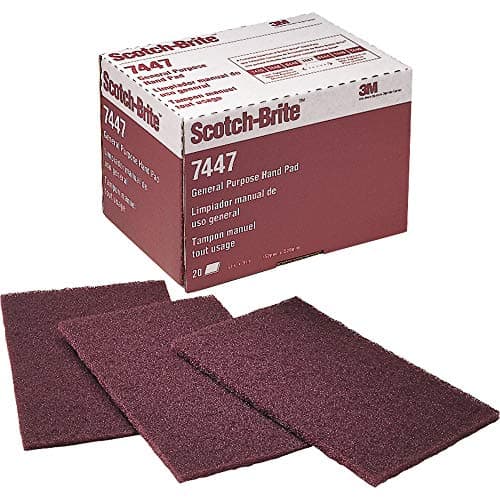
If you wanted the rust off without a bath at all: 3M Scotch-Brite 7447
Non-woven abrasive pads. They lift surface rust and old grime off a casting or a plane iron without cutting into the parent metal the way sandpaper and steel wool do, and without leaving steel fibers behind in the surface to rust later. Used with a little oil as a lubricant they are the fastest route from “rusty flea-market plane” to “tool I can see what I bought”.
This is the pick because of what the typical job actually is. Most rust on most secondhand hand tools is a surface film on the flat, reachable faces — the sole, the sides, the iron, the chisel back, the saw plate. A pad does those in minutes with no disassembly, no container big enough for a No. 7 and no window where freshly stripped steel sits wet and bare.
The cons are real: it is a pure consumable, it will dull japanning if you lean on it, and it cannot reach into threads or the frog seat at all. It is also hand work, so a heavily crusted tool will take you an evening that a bath would have taken overnight unattended.
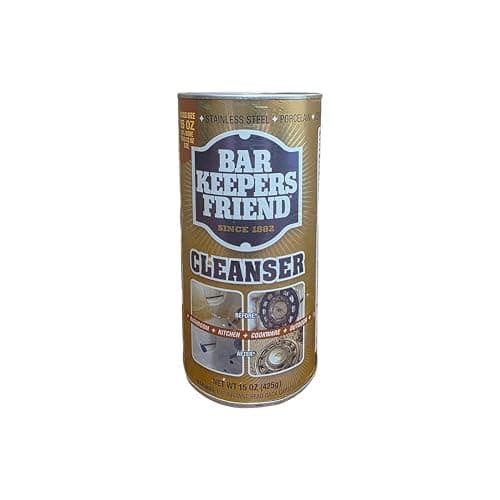
If you wanted a cheap chemical attack: Bar Keepers Friend
Oxalic acid in a mild abrasive powder, sold in every supermarket for a few dollars. Mixed to a paste it takes off light rust and grime in one pass, and it is the only thing here that works chemically for pocket money. As a first pass before any other method it is excellent: it removes everything loose so that whatever comes next only has to deal with what is actually stuck.
It is also the clearest illustration of what Evapo-Rust is selling. Bar Keepers Friend is acidic. Leave it on and it will etch the surface; it must be rinsed and dried immediately or the tool flash-rusts in front of you; and it is mildly abrasive, so it is the wrong product anywhere near japanning you want to keep. That is precisely the trade-off the chelating bath exists to remove, and if your tool has original finish worth saving, pay for the bath.
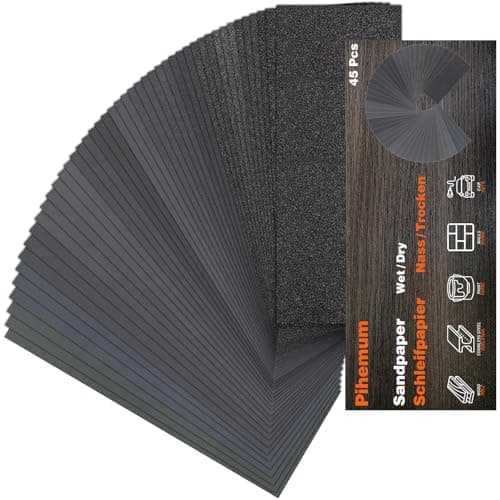
If the rusty surface is a sole or an iron back: wet/dry paper on glass
A bath will take rust off a plane sole and hand you back a clean casting that is still not flat. Abrasive paper on a sheet of float glass takes the rust off and leaves the surface flat, which is the actual goal on a sole, a chisel back or the back of a plane iron — and it is the one thing no chemical method can do at any price.
So on those three surfaces this is not a compromise, it is the correct tool, and a grit assortment running from coarse flattening to a polished finish does the whole job in one purchase. The cons: sole lapping eats sheets fast, you need a genuinely flat reference (a workbench is not one), and it is slow next to a machined lapping plate. It is also wrong everywhere that is not flat, which on a plane is most of it. The method is on how to flatten a plane sole.
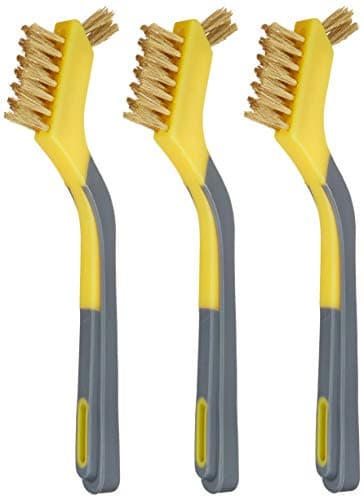
If the rust is in the threads and the frog seat: brass brushes
The one place a bath genuinely beats hand work is the inside of an adjuster thread, and the substitute for the bath there is a brass brush. Brass is softer than cast iron, so it lifts grime and loose oxide out of threads, frog seats and the corners of a casting without scarring anything. Nothing else on this page reaches into those places.
Treat this as the fourth pick rather than a standalone answer: it is a detail tool. The bristles shed and flatten over time, it is useless on large surfaces, and the stainless brush that comes in the set is too aggressive for japanning. Buy it alongside the pads, not instead of them.
When to just buy the Evapo-Rust
Three cases, and they are worth being blunt about because the products above will waste your time in all three.
A tool with original japanning you intend to keep. Every mechanical method on this page is abrasive and every cheap chemical one is acidic. The chelating bath is the only method that is neither.
A pile of rusty tools rather than one. A reusable bath amortizes; pads do not, and your evenings do not either.
Hardware, screws and small parts. Brushing rust out of a dozen slotted screws and a lever cap by hand is a miserable job that immersion does while you sleep.
And one case for nothing at all: pitting. No product here, including Evapo-Rust, puts back metal that is already gone. Judging that before you buy a secondhand tool is the subject of buying used hand tools.
Whatever you use, something has to go on afterwards
Every method on this page, the bath included, leaves bare steel that will flash-rust within hours in a normal shop. Have the protectant on the bench before you start rather than after: camellia oil on irons and saw plates, a waxy film or a conservation wax on the casting. The three protectants in the registry are ranked against each other on the best rust prevention for hand tools, and the removal-then-protection sequence in full is on rust removal and prevention.
Every pick, in full
The write-ups
01Cleaning a casting without eating it
Quantity
20 pads
Size
6 x 9 in
Grade
Maroon, general purpose
Use
Post-rust-removal cleanup
3M Scotch-Brite 7447 Maroon Hand Pads, 20 Pack
3M
8.6/10
Non-woven abrasive pads that lift rust residue and old grime without cutting into the parent metal the way steel wool and sandpaper do. The right tool between the rust bath and the wax.
Cost per decade
$25.57
Horizon · tier D
10 years — No warranty and no parts availability found
This is a consumable, not a tool: it is used up. The horizon is the floor value and the rating below is accurate rather than unkind — you will buy this again, and the cost-per-decade figure is only useful for comparing one consumable against another.
Rebuy risk
High
none of the three met
Effectiveness
8.5
Handling
9.0
Coverage
9.0
Value
8.0
What it gets right
+Cuts residue, not the casting
+No steel fibers left behind to rust in the surface
+Twenty pads is a lifetime supply for a hobbyist
What it costs you
−Pure consumable
−Will dull japanning if you lean on it
−Too coarse for a finished surface
Skip this if…
…you are cleaning a collectible with original finish. Any abrasive is the wrong answer there.
Oxalic acid in a mild abrasive. It takes off the loose surface rust and grime so the rust remover only has to deal with what is actually stuck.
Cost per decade
$5.20
Horizon · tier D
10 years — No warranty and no parts availability found
This is a consumable, not a tool: it is used up. The horizon is the floor value and the rating below is accurate rather than unkind — you will buy this again, and the cost-per-decade figure is only useful for comparing one consumable against another.
Rebuy risk
High
none of the three met
Effectiveness
7.5
Handling
6.5
Coverage
8.0
Value
10.0
What it gets right
+Costs almost nothing and does real work
+Available in any supermarket, unlike specialist products
+Cuts grease and light rust in one pass
What it costs you
−Acidic; leave it on and it will etch
−Must be rinsed and dried immediately or it flash-rusts
−Mildly abrasive, so keep it off japanning
Skip this if…
…the tool has original japanning you want to keep. Any abrasive cleaner is a risk there.
Wet/Dry Sandpaper Assortment, 80 to 5000 Grit, 45 Sheets
Assorted
8.6/10
The cheapest way to flatten a plane sole: sandpaper on float glass. A grit range this wide covers the whole job from initial flattening to a polished sole.
Cost per decade
$7.19
Horizon · tier D
10 years — No warranty and no parts availability found
This is a consumable, not a tool: it is used up. The horizon is the floor value and the rating below is accurate rather than unkind — you will buy this again, and the cost-per-decade figure is only useful for comparing one consumable against another.
Rebuy risk
High
none of the three met
Effectiveness
8.0
Handling
8.0
Coverage
9.0
Value
9.5
What it gets right
+Sole lapping on glass costs a fraction of a dedicated lapping plate
+Grit range covers flattening through polishing in one purchase
+Also does the back of an iron in a pinch
What it costs you
−Consumable, and sole lapping eats sheets fast
−You need a genuinely flat reference; a workbench is not one
−Slow compared with a machined lapping plate
Skip this if…
…you own a large diamond plate. Lap on that instead and skip the mess.
Price as of November 24, 2026. Prices move; Amazon's is the one that counts.
#ad · we may earn a commission from this link to Wet/Dry Sandpaper Assortment, 80 to 5000 Grit, 45 Sheets
04Getting into the frog and the adjuster threads
Quantity
3 brushes
Bristles
Brass, nylon, stainless
Use
Threads, frog seats, corners
Handle
Soft grip
Brass Mini Wire Brushes, Set of 3
Amazon Basics
8.3/10
Brass is softer than the casting, so it lifts grime out of threads and corners without scarring anything. The detail tool of a restoration.
Cost per decade
$5.66
Horizon · tier D
10 years — No warranty and no parts availability found
This is a consumable, not a tool: it is used up. The horizon is the floor value and the rating below is accurate rather than unkind — you will buy this again, and the cost-per-decade figure is only useful for comparing one consumable against another.
Rebuy risk
High
none of the three met
Effectiveness
8.0
Handling
8.5
Coverage
7.0
Value
9.5
What it gets right
+Brass is softer than cast iron, so it cannot scar the tool
+Small enough to clear adjuster threads properly
+Cheap and lasts through many tools
What it costs you
−Brass bristles shed and flatten over time
−Too small for large surfaces
−The stainless brush in the set is too aggressive for japanning
Skip this if…
…the tool is only surface rusted. The rust bath and a pad will do it without detail work.
Match the method to the surface, not to the tool. One plane can want three different answers: paper on glass for the sole, a pad for the sides and the iron, a brass brush for the adjuster threads. Buying one product for a whole plane is the mistake that makes people think the expensive bath was necessary.
Light rust almost never justifies a bath. If the rust wipes to a brown smear under an oiled pad, it is a film. A film is a ten-minute job and the pads are the fastest route through it.
Anything acidic gets rinsed and dried in the same session. That includes Bar Keepers Friend. Walking away from an acid paste on bare cast iron is how a cleaning job becomes a refinishing job.
If you are restoring more than one tool, do the arithmetic. A reusable bath spread over four or five planes costs less per tool than the consumables, and far less than the evenings. One plane is the opposite.
Buy the protectant first. Stripped steel flash-rusts in hours, so the thing that goes on afterwards has to already be in the shop. It is the commonest sequencing mistake in a first restoration.
Questions
Frequently asked
What is a good alternative to Evapo-Rust?+
For light surface rust on a reachable face, 3M Scotch-Brite 7447 pads with a little oil — no container, no overnight wait, no flash-rusting window. For a cheap chemical attack, Bar Keepers Friend. For a tool with original japanning, the honest free alternative is electrolysis, which like Evapo-Rust does not attack sound metal.
Is there a homemade substitute for Evapo-Rust?+
Electrolysis is the one that genuinely substitutes: washing soda, water, a scrap steel anode and a DC power supply. It shares the property people buy Evapo-Rust for, which is that it reduces the oxide rather than dissolving the metal around it. Vinegar and citric acid are often suggested and are a different thing entirely — they are acids, they keep working on sound metal once the rust is gone, and they will etch a sole if you forget them.
Does Bar Keepers Friend remove rust from tools?+
Yes, light rust, and for a few dollars. It is oxalic acid in a mild abrasive, so it is working chemically and mechanically at once. The caveats are the price of that: rinse and dry immediately, keep it away from japanning you want to keep, and do not leave it on a machined surface.
Will any of these damage the japanning on a vintage plane?+
The abrasives will if you lean on them, and the acid cleaner will. Japanning is the one situation where the chelating bath earns its price, because it is neither abrasive nor acidic. If the finish matters to you, buy Evapo-Rust rather than saving money here.
Is Evapo-Rust worth it for one plane?+
Usually not, unless that plane has original japanning or a pile of rusty hardware. The bath’s cost advantage comes from reuse across several tools; for a single tool with surface rust on its flat faces, pads and abrasive paper do the same work for a fraction of the money.
What should I do immediately after removing rust?+
Dry the tool properly and get a protectant on it the same hour. Bare, freshly stripped steel flash-rusts fast. Camellia oil on irons and saw plates because it cannot contaminate a glue joint or a finish; a waxy film or a conservation wax on the casting. All three are compared on the best rust prevention for hand tools.
We have not handled these tools. Nobody here has tested one, owned one, or taken one apart. Specifications come from the manufacturer or the retailer listing; warranty terms come from the maker's own warranty page; the cost-per-decade arithmetic is ours and reproducible. Where we could not verify a figure we say so on the page rather than quietly leaving it out. Read the full method.