Hand Planes
What Is A Spokeshave?
A spokeshave is a plane with a two-inch sole and handles, and that short sole is exactly what lets it follow a curve.
We earn a commission when you buy through our Amazon links, at no extra cost to you. It never decides a ranking, and where the best tool in a class is one we earn nothing on, we say so and link it anyway. How this works.
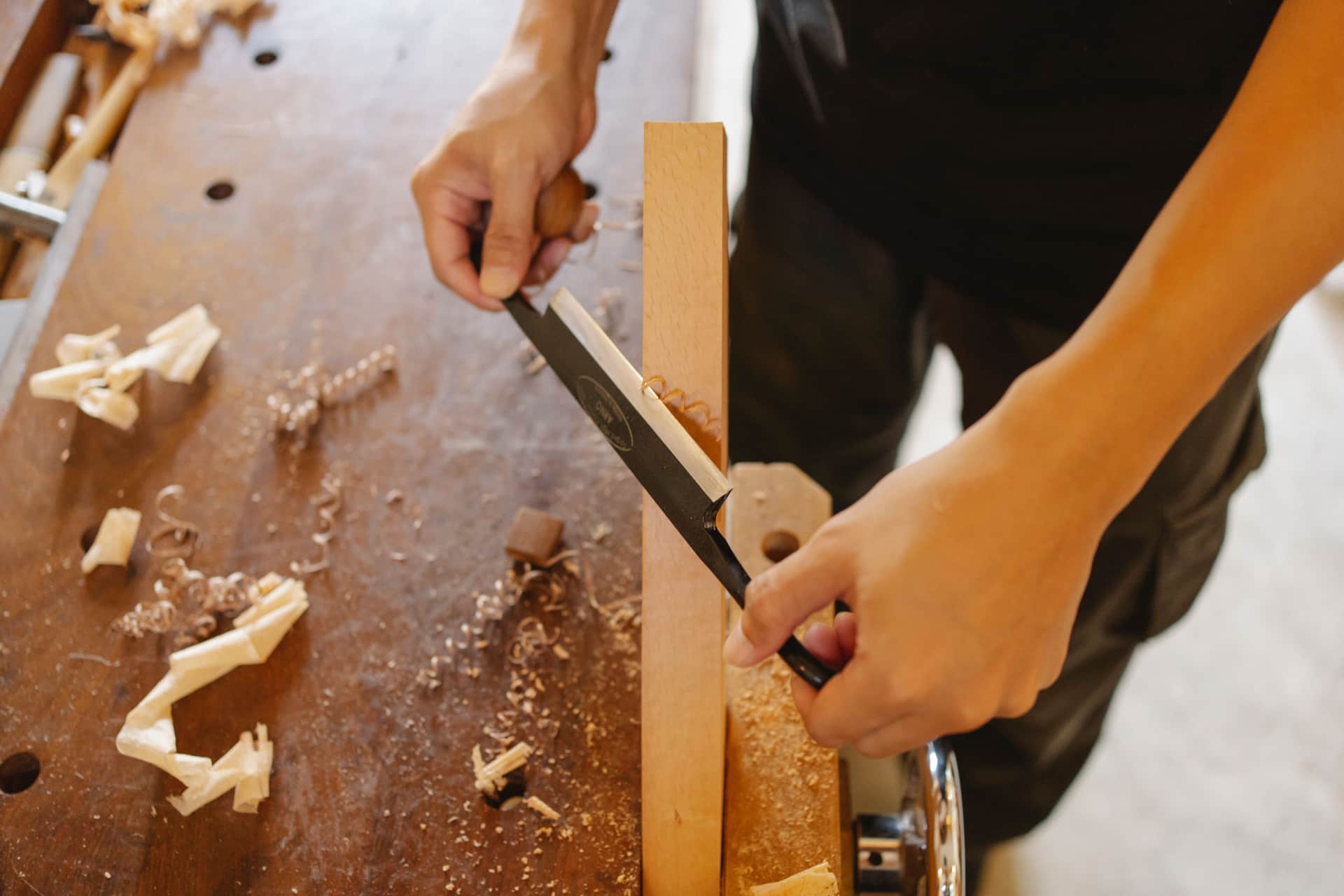
A spokeshave is, at heart, a very short plane with a handle on each side. The iron sits behind a tiny sole — often only an inch or two long — and you hold it in both hands and draw or push it along the work. It got its name from shaping the spokes of wooden wheels, and its whole reason to exist is the job a bench plane cannot do: following and fairing a curve. Where a long flat sole fights a curved surface, a spokeshave's short sole rides right along it.
If you make anything with shaped parts — chair legs and arms, cabriole curves, a shaped tool handle, the fair line of a boat rib, the rounded edge of a tabletop — the spokeshave is the tool that turns a sawn or rasped near-curve into a smooth, continuous one. It is a shaping plane, and it belongs in the same family of dedicated tools mapped out in jack vs smoother vs jointer.
Why the short sole matters
Everything a bench plane does depends on a long sole registering across a surface to make it flat. A spokeshave wants the opposite. Its sole is short precisely so it can followa curve instead of bridging it — a long sole on a convex curve would touch only at one point and skip, and on a concave curve could not reach the bottom at all. The trade is that a spokeshave, like a block plane, cannot flatten anything; it refines the surface it is given. That is not a limitation, it is the design: it is a tool for fairing shapes, not truing faces.
Flat sole versus round sole
The single most important choice when buying or reaching for one is the sole shape, and it maps directly to the kind of curve.
| Sole | Curve it suits | Examples |
|---|---|---|
| Flat sole | Convex (outside) curves and flats | Rounding over an edge, fairing a chair arm, a table edge |
| Round sole | Concave (inside) curves | The hollow of a seat, the inside of a curved rail |
A flat-soled spokeshave is the general-purpose one and the first to own; it handles outside curves and straight sections. A round-soled (or half-round) spokeshave reaches into hollows a flat one rides straight over. Serious curved work often wants one of each, but a flat-soled shave covers the majority of what most people meet.
Low-angle and the bevel-up question
Spokeshaves come in higher-angle (bevel-down, bedded like a bench plane) and low-angle (bevel-up) forms. The low-angle shaves excel on end grain and difficult grainfor the same geometric reason a low-angle block plane does — a shallower attack slices where a steep one tears. On a shaped part the grain direction changes constantly as the curve turns, so tear-out is a constant threat, and the shallower cutting angle helps. The bed-angle logic is exactly the one worked through in bevel up versus bevel down.
Setup and use
Metal spokeshaves set up much like any small plane: seat the iron, set a fine projection, and make sure it is even across the width. Many have two small thumbscrews that adjust each side of the iron independently, which is a quick, precise way to dial in an even, whisper-thin cut — and taking too heavy a shaving is the most common beginner mistake, because a short tool with a lot of iron out grabs and chatters.
In use, the golden rule is the same as any plane: work with the grain, downhill on the curve. Because the grain direction changes as the shape curves, you constantly change direction with it — shaving toward the low points from both sides so you are always cutting downhill and never lifting the fibers. Whether you push or pull is genuinely down to comfort and control: pushing away gives power for stock removal, pulling toward you often gives finer control on the finishing passes. Most people do both on the same part. Read the grain, take a light cut, and change direction the moment it starts to tear.
Sharpening the short iron
The one real fiddle with a spokeshave is that the iron is short— too short to hold comfortably against a stone the way you would a plane iron, and awkward in a standard honing guide. The bevel and the flat back are sharpened by exactly the same logic as any plane iron: flatten the back where it meets the edge, hone the bevel, remove the burr. The technique in how to sharpen a plane iron applies directly. The practical answers to the short iron are to grip it in a small purpose-made holder, clamp it, or hold it against a block for control — and to sharpen it often, because a keen spokeshave iron is the difference between a tool that fairs a curve in minutes and one that chatters and tears.
Metal or wooden spokeshave?
Like planes, spokeshaves come in metal-bodied and wooden-bodied forms, and the choice shapes how the tool behaves. A metal spokeshave has a short sole ahead of the iron and usually an adjustable depth of cut, sometimes with two thumbscrews that set each side of the iron independently. It is the easier one to pick up: you dial in a fine cut and go. A wooden spokeshaveis different in a way that surprises people — the iron has tangs that run down into the body, the sole ahead of the blade is almost nothing, and the effective cutting angle is very low, so it slices with a paring action closer to a knife than a plane. Wooden shaves excel on clean, straight-grained work and green wood; they are set by friction and a tap, with no mechanism to adjust. For a first spokeshave the adjustable metal type is the more forgiving choice, and the wooden one is a rewarding second when you want that low, slicing cut.
Reading grain on a curve
The skill that makes a spokeshave sing is reading grain, and on a curved part the grain direction is a moving target. As the surface curves, the grain runs downhill in one direction on one side of the curve and the opposite direction on the other, so you cannot shave the whole curve in a single sweep without hitting a stretch where you are cutting uphill and tearing. The rule is to always work downhill toward the low point of the curve — shaving from both sides toward the bottom of a hollow, or from the crown down toward each side of a hump — and to change direction the moment the tool starts to tear rather than shave. Take a light cut so a wrong guess costs you a rough patch rather than a gouge, and let the shaving and the sound tell you when you have the direction right.
Common jobs, and how to approach them
A few typical tasks show how the tool is used. Rounding over a straight edge — the simplest introduction — is done with a flat-soled shave, taking the square corner down to a facet and then to a smooth round with progressively lighter passes. Fairing a chair arm or leg means following a long convex curve, working downhill from the high points and checking the line by eye and by running a hand along it. Shaping the hollow of a seat or a concave rail is the job that needs a round-soled shave, which reaches into the curve a flat sole rides over. In every case the spokeshave refines a shape that a saw, drawknife or rasp has roughed out first; it is a finishing tool for curves, not a heavy stock remover.
Fettling and the depth adjusters
A new metal spokeshave, like a new plane, usually benefits from a little setup before it performs. The iron arrives as a ground shape and needs honing to a real edge; the bed the iron sits on may want cleaning or a touch of filing so the blade seats without rocking; and on models with thumbscrew adjusters, learning to balance the two so the cut is even across the width is the difference between a shave that grabs and one that glides. Set the projection fine to begin with — far less than you think you need — because a short-soled tool with too much iron out is grabby and prone to chatter. As with any edge tool, a keen blade and a light setting solve most complaints.
The related shaping tools
It helps to know where the spokeshave sits among its neighbors, because they hand work off to one another. A drawknife removes bulk fast, roughing a curve close to the line before the spokeshave refines it. A travisheris a curved-sole cousin dedicated to scooping out chair seats, doing on a deep hollow what a round-soled shave does on a gentler one. Rasps and files handle shaping where the grain is too wild for any bladed tool. The spokeshave is the one that turns a rough-shaped curve into a fair, finished surface, and it is the most broadly useful of the group — which is why, of all the shaping tools, it is the one most benches keep within reach. Where it fits against the flat-soled planes is the subject of jack vs smoother vs jointer.
Where it fits in a kit
A spokeshave is not a first plane, but it is the first tool you want the moment you make anything curved, and it is inexpensive relative to what it does. A single flat-soled shave plus, later, a round-soled one covers most curved work, and both will still be shaping wood decades from now — there is very little to wear out. If you are building a lasting set of hand tools rather than buying for a single project, it earns its place alongside the other specialists, such as those in shoulder plane vs rabbet plane, and where it sits against the core planes is covered in the best hand planes.
Questions
Frequently asked
What is a spokeshave used for?
Shaping and fairing curves — chair legs and arms, tool handles, curved edges, spokes and boat parts. It is a very short plane with a handle each side, and its short sole lets it follow a curve rather than flatten it. It refines a shape rather than truing a face.
What is the difference between a flat and round spokeshave?
The sole. A flat-soled spokeshave works convex (outside) curves and straight sections and is the general-purpose one to own first; a round-soled shave reaches into concave (inside) curves and hollows that a flat sole cannot follow.
Do you push or pull a spokeshave?
Either — it is down to comfort and control. Pushing away gives power for removing stock; pulling toward you often gives finer control on finishing passes. The rule that matters more is to always cut with the grain, working downhill on the curve.
How do you sharpen a spokeshave blade?
By the same method as any plane iron: flatten the back where it meets the edge, hone the bevel, and remove the burr. The only complication is that the iron is short and awkward to hold, so grip it in a small holder or clamp it, and sharpen it often.
Is a spokeshave hard to use?
Not once you take a light cut and read the grain. The common beginner mistakes are setting the iron to take too thick a shaving, which makes it grab and chatter, and cutting uphill against the grain. A fine, even setting and working downhill on the curve solve most of it.
Keep reading
Related
- Jack vs smoother vs jointerWhere the shaping tools sit alongside the flattening planes.
- How to sharpen a plane ironThe same method that keeps a short spokeshave iron keen.
- The best hand planesThe core planes a spokeshave complements once you shape curves.
- Shoulder plane vs rabbet planeThe other specialists that do what a bench plane cannot.
Back to Hand Planes · how we pick · editorial policy