We earn a commission when you buy through our Amazon links, at no extra cost to you. It never decides a ranking, and where the best tool in a class is one we earn nothing on, we say so and link it anyway. How this works.
Our top pick
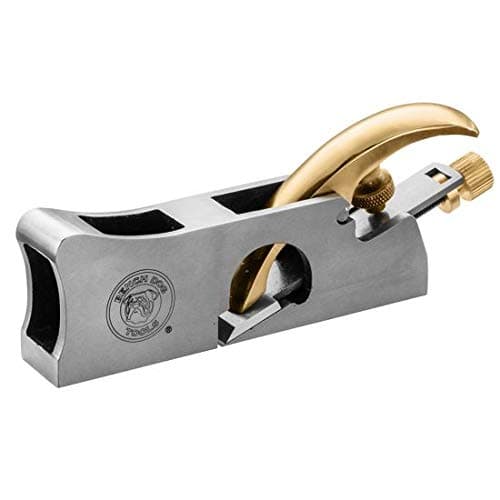
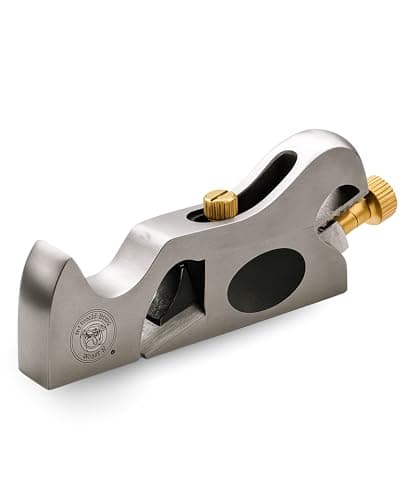
Bench Dog No. 92 Shoulder & Chisel Plane
The plane that arrives with its own measurements and a spare iron on the shelf
Rockler publishes a sole flatness figure, ships a Certificate of Inspection recording that individual plane's flatness and iron hardness, and sells the matching iron for about fifteen dollars. The iron is softer than the WoodRiver's, the whole upper section lifts off to make a chisel plane, and at 1.1 lb it is the one to reach for on small work.
The plane that arrives with its own measurements and a spare iron on the shelf
A 1 in iron in a ductile casting with two removable nose pieces — long for a shoulder plane, short for a bullnose, none for a chisel plane — and a Certificate of Inspection in the box. It is ranked last because of what an independent bench test published about it, not because of what it costs.
The wide convertible, if you check it with a square on arrival
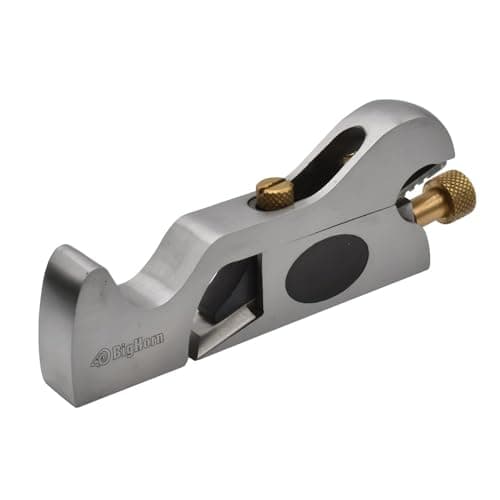
A 3/4 in shoulder plane with an adjustable mouth and a removable upper section for chisel-plane work — the Bench Dog layout, for less money. What you give up is every number: no steel grade, no hardness, no bed angle, no weight and no spare iron published anywhere we looked.
The same architecture as the measured planes, with none of the paperwork
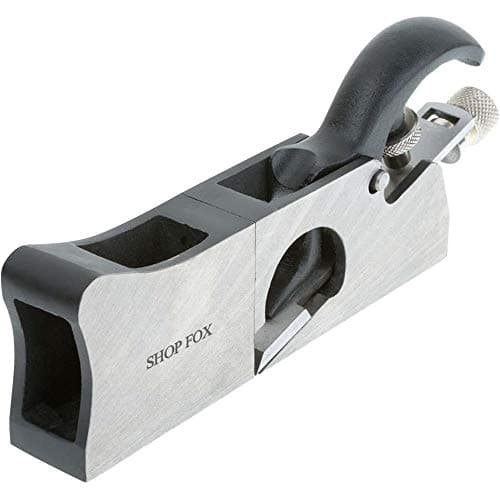
Shoulder plane, bullnose plane and chisel plane in one 6 in body with a 1-3/32 in sole, which puts it in the wide class rather than the 3/4 in one. The iron comes out easily for sharpening and the adjuster is a knurled screw; what the maker will not tell you is what the iron is made of.
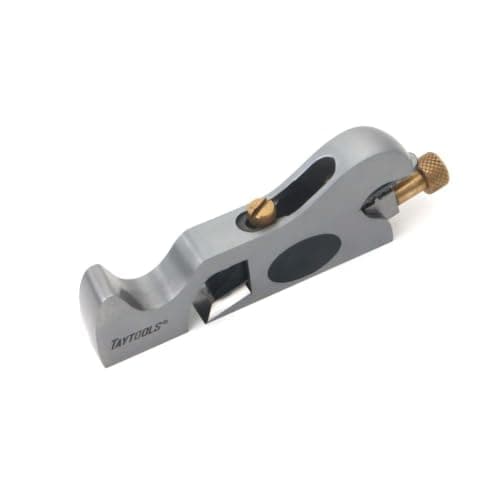
A copy of the Stanley No. 92 that Stanley built from 1902 to 1969, at roughly a third of what the measured planes cost, and Taytools publishes the numbers: a 0.730 in iron, 0.110 in thick, hardened to 55-60 HRc, bedded at 20 degrees in a ductile iron body with the sole and sides ground. They also state in writing that it needs sharpening before use, which is more honest than most listings at any price.
The cheapest shoulder plane that still tells you what it is made of
#ad· Live prices from the Amazon Product API, as of November 22, 2026. Where we have no verified live price we show none, and the cost-per-decade figure is suppressed with it — we would rather leave a gap than print a number that has rotted.
The verdict: buy the Bench Dog No. 92. Rockler publishes the one number that decides this category — the 3/4 in blade is “a hair wider than the full width of the plane body” — plus a 0.002 in sole flatness figure, a hardened carbon steel blade at 55–60 HRC, and a Certificate of Inspection with the measurements for your individual plane. The spare blade is a listed Rockler part. It is for anyone cutting real tenon shoulders and rabbets who wants the joint to come out square. The budget pick is the Taytools No. 92, the cheapest plane here and the only other one whose maker publishes blade width, thickness, hardness and bed angle. Prices below are live, with the date they were checked.
The $200 ceiling matters here because it changes the winner. Our main shoulder plane roundup is anchored on a WoodRiver No. 92 that sits just above this band, and the best shoulder planes under $100 is a three-plane field won by the cheapest of them. Under two hundred you get a different and better answer: a plane with published measurements and a purchasable blade.
The one test a shoulder plane has to pass
A shoulder plane exists to trim the flat cheek and the square shoulder of a joint, working right into an internal corner. That means the cutting edge must reach the full width of the plane body — ideally a touch past it. A blade set even a few thousandths narrow leaves an uncut ridge in the corner, and no amount of sharpening fixes it, because the problem is geometry rather than edge.
So the ranking order below is: blade width against body width, then whether the mouth adjusts, then whether a spare blade exists, then what the maker publishes at all. Mass, length, brass fittings and the box are not criteria. A shoulder plane is a small tool doing one fussy job.
On mouth adjustment: every plane on this page adjusts its mouth the same way — by sliding the upper section forward or back — and on most of them the upper section lifts off completely so the tool becomes a chisel plane that can work into a stopped corner. That second mode is genuinely useful and is the reason a 3-in-1 appears on a shoulder-plane page.
The plane to buy: Bench Dog No. 92
Ductile iron body, sole and the back of the blade precision ground and polished flat, a published 0.002 in sole flatness, a 1/8 in hardened carbon steel blade 4-3/8 in long at a 25-degree bevel, and 1.1 lb in the hand. Rockler states the blade is a hair wider than the body, which is the pass mark. The Certificate of Inspection records the measurements of the plane you receive, and Rockler sells the spare blade as its own item — which on a tool whose blade is ground away by sharpening is the difference between a thirty-year plane and a five-year one.
The marks against it: the warranty is a retailer satisfaction guarantee rather than a lifetime promise on the casting, the blade is plain carbon steel rather than O1 or A2, and at 3/4 in it is a medium shoulder plane, so wide tenon cheeks will want more than one pass. The wider No. 93 class sits over this ceiling and is covered on the main roundup.
The 3-in-1 case, and when it is the better buy
The Bench Dog 3-in-1 converts between shoulder plane, bullnose plane and chisel plane. If your actual problem is a stopped rabbet, a hinge mortise or a dado that dies into a corner, the bullnose and chisel modes reach places a fixed No. 92 cannot, and buying one convertible tool is cheaper than buying two fixed ones. It is the right pick for a cabinetmaker fitting work rather than cutting joints from scratch.
The trade is real: a tool with three configurations has more joints to hold a setting, and a convertible plane is never as rigid as a one-piece casting of the same money. Buy it for reach, not for rigidity. The distinction between these classes is on shoulder plane vs rabbet plane.
The two planes that publish almost nothing
The Big Horn 19566 and the Shop Fox D3752 both do the job and both rank below the Bench Dog planes for the same reason: their sellers publish a 3/4 in blade (Big Horn) or a sole width (Shop Fox) and essentially nothing else. No blade steel, no hardness, no bed angle, no body material, no weight, no warranty. The Big Horn at least states that the sole and the back of the blade are precision-ground and polished flat and that the mouth adjusts; the Shop Fox states that the full-width iron is easy to remove for sharpening and that it converts to a chisel or bullnose plane.
Neither is a bad tool and both are cheaper than the Bench Dog. But on a site that ranks on what makers will put in writing, a plane with no published blade specification cannot outrank one that ships with its own measurement certificate.
The budget pick: Taytools No. 92
The cheapest shoulder plane here and the best-documented cheap one. Taytools publishes a 0.730 in blade width, 0.110 in thickness, hardened tool steel at 55–60 HRc, a 25-degree bevel, a 20-degree bed, a ductile cast iron body with ground soles and sides, a 6-1/2 in length and 19 oz, adjusted by a brass knurled screw. It is explicitly a replica of the Stanley No. 92 produced from 1902 to 1969.
Two honest caveats. Taytools states the blade needs honing before use — assume that as a given, not a defect. And at 0.730 in the blade is narrower than the Bench Dog’s full-width-plus arrangement, so check the corner on a test cut and be prepared to work the blade’s side on a stone if it leaves a ridge. Taytools publishes a 90-day return policy and no product warranty.
What is not on this page
The WoodRiver No. 92 and No. 93 are above the ceiling, as is the Lie-Nielsen and Veritas class, and all of them are discussed on the best shoulder planes. Router planes solve the adjacent problem — a flat-bottomed trench at a repeatable depth rather than a square corner — and those are on the best router planes. If the work is fitting tenons specifically, read how to cut tenons by hand first: a well-sawn cheek needs very little shoulder-plane work, and a badly sawn one cannot be rescued by any plane on this page.
Every pick, in full
The write-ups
01The plane that arrives with its own measurements and a spare iron on the shelf
Blade
3/4 x 4-3/8 in, approx 1/8 in thick, carbon tool steel, 55-60 HRC
Bed / bevel
Beds against the frog at 19 deg; 25 deg bevel
Sole
3/4 x 5-1/4 in ductile iron, flatness published as 0.002 in
Weight
1.1 lb
Converts
Upper section removes for use as a chisel plane
Warranty
None published; 90-day retailer guarantee
Bench Dog No. 92 Shoulder & Chisel Plane
Rockler
8.3/10
Rockler publishes a sole flatness figure, ships a Certificate of Inspection recording that individual plane's flatness and iron hardness, and sells the matching iron for about fifteen dollars. The iron is softer than the WoodRiver's, the whole upper section lifts off to make a chisel plane, and at 1.1 lb it is the one to reach for on small work.
Cost per decade
$78.00
Horizon · tier C
20 years — No lifetime warranty; parts purchasable and resharpenable
No defect warranty published for this plane at the date checked — the retailer publishes a 90-day satisfaction guarantee, which is a returns policy, not a warranty. What sets the horizon instead is that the matching iron is a cataloged item you can buy on its own, which on a shoulder plane is not a given: the iron is sized to that one body and ground a few thousandths wider than the sole, so no generic replacement exists. Body is a ductile iron casting with nothing else in it to consume.
Rebuy risk
Medium
parts listed, resharpenable
Sole & body
9.0
Iron & edge
7.0
Adjustment
9.0
Out of box
8.5
Parts & repair
8.5
Value
7.5
What it gets right
+Ships with a Certificate of Inspection giving the measured sole flatness and iron hardness for that individual plane, which nothing else in this class does
+Rockler lists a spare iron for it at $14.99 at the date checked — the cheapest published replacement part in the class
+Adjustable mouth, and the entire upper section lifts off to convert it into a chisel plane
+Lightest plane here at 1.1 lb, which matters on one-handed trimming of small parts
+Sapele handle rather than plastic, and the iron is ground wider than the body for ridge-free corners
What it costs you
−Iron is plain carbon steel at 55-60 HRC, measurably softer than the WoodRiver's published 60-64 Rc
−No defect warranty published; Rockler's 90 days is a satisfaction guarantee
−The Amazon price has run above Rockler's own list price for this plane, so compare before you buy here
−A bevel-up carbon iron off the shelf needs honing before it will take a shaving
Skip this if…
…you want the hardest iron in the class and do not care about the inspection slip. That is the WoodRiver, and it costs more.
02The wide convertible, if you check it with a square on arrival
Blade
1 in wide, 1/8 in thick, installs bevel up
Bed angle
Beds against the frog at 19 deg
Sole
1 x 6-1/8 in, ductile cast iron
Configurations
Long nose, short nose, or none for chisel-plane work
Weight
2.2 lb
Warranty
None published; 90-day retailer guarantee
Bench Dog 3-in-1 Shoulder, Bullnose & Chisel Plane
Rockler
6.0/10
A 1 in iron in a ductile casting with two removable nose pieces — long for a shoulder plane, short for a bullnose, none for a chisel plane — and a Certificate of Inspection in the box. It is ranked last because of what an independent bench test published about it, not because of what it costs.
Cost per decade
$149.99
Horizon · tier D
10 years — No warranty and no parts availability found
No warranty terms and no replacement iron listed for this plane or this maker at the date checked. On a shoulder plane that matters more than it would on a bench plane, because the iron is not a standard size — it is ground to this body and a few thousandths wider than the sole, so there is no aftermarket to fall back on. Sharpening renews the edge for many years; when the iron is finally gone, the plane is gone with it. The horizon is the floor value and the rating is what that absence means.
Rebuy risk
High
resharpenable
Sole & body
6.0
Iron & edge
6.5
Adjustment
7.0
Out of box
5.0
Parts & repair
5.5
Value
6.0
What it gets right
+Ships with a Certificate of Inspection carrying that plane's own sole flatness and iron hardness figures
+1 in iron, so it works on wide tenon cheeks rather than only on furniture-scale joints
+Three configurations from one body, with a storage case included
+Sapele handles and a ductile casting, not a gray one
What it costs you
−Fine Woodworking's test of Rockler's then-new planes called this one the outlier and listed three faults on the sample: the sides were not square to the sole, the blade was narrower than the body, and the bullnose attachment lacked alignment pins — the first two are the exact things a shoulder plane exists to get right
−Rockler publishes spare irons across the Bench Dog line, including for the No. 92, but we found none listed for this model
−The most expensive of the convertible planes here
−No defect warranty published; the 90-day guarantee is a returns policy
Skip this if…
…you will not check it against a square the day it arrives. On a shoulder plane, sides square to the sole is not finish, it is function.
Price as of November 22, 2026. Prices move; Amazon's is the one that counts.
#ad · we may earn a commission from this link to Bench Dog 3-in-1 Shoulder, Bullnose & Chisel Plane
03The same architecture as the measured planes, with none of the paperwork
Blade
3/4 in, full width of the sole; steel and hardness not published
Bedded angle
Not published
Sole
Precision-ground and polished flat per the listing; tolerance not published
Converts
Upper section removes for use as a chisel plane
Weight
Not published
Warranty
Not published
Big Horn 19566 Shoulder Plane
Big Horn
6.2/10
A 3/4 in shoulder plane with an adjustable mouth and a removable upper section for chisel-plane work — the Bench Dog layout, for less money. What you give up is every number: no steel grade, no hardness, no bed angle, no weight and no spare iron published anywhere we looked.
Cost per decade
$98.75
Horizon · tier D
10 years — No warranty and no parts availability found
No warranty terms and no replacement iron listed for this plane or this maker at the date checked. On a shoulder plane that matters more than it would on a bench plane, because the iron is not a standard size — it is ground to this body and a few thousandths wider than the sole, so there is no aftermarket to fall back on. Sharpening renews the edge for many years; when the iron is finally gone, the plane is gone with it. The horizon is the floor value and the rating is what that absence means.
Rebuy risk
High
resharpenable
Sole & body
7.0
Iron & edge
5.0
Adjustment
8.0
Out of box
6.0
Parts & repair
4.5
Value
6.5
What it gets right
+Adjustable mouth and chisel-plane conversion, the two features that make the Bench Dog worth its money, for less
+Listing states the sole and the back of the iron are precision-ground and polished flat
+Full-width iron, so it cuts into a corner without leaving a ridge
+Widely stocked, so it is easy to buy and easy to send back
What it costs you
−Publishes no steel grade, no hardness, no bed angle, no dimensions and no weight, so there is nothing to rank it on
−No warranty terms found for this plane or this maker
−No replacement iron listed anywhere, and a shoulder-plane iron has no aftermarket
−Costs more than the Taytools, which publishes a complete spec sheet
Skip this if…
…you are buying on documentation. At this money the Taytools publishes everything and the Bench Dog ships a slip measured for your individual plane.
Full width, removable for sharpening; steel and hardness not published
Bed angle
Described as low angle; no figure published
Adjuster
Knurled adjustment screw
Warranty
Not published on the product listing
Shop Fox D3752 Precision 3-in-1 Plane
Woodstock
6.4/10
Shoulder plane, bullnose plane and chisel plane in one 6 in body with a 1-3/32 in sole, which puts it in the wide class rather than the 3/4 in one. The iron comes out easily for sharpening and the adjuster is a knurled screw; what the maker will not tell you is what the iron is made of.
Cost per decade
$89.95
Horizon · tier D
10 years — No warranty and no parts availability found
No warranty terms and no replacement iron listed for this plane or this maker at the date checked. On a shoulder plane that matters more than it would on a bench plane, because the iron is not a standard size — it is ground to this body and a few thousandths wider than the sole, so there is no aftermarket to fall back on. Sharpening renews the edge for many years; when the iron is finally gone, the plane is gone with it. The horizon is the floor value and the rating is what that absence means.
Rebuy risk
High
resharpenable
Sole & body
7.0
Iron & edge
5.0
Adjustment
7.5
Out of box
6.0
Parts & repair
4.5
Value
8.5
What it gets right
+Cheapest way to own all three joinery-plane configurations at once
+1-3/32 in sole is the wide class, so it crosses a tenon cheek the 3/4 in planes cannot in one pass
+The full-width iron is stated to come out easily for sharpening, which on a convertible plane is not a given
+Sold under both the Shop Fox and Woodstock badges, so it is usually in stock somewhere
What it costs you
−No iron steel, hardness, bed angle, body material or weight published — low angle is a claim without a number
−No warranty terms on the listing, and no replacement iron published
−Stock showed only fifteen units with more on the way at the date checked
−Two badges on one tool makes it unclear who you contact when something is wrong
Skip this if…
…you want to know what you are buying before you buy it. Three configurations is a real advantage; three configurations of an unspecified iron is a gamble.
05The cheapest shoulder plane that still tells you what it is made of
Blade
0.730 in wide, 0.110 in thick, hardened tool steel 55-60 HRc, 25 deg bevel
Bedded angle
20 deg
Body
Ductile cast iron, ground soles and sides, brass fittings
Size
6-1/2 in long, 2-1/4 in tall, 19 oz
Adjuster
Solid brass knurled screw
Warranty
None published; 90-day return on unopened packaging
Taytools No. 92 Cabinet Maker's Shoulder Plane
Taytools
7.3/10
A copy of the Stanley No. 92 that Stanley built from 1902 to 1969, at roughly a third of what the measured planes cost, and Taytools publishes the numbers: a 0.730 in iron, 0.110 in thick, hardened to 55-60 HRc, bedded at 20 degrees in a ductile iron body with the sole and sides ground. They also state in writing that it needs sharpening before use, which is more honest than most listings at any price.
Cost per decade
$59.99
Horizon · tier D
10 years — No warranty and no parts availability found
No warranty terms and no replacement iron listed for this plane or this maker at the date checked. On a shoulder plane that matters more than it would on a bench plane, because the iron is not a standard size — it is ground to this body and a few thousandths wider than the sole, so there is no aftermarket to fall back on. Sharpening renews the edge for many years; when the iron is finally gone, the plane is gone with it. The horizon is the floor value and the rating is what that absence means.
Rebuy risk
High
resharpenable
Sole & body
8.0
Iron & edge
7.0
Adjustment
8.0
Out of box
6.0
Parts & repair
5.0
Value
9.5
What it gets right
+Publishes iron width, thickness, hardness, bevel and bed angle — more than two of the pricier planes on this page do
+Ductile cast iron rather than gray, with both the sole and the sides ground, which is the geometry the tool depends on
+Solid brass knurled depth adjuster instead of a stamped lever
+Taytools states plainly that the iron needs sharpening and honing before use, so nothing is oversold
+The cheapest plane here that arrives in a presentation box rather than a blister pack
What it costs you
−No replacement iron published for it, and a shoulder-plane iron is not a standard size — when it is gone the plane is gone
−No warranty, and the 90-day return requires the original unopened packaging, so opening the box to use the plane ends that path
−20 deg bed is the highest here; the 15 deg planes have the edge on end grain
−No sole flatness tolerance published, unlike the two planes above it
Skip this if…
…you expect it to cut out of the box. Taytools says so themselves, and a shoulder plane with a factory grind on it will tear the shoulder you were trying to save.
Check the blade against the body before anything else. The blade must reach the full width of the sole, ideally a hair proud of it. This single fact decides whether the plane can clean an internal corner at all.
Buy the one with a spare blade in the catalog. A shoulder plane blade is short and gets shorter every time you sharpen it. A part number is the difference between a lifetime tool and a consumable.
Medium (3/4 in) is the right first size. A large shoulder plane is more tool than most tenons need and is harder to balance on a narrow cheek. Buy the medium and take two passes.
Hone it before the first cut. Every plane here ships ground, not honed, and at least one maker says so outright. A shoulder plane with a factory edge will crush the corner rather than cut it.
If you only need reach, buy the convertible. For stopped rabbets and hinge mortises the chisel-plane mode is worth more than the extra rigidity of a fixed casting. For cutting joints from scratch, the reverse is true.
Questions
Frequently asked
What is the best shoulder plane under $200?+
The Bench Dog No. 92. Rockler publishes the blade as a hair wider than the plane body — the one specification that decides whether a shoulder plane can clean an internal corner — plus 0.002 in sole flatness, a 55–60 HRC blade, and a spare blade listed as its own part. The budget pick is the Taytools No. 92.
Why does the blade have to be wider than the body?+
Because a shoulder plane works into a corner. If the cutting edge stops short of the side of the plane, it leaves an uncut ridge in that corner on every pass, and no amount of sharpening will remove it. Width against the body is geometry, not edge quality.
Is a 3-in-1 plane as good as a dedicated shoulder plane?+
It reaches further and it is less rigid. If the work is stopped rabbets, hinge mortises and trenches that die into a corner, the chisel-plane and bullnose modes earn their keep. If the work is cutting and fitting tenon cheeks, a one-piece casting of the same money is the better tool.
Do I need a shoulder plane at all?+
Only if you cut joints by hand. A shoulder plane fixes a tenon cheek that is a few thousandths fat and squares a shoulder that is a degree off. If your tenons come off a machine to a repeatable size, it is a tool you will use twice a year.
What size shoulder plane should I buy first?+
The medium, around 3/4 in wide. It balances on a narrow cheek, fits the tenons most furniture actually uses, and takes two passes on anything wider. The large planes are specialists and sit above this price band.
We have not handled these tools. Nobody here has tested one, owned one, or taken one apart. Specifications come from the manufacturer or the retailer listing; warranty terms come from the maker's own warranty page; the cost-per-decade arithmetic is ours and reproducible. Where we could not verify a figure we say so on the page rather than quietly leaving it out. Read the full method.