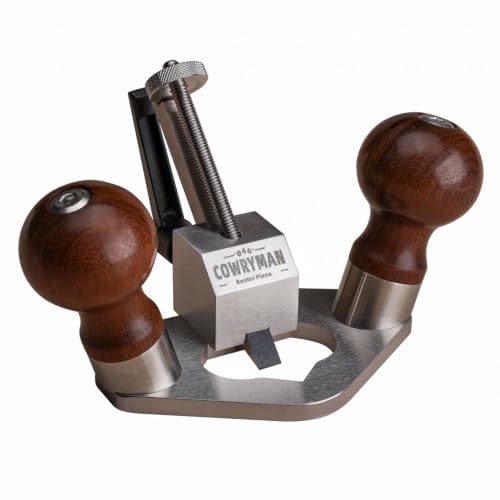
The verdict: buy the Cowryman 040, because it is the only router plane under a hundred dollars whose cutter is published as high-speed steel and whose maker sells replacement cutters as catalog items. That is the right purchase for anyone who intends to own one router plane for the rest of their working life. The budget pick is the Big Horn 19363 mini — a 4 in closed-throat plane with a depth stop, which is the feature that separates a router plane from a chisel held at an angle. Prices below are live from the Amazon Product API with the date they were checked.
This page ranks the same tools as the best router planeson a different question, and gets a different answer. That page asks which router plane is best, and its top two cost roughly three and two times the ceiling here, so neither appears below. This page asks what a hundred dollars buys — and in this band the deciding feature is not the casting at all.
Why the cutter is the whole ranking
A router plane is about as simple as a hand tool gets: a flat base, a post, a clamp and an L-shaped cutter hanging below. Its job is to cut to a depth set by the base rather than by your hand, so a dado floor, a hinge mortise or a tenon cheek comes out at one consistent depth across its whole length and, crucially, at the same depth on the matching part.
Nothing in that description wears out. The base is a casting, the post is a bar, the clamp is a screw. Sharpen the cutter and the tool is new again — right up until the cutter is too short to project, chips badly, or snaps at the brazed joint on the cheaper L-shaped ones.
So on a buy-it-for-life site the only honest question in this band is whether you can buy another cutter. Router plane cutters are not a standard size. They are sized to one maker's post diameter and clamp opening, nobody publishes a cross-reference, and a plane whose cutter has no listed replacement is a tool with an expiry date however good the casting is. Two of the four planes below pass that test and two do not, and the write-ups say which.
The three secondary criteria, in order: what the cutter is made of (HSS holds an edge markedly longer than the 55–60 HRC carbon cutters common at this money); base size, because a router plane works by bridging the cut and referencing the surface either side of it, so a base narrower than your housing cannot do the job at all; and whether there is a depth stop and a fence, which turn repeatable passes and edge-parallel grooves from a jig-building exercise into a setting.
The one to buy: Cowryman 040
An 040-pattern plane with an 8 mm one-piece cutter in high-speed steel. Both halves of that sentence are doing work. HSS is the meaningful word on the spec sheet: it holds an edge markedly longer than the carbon cutters at this price, and it is published rather than implied. One-piece matters because a cheap L-shaped cutter is usually two pieces brazed together, and the braze is where they fail.
Cowryman also lists straight cutters and L-shaped cutters as separate items, which on this page is rarer than it should be and is the reason this ranks first rather than third. The consumable is a catalog part, so the tool is maintainable indefinitely.
The honest costs. Cowryman publishes no base material, no base dimensions, no weight and no hardness figure, and no warranty of any length — so you are buying on one excellent disclosure and silence everywhere else. HSS is harder to hone than carbon steel and wants a diamond plate rather than a soft waterstone, which will glaze. And 8 mm is a narrow cutter: it is a joinery-tuning width, not a tenon-cheek width. If your stones are all soft waterstones, read waterstones vs diamond stones before you buy this one.
The only one that publishes a hardness: Taytools 468334
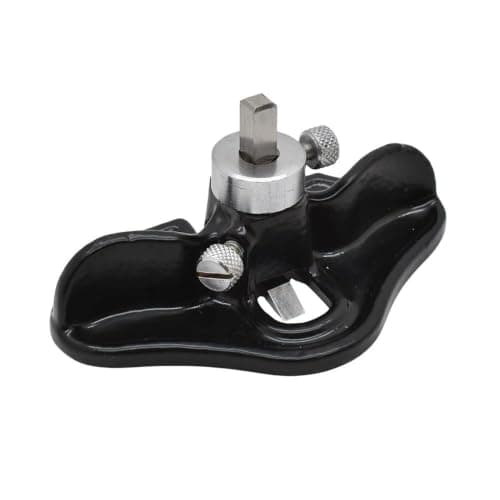
A 1/4 in cutter in a ductile cast iron body on a 4-1/8 by 1-1/4 in base, and the only router plane in this band whose listing states a blade hardness at all: 55–60 HRC. That is not a premium figure. A published figure still beats an implied one, and at this price nothing else here publishes anything.
It also publishes its base dimensions, which sounds dull and is the most practically useful number on the page — you can tell before buying whether the base will bridge your dado. A small base is the right size for hinge mortises and inlay recesses, where a 7 in base simply will not sit down. And Taylor Toolworks sells router plane cutters as their own catalog items, so this plane passes the replacement test too.
Against it: 55–60 HRC is the softest published edge here and will want honing more often than the Cowryman's HSS. A 1/4 in cutter is too narrow to clean a tenon cheek in one pass. Taylor Toolworks publishes a 90-day refund policy and states no product warranty. Stock was in double digits but not deep at the date checked.
The full-size configuration: Big Horn 19344
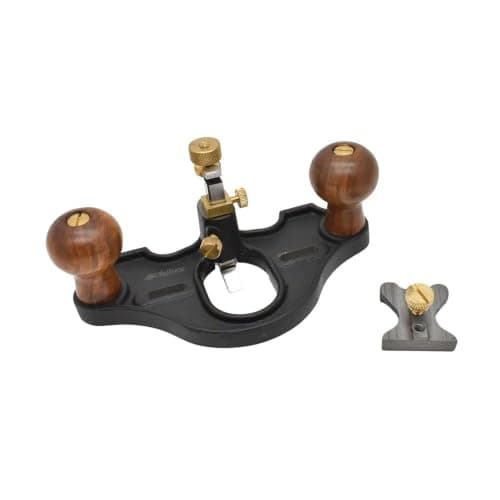
A 7-1/2 in closed-throat plane that ships with both a fence and a frog, which is the full-size Stanley 71 configuration at roughly a third of what the surviving clones of it cost.
The fence is the part worth noticing. Without one, a router plane follows the surface it sits on and nothing else — which is fine for cleaning a housing you have already sawn, and useless for cutting a groove a fixed distance from an edge. The 7-1/2 in base spans a wide housing and keeps the cut flat across it, and the closed throat supports the work on all four sides of the cutter, which is what keeps a dado floor even.
It ranks third rather than first for one reason: no replacement cutter is listed, and no cutter width, base width, weight or steel specification is published either. There is no warranty of any length. A closed throat also hides the cutter at exactly the moment you want to see it meet a stopped line. Big Horn is a house brand and the castings are good value; the documentation behind them is thin, and on this page that costs it two places.
The budget pick: Big Horn 19363 mini
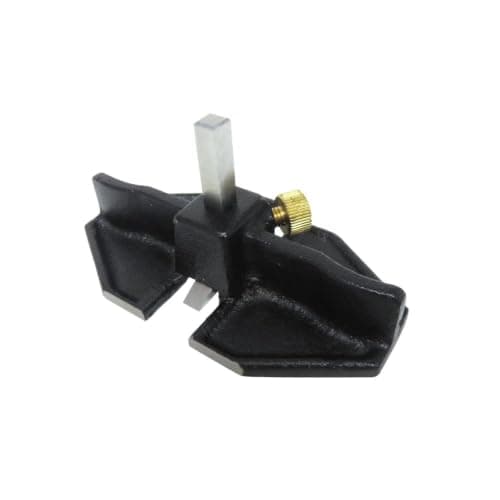
A 4 in closed-throat mini with a depth stop, and the depth stop is the point. It is what lets you creep down to a line in repeatable passes instead of setting a cut and hoping — the difference between a router plane and a chisel held at an angle. Most tools at this price do not have one.
A 4 in base fits inside a hinge mortise and sits on a tenon cheek where a full-size plane overhangs. It is the cheapest thing in the registry that is a router plane rather than a novelty.
Nothing is published beyond length, throat and the depth stop — no cutter width, no steel, no weight — there is no warranty, and no replacement cutter is listed. A 4 in base will rock on any housing wider than itself, which is the whole job on a dado. Expect to lap the base and hone the cutter before first use; at this price that is the deal rather than a defect. If hinge mortises are the job you bought it for, the chisels for the same work are on the best chisels for door hinges.
The purchase that makes any of them permanent
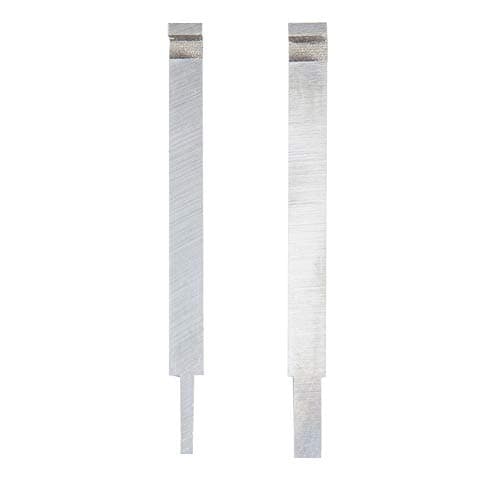
Cowryman's straight cutters, 3 mm and 6 mm, both one-piece HSS. They are on this page because of the argument at the top: a router plane is a casting plus a cutter, the casting does not wear out, and the buy-it-for-life question is whether the cutter can be bought again.
A narrow cutter is also the one you actually want for inlay and for cleaning a small stopped housing, so this is not purely insurance. The caveats are real though: router plane cutters are not a standard size, these are sized to Cowryman's post and clamp and may not fit another maker's plane, and nobody publishes a cross-reference — so measure your post and clamp opening before ordering. They are two narrow widths with no wide cutter in the set, and HSS needs a diamond plate to hone properly.
One plane that is not ranked, and why
The KAKURI 18 mm mini router plane sits in this band and is normally worth a look. At the price check behind this page it came back with no buyable offer — an image, no price. Our rule is that a pick has to be purchasable on the day we publish, so it is named here and not ranked. If it returns, it will appear on the main router plane roundup first.
What a hundred dollars cannot buy
A published sole flatness tolerance, a weight, or in three cases out of four a steel specification. The planes above this band publish those things, and the premium ones also publish a spare cutter range in several widths, which is the real difference rather than the machining.
What a hundred dollars does buy is the function, completely. A router plane is a depth-referencing tool, and a cheap casting with a sharp cutter references depth exactly as well as an expensive one. The tolerance that matters on this tool is the flatness of the base, and that is lappable on a sheet of abrasive in twenty minutes — see how to flatten a plane sole. That is why this is one of the categories where buying at the bottom of the market is a defensible decision rather than a compromise.