Restore & Vintage
The Vintage Plane Brands Worth Buying
Four makers whose castings are still working a century later, and how to tell a good era from a bad one.
We earn a commission when you buy through our Amazon links, at no extra cost to you. It never decides a ranking, and where the best tool in a class is one we earn nothing on, we say so and link it anyway. How this works.
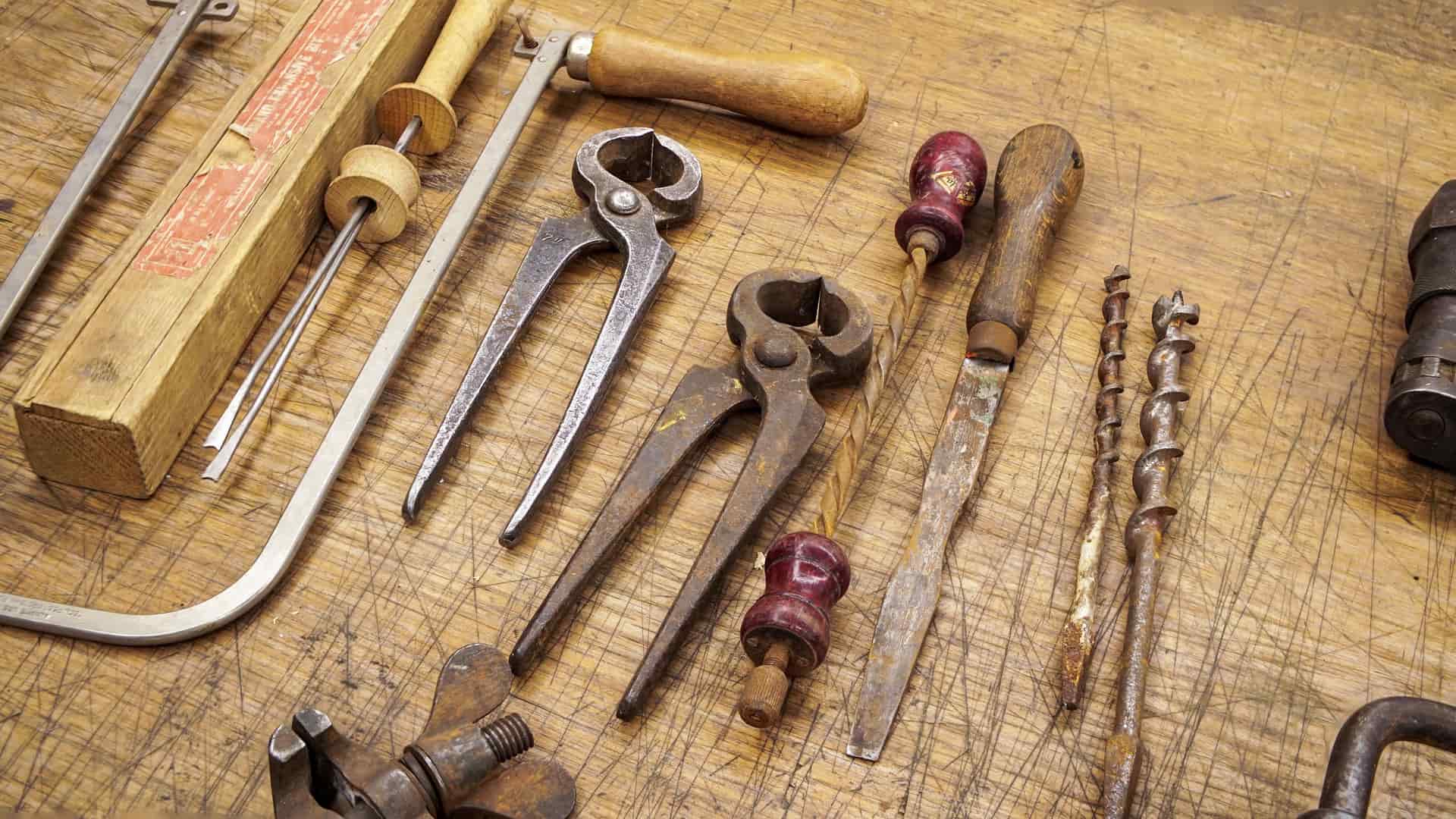
The strongest evidence on this entire site that a hand tool outlives its owner is that planes manufactured between the 1860s and the 1960s remain in ordinary working use, in numbers, today. Not preserved in cabinets — used, in workshops, for work.
Everything else here about durability is an inference from warranty documents and materials. This is an observation, and it is why buying vintage is the cheapest honest route to a lifetime tool.
This page carries no live prices because these tools are bought secondhand rather than from a retailer, and we earn nothing from any of it. The supplies to restore what you find are on the restoration kit.
Stanley
The default, and correctly so. Stanley made bench planes in enormous numbers for a century, the Bailey pattern became the industry standard, and parts interchange across decades of production. That interchangeability is the single most valuable property of a vintage Stanley: a plane assembled from three donors is a normal thing to own.
Quality was not constant across that century, and it is well enough documented that you can date a specific plane from its castings and hardware. Published type studies cover the production runs in detail; how to read one is on the Stanley type study guide.
The broad shape: pre-war production is generally regarded as the best, wartime and immediate post-war production shows material compromises, and later production moved steadily toward cost reduction. That is a generalization with exceptions, and the type study is how you check rather than guess.
Record
The British equivalent, and in the mid-century period a genuinely comparable tool. Record's bench planes follow the Bailey pattern closely enough that most parts knowledge transfers, and their vises are still sought after independently.
More common in the UK and less so in North America, which affects both price and parts availability depending where you are. A Record No. 4 in good condition is the same proposition as a Stanley of the same era.
Millers Falls
The connoisseur's pick. Millers Falls made bench planes to a standard often described as equal to or better than contemporary Stanley, with distinctive red-painted totes on some models and their own numbering system that maps onto the Stanley numbers with an offset.
Because they are less famous, they are frequently cheaper than an equivalent Stanley in the same condition. That makes them the value pick for someone who wants a user rather than a collectible, and the numbering offset is the main thing to learn before shopping for one.
Sargent
A large American maker whose planes are competent, plentiful and cheap, largely because nobody is collecting them. Their own numbering system does not map neatly onto Stanley's and parts are less interchangeable, which is the practical downside.
For a first restoration, that cheapness is a feature: you can learn on a Sargent without worrying about damaging something valuable.
What to be careful with
Unbranded and hardware-store-brand planes. Many were made by the major manufacturers under a store name and are excellent. Many others were cheap castings from the start, and no amount of restoration fixes a plane that was bad when new. Without a maker to research, you are judging on the casting quality in front of you.
Wooden-bodied planes. A different craft with a different skill set. A transitional or wooden plane can be superb, and it demands knowledge of the wooden body that does not transfer from metal planes. Not a first purchase.
Anything sold as “rare”. Collector prices and user prices are two different markets. Paying a collector price for a tool you intend to use and modify is the most common expensive mistake in this whole area.
The one universal check
Whatever the badge says: the casting is the only part that has to be right. Irons, chipbreakers, lever caps, totes and knobs are all replaceable, and irons in particular are a straightforward upgrade. A cracked casting, a broken mouth or a badly ground body is scrap. Everything else is a Saturday. See buying used hand tools.
Questions
Frequently asked
What is the best vintage hand plane brand?
Stanley, for parts interchangeability and documentation. Millers Falls is the value pick — comparable quality, lower prices because it is less collected. Record is the British equivalent and follows the same Bailey pattern.
What years were Stanley planes best?
Pre-war production is generally the most highly regarded, with wartime and later runs showing progressive cost reduction. That is a generalization; published type studies let you date a specific plane rather than guessing. See the Stanley type study guide.
Are Millers Falls planes as good as Stanley?
Often described as equal or better for the same era, and usually cheaper because they are less collected. The main thing to learn is their numbering system, which maps onto Stanley's with an offset.
Should I buy an unbranded vintage plane?
Only if the casting looks good in your hands. Many unbranded planes were made by major manufacturers under store names and are excellent; others were cheap from the start, and restoration does not fix a plane that was bad when new.
Receipts
Sources
- Stanley Tools — Warranty Information (limited lifetime on hand tools; excludes consumables including 'any blade'). Retrieved 2026-07-24.
- Lie-Nielsen Toolworks — Replacement Parts catalog. Retrieved 2026-07-24.
- Amazon listing for Evapo-Rust Heavy Duty Rust Remover, 128 oz — specifications and price basis, retrieved via the Amazon Product API on 2026-07-24 and refreshed on the daily price check.
We have not handled these tools. Nobody here has tested one, owned one, or taken one apart. Specifications come from the manufacturer or the retailer listing; warranty terms come from the maker's own warranty page; the cost-per-decade arithmetic is ours and reproducible. Where we could not verify a figure we say so on the page rather than quietly leaving it out. Read the full method.
Keep reading
Related
- The Stanley type studyHow to date a plane from its castings and hardware.
- Buying used hand toolsWhat to check before money changes hands.
- Vintage vs new planesWhether this route is right for you at all.
- Modern plane brands comparedThe makers still in business, on their published terms.
- Where to buy vintage hand toolsThe cheapest tools are where nobody expects a woodworker to look.
Back to Restore & Vintage · how we pick · editorial policy