Narex chisels are recommended more consistently than anything else in this category, and the recommendation is usually made without distinguishing between three quite different product lines at a fourfold price spread. This page does that, because the lines are not interchangeable and the cheapest one is the right answer more often than the recommendation implies.
A note on what this is first: we have not handled these. It is a comparison of published specifications, grinding quality as described by the sellers, warranty and parts documentation, and the cost-per-decade arithmetic from live prices. Full method on the methodology page.
Are Narex chisels good? The short answer
Yes, and the cheapest line is the one to buy. The published specification is better than anything else at the price, and the one thing Narex will not tell you is what happens if a chisel fails.
The concrete case for them is a set of figures the competition mostly does not print. Narex publishes fine-grained chrome-manganese steel hardened to 59 HRc on the standard line, bevels ground at 25 degrees, blades with well-seated steel tangs, and handles carrying two steel ferrules specifically described as being there to withstand vigorous mallet work. At this money, sets from better-known brands typically publish “hardened steel” and a size list. A stated Rockwell number is a claim a maker can be held to; a phrase is not.
The case against is narrower and worth stating plainly: no published warranty from the manufacturer, metric sizing that irritates anyone working to imperial plans, and a lacquered beech handle on the entry set that is functional rather than lovely. None of those is a cutting problem. Two of them are documentation and taste problems, which is a better class of complaint than most of this category offers.
The three lines on published specifications
| Line | Steel and hardness | Handle | What the money buys |
|---|
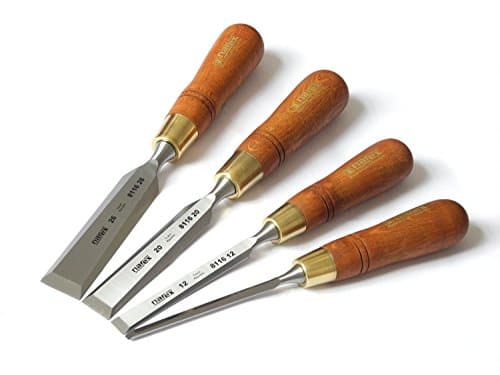
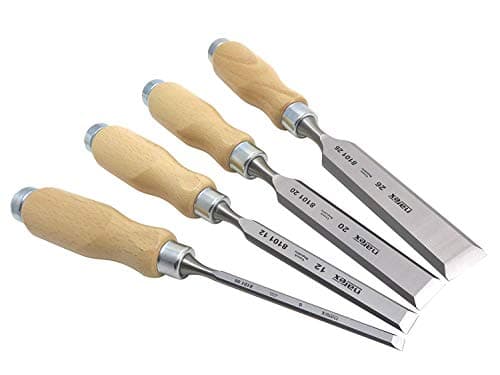
| Classic / Profi bevel edge | Chrome-manganese, 59 HRc | Lacquered European beech, two steel ferrules | The baseline, and the right purchase for most people |
| Czech Steel Premium | Chrome-manganese, 59 HRc — same steel | Hornbeam, denser and better finished | Handles and setup time, not cutting performance |
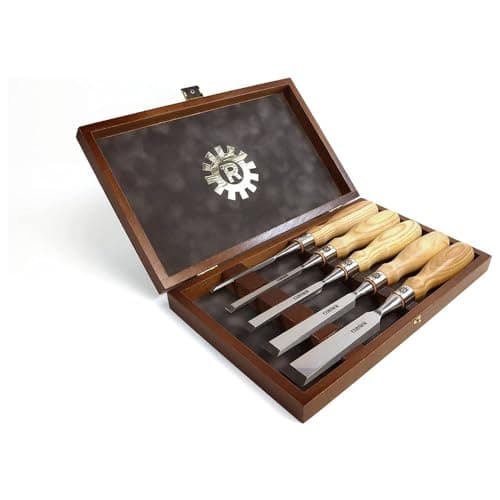
| Richter | Cryogenically treated chrome-vanadium, about 62 HRc | Ash, stainless ferrules | Longer edge life, minimal lapping, slower resharpening |
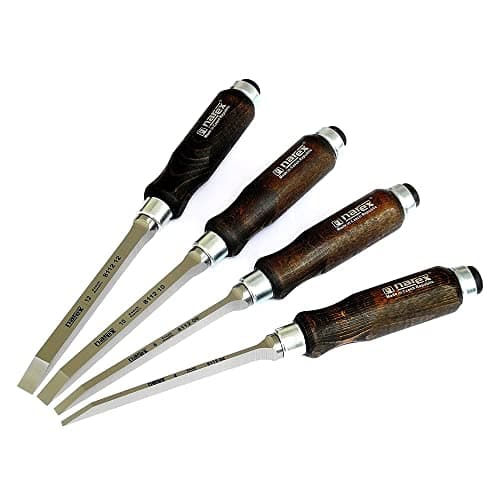
| Mortise (standard and Richter) | 59 HRc standard, 62 HRc Richter | Beech or ash, hooped and ferruled | A different tool, not a different grade |
The row that decides most purchases is the second one. The Premium set and the Classic set are the same steel at the same hardness — the upgrade is hornbeam instead of beech and a closer factory finish. That is a real thing to want and it is not a sharper chisel.
The classic bevel-edge set
Four sizes, Czech chrome-manganese steel, beech handles, and the price at which this whole site's argument about chisels holds up. Hardened properly, backs flat enough that lapping is a job rather than an ordeal, and side lands thin enough for general work.
For most people this is the correct purchase and the other two lines are refinements they will not notice. The money not spent here goes on a stone, which will improve their cutting more than either upgrade would.
The premium hornbeam set
The same steel, better ground, with hornbeam handles instead of beech. Hornbeam is significantly denser and takes decades of mallet work better; the grinding is closer to finished out of the box.
You are buying handles and setup time, not cutting performance. That is a legitimate thing to buy — a handle you enjoy holding gets used more — but it is worth knowing that is what the premium is for. The metric sizing (6, 12, 20, 26 mm) annoys people working to imperial plans.
The Richter line
This is a genuine upgrade rather than a finish upgrade. Cryogenically treated chrome-vanadium hardened to around HRc 62, ground and polished so that first-use lapping is minimal, ash handles with stainless ferrules.
The published hardness figure is the thing worth paying attention to. Most makers in this band publish no hardness at all; a stated HRc means someone measured it. At 62 the edge holds noticeably longer in hardwood than the standard line — and is correspondingly slower to bring back once it does dull, which is the trade harder steel always makes.
Whether four to five times the price is worth an incremental gain depends entirely on how much you sharpen. If you are still learning to sharpen, harder steel punishes poor technique more, not less, and this is the wrong first purchase.
The mortise chisels
A different tool rather than a different grade. Thick, square in section, hooped handles, built to be levered against. If you chop mortises by hand, a bench chisel used the same way will snap and these will not. If you cut mortises with a router or a drill press, these are four beautifully made objects doing nothing.
The thing Narex does not publish
We could find no warranty terms published by Narex itself.A UK specialist retailer states a lifetime guarantee on their range, which is suggestive and is not a manufacturer's document, and a US marketplace listing for one Narex product records “written warranty: no”.
So we rate all Narex chisels tier C rather than tier A, deliberately conservatively. It matters less here than it would elsewhere: a chisel has no consumable part, so what makes it a lifetime tool is that there is nothing on it to wear out. But if you are choosing between makers on published cover, Narex publishes none, and it would be wrong to let a retailer's claim stand in for one.
What the first hour actually looks like
Every Narex chisel arrives ground, not honed, and the 25 degree factory bevel is a starting point rather than a working edge. What varies between the lines is how much lapping the back needs before the tool is accurate, and that is most of what the price difference buys.
On the standard line expect a real session on the backs — flat for the first inch or so behind the edge is the requirement, not flat along the whole blade. On the Richter line expect noticeably less, because the blades arrive ground and polished closer to finished. Neither is a defect; a chisel back is a reference surface and factories charge for flattening it. The procedure is on how to flatten a chisel back, and the bevel angles are charted on sharpening angles explained.
One angle note specific to Narex: the maker recommends a 30 to 35 degree secondary bevel on the Richter line for hard wood. That is the only published angle recommendation we found from Narex, and it exists because a 62 HRc edge is more brittle at the apex than a 59 HRc one. If you buy the harder line and keep chipping edges, that recommendation is the fix.
Who should not buy Narex
Three cases, and the page earns nothing by hiding them.
If a published warranty is the deciding factor for you.Narex publishes none. Some competitors do — and it is worth reading what those warranties actually exclude before treating one as decisive, because on an edge tool the usual exclusions cover the entire tool. The research is on warranties and repairability.
If you cut a lot of tight dovetails.The side lands on the standard line are thicker than a dedicated dovetail chisel's, and they will bruise the pins. That is geometry, not sharpening, and it is what dedicated dovetail chisels exist to fix.
If you have never sharpened anything. Not because Narex is difficult, but because the money is better spent the other way round: a cheaper set plus a stone beats a better set with nothing to sharpen it on. That argument, with the sets that bundle a stone, is on the best budget chisel sets.
Narex against the rest of the shelf
The comparison people actually want is against the known Western brands at similar money, and it comes down to disclosure rather than to steel. Narex publishes a grade family, a hardness, a grind angle and a ferrule count. Most of its direct competitors publish a size list. Where a competitor does publish a hardness — Jorgensen states HRC 60–64 on its budget set — the gap narrows considerably, and that is exactly why we rank on what is disclosed rather than on reputation.
Against the tier above, the honest position is that the ceiling in this category is low. A Narex set sharpened properly does everything a set at four times the price does; what the expensive sets buy is setup time, handle quality and a shorter first hour. The whole field is ranked on the best wood chisels, and the makers side-by-side are on chisel brands compared.