Chisels
Chisel Brands Compared
The brands that keep coming up, what tier each sits in, and which earns its price.
We earn a commission when you buy through our Amazon links, at no extra cost to you. It never decides a ranking, and where the best tool in a class is one we earn nothing on, we say so and link it anyway. How this works.
The short answer
Quick picks
| # | Tool | Best for | Per decade | Score | Price |
|---|---|---|---|---|---|
| 01 | 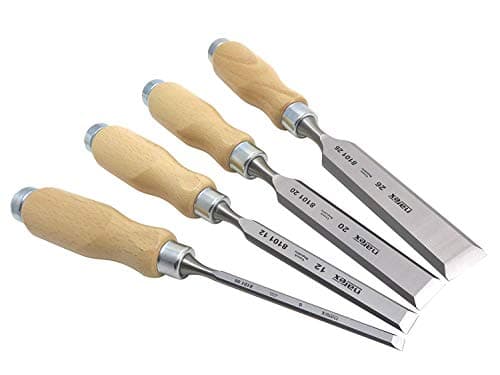 Narex Bevel Edge Chisel Set, 4 Piece The set that makes the case for this whole site. Four sizes, Czech chrome-vanadium hardened properly, beech handles, and a price that leaves budget for the stone you will need anyway. | Best chisels overall, and the end of the argument | $24.50tier C | 8.4/10 | $48.99Amazon |
#ad· Live prices from the Amazon Product API, as of October 16, 2026. Where we have no verified live price we show none, and the cost-per-decade figure is suppressed with it — we would rather leave a gap than print a number that has rotted.
The chisel market sorts fairly cleanly into three price tiers, and the good news for a buy-it-for-life buyer is that all three contain tools worth owning. The differences as you climb are real but incremental — better steel, better fit and finish, less setup out of the box — not the gulf the prices imply. A well-chosen entry-tier chisel, flattened and sharpened, will outlast its owner just as surely as a premium one; what the extra money buys is refinement and time saved, not a fundamentally different result.
What follows are the makers that come up again and again, sorted by tier, using only real, currently sold brands and honest qualitative brackets rather than invented prices. Prices move; the tiers do not.
Entry tier: get cutting for the least money
Narex (Czech-made) is the value benchmark, and it has quietly become the default first recommendation across the hand-tool world. The steel is good chrome-manganese, the blades are well ground, and they take and hold a keen edge with ordinary sharpening; they need their backs flattened like any chisel, but the starting point is honest. We cover them in depth in the Narex chisels review, and they anchor the entry tier for a reason.
Irwin Marples(the blue-handled bench chisels) are the other common entry pick — widely available, tough, and perfectly serviceable for general work, if a step behind Narex on fit and edge-taking. At this tier you are buying a real tool that needs a little setup; you are not buying a compromise you will have to replace.
Mid tier: better steel, better finish, less fuss
This is where a lot of woodworkers happily stop for life. Two Cherries and Kirschen (both the same German maker) offer chrome-vanadium blades with a long reputation for edge holding and clean grinding. Ashley Iles (English, O1 tool steel) are prized for taking a wickedly fine edge and for a slim, land-thinned bevel-edge pattern that suits joinery. Pfeil (Swiss) and Robert Sorby (English) round out the tier with well-finished, dependable blades.
What you get for the step up from entry is consistency: flatter backs from the factory, better-fitted handles, steel that arrives ready to hone rather than needing coaxing, and an edge that lasts a little longer between sharpenings. For most furniture makers, a mid-tier set is the sensible buy-it-once destination.
Premium tier: heirloom fit and finish
Lie-Nielsen (American, A2 or optional O1 steel, sold direct rather than through the usual retailers) and Veritas (Canadian, with a choice of O1, A2 or PM-V11 steel) are the premium Western benchmarks: dead-flat backs out of the box, superb handle fit, and steel matched to how you want the tool to behave. Blue Spruce makes beautifully finished bench and paring chisels aimed squarely at the buyer who wants the best-made tool available.
Be honest with yourself about what the premium tier buys. It is not a better cut — a sharp Narex and a sharp Lie-Nielsen leave the same surface. It is near-zero setup, exceptional balance and finish, steel options you cannot get lower down, and the intangible pleasure of a tool made without compromise. Those are worth real money to some people and nothing to others.
Japanese makers cut across the tiers
Japanese chisels (nomi) do not slot neatly into the Western ladder. They run from inexpensive, perfectly usable blades to the work of named blacksmiths that costs as much as any premium Western chisel, and their whole construction is different — a hard laminated steel edge, a hollow-ground back, and a hooped wooden handle made to be struck. That hard steel takes an exceptional edge but is more brittle, so the technique differs too.
If you are weighing this path, Japanese versus Western chisels lays out the trade-offs, and the best Japanese chisels covers specific makers worth the money.
What the steel differences actually mean
As you climb the tiers the steel changes, and the shorthand is worth knowing. Simple carbon and chrome-manganese steels (entry) sharpen very easily and take a fine edge, but need touching up a bit more often. O1 (Ashley Iles, and as an option higher up) is a classic tool steel that hones to a keen edge and is easy to maintain. A2 (common at premium) holds an edge longer at the cost of being slightly harder to sharpen and a touch less keen. Specialty alloys like PM-V11 push edge retention further still. None of this is magic — chisel steel explainedunpacks what each type trades away, because there is no single “best” steel, only steels that favor edge holding or ease of sharpening.
| Tier | Example brands | What you get | Best for |
|---|---|---|---|
| Entry | Narex, Irwin Marples | Honest steel, decent grinding, some setup needed | A first set; getting cutting for the least money |
| Mid | Two Cherries / Kirschen, Ashley Iles, Pfeil, Robert Sorby | Better steel and finish, flatter backs, longer-lasting edge | The sensible buy-it-once set for most furniture makers |
| Premium | Lie-Nielsen, Veritas, Blue Spruce | Near-zero setup, heirloom fit and finish, steel options | Buyers who want the best-made tool and will keep it for life |
| Japanese | Named nomi makers (varies widely) | Laminated hard-steel edge, different construction and technique | Those drawn to the Japanese approach and edge quality |
Which one earns its price?
For most people the answer is the entry or lower-mid tier, and it is not a compromise. Narex at the bottom and a maker like Ashley Iles or Two Cherries in the middle both give you tools that will cut cleanly and last for decades — the money above them buys refinement and saved setup time, not a better joint. If you are assembling a first set to keep, our best wood chisels guide picks across these tiers with that buy-it-once test in mind.
Spend up when a tool will earn it: if you use chisels daily, the premium tier's ready-to-go backs and edge retention pay you back in time, and if the pleasure of a superb tool matters to you, that is a legitimate reason on its own. Just do not mistake price for capability. The cheapest chisel here, kept sharp, will still be working long after the buyer is gone — which is the only test that really matters for a tool you intend to own once.
One thing the tiers above deliberately do not measure is what each company has actually written down. Sorted that way the order changes sharply — Narex publishes a hardness figure most makers will not, and no warranty terms of its own at all — and the whole shop's worth of makers ranked on published commitment is on the best woodworking tool brands.
Questions
Frequently asked
What is the best chisel brand?
There is no single best — it depends on your budget and how much setup you will tolerate. Narex is the value benchmark, Ashley Iles and Two Cherries are strong mid-tier choices, and Lie-Nielsen, Veritas and Blue Spruce lead the premium end. All of them cut cleanly when sharp; the higher tiers mostly buy finish and saved time.
Are Narex chisels good enough for a beginner?
Yes, and they are the usual first recommendation. The chrome-manganese steel takes and holds a keen edge, the blades are well ground, and they need only the routine back-flattening any chisel does. A beginner is far better served by learning on good, affordable Narex chisels than by overspending early.
Is it worth buying premium chisels like Lie-Nielsen?
Only if you value what they buy. A sharp premium chisel does not cut better than a sharp entry one; what you pay for is dead-flat backs out of the box, longer edge retention, superb finish and steel options. For daily users or people who love fine tools, that is worth it; for occasional work it often is not.
Where are the major chisel brands made?
Narex is Czech, Irwin Marples is widely distributed, Two Cherries and Kirschen are German, Ashley Iles and Robert Sorby are English, Pfeil is Swiss, Lie-Nielsen and Blue Spruce are American, and Veritas is Canadian. Japanese chisels come from a wide range of named makers. Country of origin tracks the tiers loosely but sharpness matters more.
Do more expensive chisels cut better?
No — a sharp cheap chisel and a sharp expensive one leave the same surface. Price buys less setup, longer edge retention between sharpenings, better fit and finish, and steel options, not a fundamentally cleaner cut. Sharpening skill matters more than brand for how well any chisel performs.
Keep reading
Related
- Narex chisels reviewA close look at the value benchmark that anchors the entry tier.
- The best Japanese chiselsThe makers worth the money if the Japanese approach appeals.
- Chisel steel explainedWhat O1, A2 and PM-V11 actually trade away as you climb.
- The best wood chiselsOur picks across these tiers with the buy-it-once test applied.
Back to Chisels · how we pick · editorial policy