We earn a commission when you buy through our Amazon links, at no extra cost to you. It never decides a ranking, and where the best tool in a class is one we earn nothing on, we say so and link it anyway. How this works.
Our top pick
Narex 825802 Hornbeam Mallet, 900 g
Mortising, where mass does the work so technique does not have to
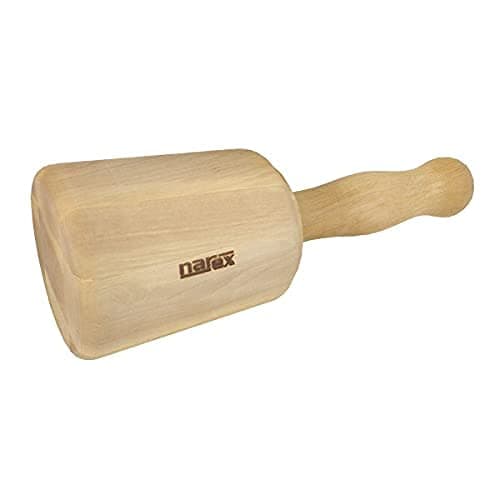
900 g of round-turned hornbeam. Hornbeam rather than beech is the point: it is one of the densest European hardwoods, and it is what mallet heads were made from before beech became the default. At this weight the chisel goes where it is pointed and you stop fighting it.
Mortising, where mass does the work so technique does not have to
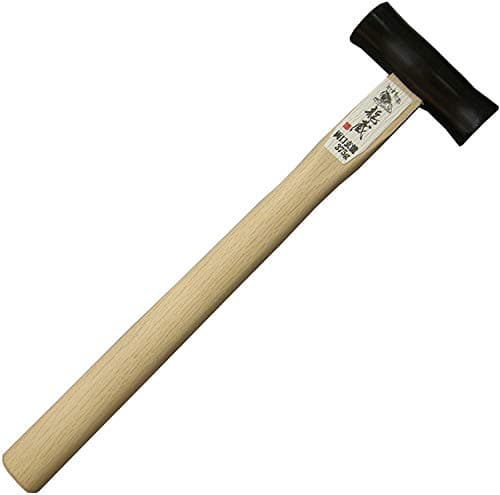
A 375 g bronze-plated Japanese carbon steel head, 29 mm thick, on a natural oak handle, with one flat face and one slightly domed face. If you own hooped Japanese chisels or a wooden plane, this is not a style preference — a genno is the tool those are designed to be struck with, and a wooden mallet does the job badly.
Japanese chisels and setting a kanna, where a wooden mallet is wrong
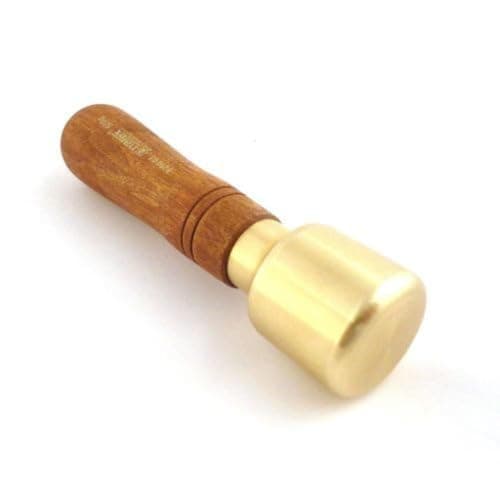
A solid brass striking head 40 mm across and 52 mm long on a stained hornbeam handle, 500 g in 170 mm overall. Brass is the right material for a chisel mallet for an unglamorous reason: it is dense enough to deliver the blow from a short wrist flick, and soft enough not to mushroom a chisel hoop or a ferrule.
Chisel work, where mass in a small head is the whole point
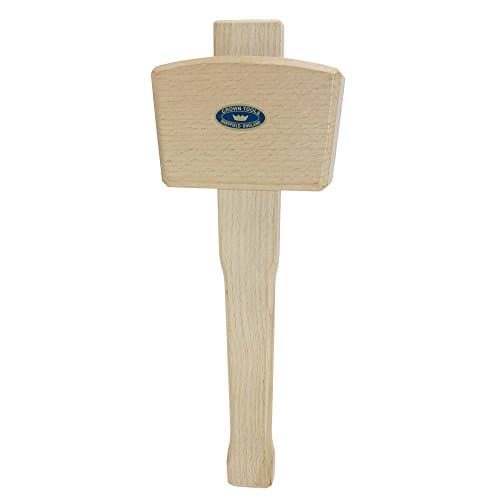
A 4-1/2 in kiln-dried beech head with a 1-7/8 by 2-7/8 in face, 17 oz overall on a 12 in unlacquered handle, made in Sheffield. The angled faces of a joiner's mallet exist so the face meets the chisel square when your arm swings in an arc — the one piece of geometry a round carving mallet gives up.
The traditional joiner's mallet, from a maker who still names the town
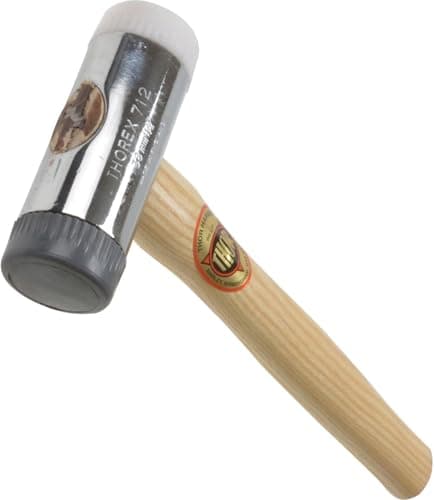
Two screw-in faces, 38 mm across, one soft grey and one hard white, on a chrome-plated zinc head and a wooden handle at 650 g — and the faces are explicitly 'designed to be replaced when worn', with color-coded alternatives in different hardnesses. Every other mallet on this page wears out. This one has a service part.
The only mallet here whose wear part is a published, replaceable component
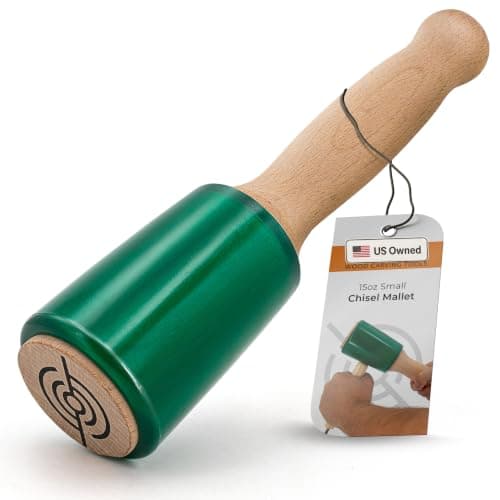
A 15 oz urethane striking head on a wooden handle, sold on the claim that the urethane absorbs punishment to protect your tools and cuts noise. For carving gouges — struck hundreds of times an hour on a small handle — a dead, non-marring face is a genuine functional advantage rather than a nicety.
Gouges and carving tools, where a hard face is the enemy
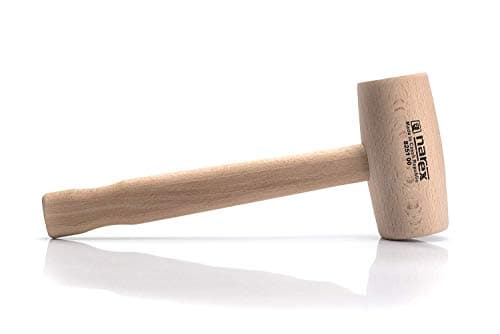
A round unfinished European beech mallet at 300 g, with two details the price does not suggest: the head is cut at a 5 degree angle so it strikes square, and the edges are chamfered so the end grain does not splinter. Narex publishes both across this series. Most mallets at this money publish nothing at all.
The cheapest mallet here that is designed rather than just turned
#ad· Live prices from the Amazon Product API, as of November 22, 2026. Where we have no verified live price we show none, and the cost-per-decade figure is suppressed with it — we would rather leave a gap than print a number that has rotted.
The verdict: buy the Narex 900 g hornbeam mallet if you chop mortises and joinery with Western chisels, which is what most people asking this question are doing. 900 g is genuinely enough mass that the chisel goes where it is pointed, the round-turned hornbeam head means any part of the circumference is a striking face so wear spreads evenly, and hornbeam is denser than the beech used on almost every other wooden mallet. The budget pick is the Narex 300 g beech mallet, the cheapest thing here and the right answer for paring and light tapping. If your chisels are hooped Japanese chisels, skip both and buy the KAKURI genno — that is explained below. Prices are live, with the date they were checked.
This page is ranked differently from the best woodworking mallets, which ranks mallets against each other as tools. Here the question is narrower and more useful: what should hit your chisel? The answer depends almost entirely on how the chisel handle is built, and getting it wrong is the commonest way a good chisel is ruined.
Match the mallet to the chisel handle, not to the job
Hooped Japanese chisels want steel. A Japanese bench or mortise chisel has a steel hoop driven onto the end of the handle precisely so it can be struck with a steel hammer. The hoop spreads the blow into the end grain and is re-seated with a hammer as the handle compresses. Hitting one with a soft wooden mallet is not dangerous, it is just inefficient — the energy goes into the mallet. The traditional tool is a genno, and the maintenance routine for those handles is on how to sharpen Japanese chisels.
Socket and tanged Western chisels want wood or brass. A boxwood, hornbeam or beech handle with a brass ferrule is designed for a broad soft face. A steel hammer concentrates the blow and splits the handle at the ferrule, usually after months rather than minutes, which is why people do not connect the cause to the effect. The difference between the two handle constructions is on socket vs tang chisels.
Moulded plastic handles will take anything. If your chisels are polypropylene-handled site chisels, the mallet question is nearly moot and a dead-blow or urethane head is the comfortable choice rather than the necessary one.
Then, and only then, comes mass. Chopping wants mass; paring wants none. A mortise is cut by a heavy mallet moving slowly, because the mass does the work and your shoulder does not. Paring is done with hand pressure and the occasional tap. Buying one mallet for both is the compromise this page is trying to help you avoid, and if you must, buy around 500 g.
For chopping with Western chisels: Narex 900 g hornbeam
Round-turned hornbeam at 900 g. The weight is the feature: at this mass a mortise chisel advances on every blow and you are not swinging, which is what keeps a mortise wall vertical. Hornbeam is one of the densest European hardwoods and was the traditional mallet timber before beech became the default, so the face wears slowly. Round turning means there is no single worn flat to work around.
Honest cons: it is too heavy for paring and tiring held at arm’s length, Narex publishes no dimensions for the model beyond weight and material, there is no replaceable part, and no warranty is published. Stock was limited at the date checked. If you only chop occasionally, the 300 g beech below is the better buy.
For hooped Japanese chisels: the KAKURI genno
A 375 g Japanese carbon-steel chisel hammer, bronze plated, on a natural oak handle, with one flat face and one slightly domed face. The domed face is for setting the hoop and for adjusting a kanna; the flat face is for the chisel. If you own Japanese chisels this is the correct tool and no wooden mallet substitutes for it — the hoop exists to be struck with steel.
It is also the wrong tool for everything else on your bench. Do not use it on a wooden Western handle. KAKURI publishes no warranty.
The brass option, and the one most carvers buy
The Narex 500 g brass carving mallet is the best general-purpose answer in this list and the reason it is not first is that it is a compromise on purpose. Brass is dense, so 500 g sits in a small head that stays close to the work; the stained hornbeam handle keeps the weight forward. For carving, for dovetail chopping and for tapping a paring chisel it is the tool most people reach for second and keep reaching for.
Against it: brass marks softwood if you miss, it is the most expensive mallet here per gram, and the retailer rather than the maker is the one publishing a guarantee.
The traditional wooden mallet, and the two soft-faced ones
The Crown 106 is a Sheffield-made beech joiner’s mallet at 17 oz — the shape every woodworking book draws. A rectangular head with angled faces strikes square when your arm swings in an arc, which is the entire design argument for the pattern. Crown publishes no warranty and leaves the handle unlacquered, which is correct and means it wants an occasional oil.
The Thor 712R Thorex is the one tool here with a genuinely replaceable wear part: two screw-in nylon faces, one soft grey and one hard white, designed to be replaced when worn, on a chrome-plated zinc head. For a shop that wants one striking tool for chisels, for assembly and for tapping a plane iron, it is the most repairable thing on this page. The Schaaf urethane head is the quiet option — it absorbs the blow and the noise — and the maker’s own page contradicts itself on the weight, which is worth knowing before you order.
The budget pick: Narex 300 g beech
The cheapest mallet here and the right first mallet for anyone whose chisel work is dovetails, paring and fitting rather than mortising. Narex builds the 825 series with a 5-degree angle on the head so it strikes square, chamfered edges so it does not splinter, and unfinished European beech throughout. At 300 g it will not chop a deep mortise in oak — that is what the 900 g version is for — but it will do everything else and it costs less than a single chisel.
If you are assembling a first kit rather than solving one problem, the mallet sits alongside the chisels and the stone on the hand tool starter kit, and the chisel-handling technique that decides how hard you need to hit anything is on how to use a chisel.
Every pick, in full
The write-ups
01Mortising, where mass does the work so technique does not have to
Weight
900 g / 32 oz
Wood
Hornbeam, round turned
Pattern
Heavy duty carving / mortising
Maker
Narex, Czech Republic
Warranty
None published
Narex 825802 Hornbeam Mallet, 900 g
Narex
7.2/10
900 g of round-turned hornbeam. Hornbeam rather than beech is the point: it is one of the densest European hardwoods, and it is what mallet heads were made from before beech became the default. At this weight the chisel goes where it is pointed and you stop fighting it.
Cost per decade
$31.84
Horizon · tier C
20 years — No lifetime warranty; parts purchasable and resharpenable
No warranty published for this mallet at the date checked, and no replacement part exists for it — the head and the handle are the same piece of wood, or are fitted to each other at the factory. The striking face IS the tool, and when it finally mushrooms, splits along the grain or wears below the chamfer, there is nothing to buy. The horizon is honest rather than generous: beech takes a very long time to get there in light chisel work, and almost no time at all if the mallet is used on steel.
Rebuy risk
High
none of the three met
Head & face
8.5
Handle & fit
8.0
Balance
7.0
Parts & repair
5.0
Value
7.5
What it gets right
+900 g is genuinely enough mass to chop a mortise in hardwood without swinging from the shoulder
+Hornbeam is denser and harder-wearing than the beech used on most mallets, including Narex's own cheaper ones
+Round turned, so any part of the circumference is a striking face and wear spreads evenly
+A wide wooden face is safe on wooden chisel handles that a steel hammer would split
What it costs you
−Too heavy for paring or any delicate work, and heavy enough to be tiring held out at arm's length
−Narex publishes no dimensions for this model that we could find — only the weight and the material
−One piece of wood with no replaceable part, the same as every wooden mallet here
−Stock was limited at the date checked
−No warranty published
Skip this if…
…you mostly pare and tap. This is a mortising mallet and it will feel like one every time you pick it up.
02Japanese chisels and setting a kanna, where a wooden mallet is wrong
Head
375 g, Japanese carbon steel, bronze plated, 29 mm thick
Handle
Natural oak
Faces
One flat, one slightly domed
Total weight
16.7 oz
Made in
Japan
KAKURI Japanese Carpenter Hammer (Genno), 375 g
KAKURI
8.3/10
A 375 g bronze-plated Japanese carbon steel head, 29 mm thick, on a natural oak handle, with one flat face and one slightly domed face. If you own hooped Japanese chisels or a wooden plane, this is not a style preference — a genno is the tool those are designed to be struck with, and a wooden mallet does the job badly.
Cost per decade
$18.40
Horizon · tier C
20 years — No lifetime warranty; parts purchasable and resharpenable
No warranty published for this tool at the date checked. The horizon rests on construction instead: the head is forged steel or solid brass with no face to wear through, and the consumable is the wooden handle, which is a shaped stick — replaceable from a hardware store or a scrap of hickory, with no part number required from anybody. On a struck tool that is the strongest position available, because it is the only one that does not depend on a company still existing.
Rebuy risk
High
parts listed
Head & face
9.5
Handle & fit
8.5
Balance
8.5
Parts & repair
7.0
Value
8.0
What it gets right
+Steel head with no face to consume: the one construction here that genuinely does not wear out in normal use
+Two faces with different jobs — the flat one for chisels and plane blades, the domed one for setting a nail below the surface without bruising the wood
+Oak handle is friction-fitted in the Japanese way, so re-handling it is a maintenance task rather than a repair
+375 g is the standard head weight for bench chisel work, and KAKURI publishes head weight, head thickness, total weight and material
+Made in Japan by a named maker with a real spec sheet
What it costs you
−Steel on a wooden chisel handle will destroy it — this is for hooped Japanese chisels, plane adjustment and nails, and nothing else
−No warranty published, and no replacement handle offered as a part
−A 29 mm hammer face is unforgiving of a mis-hit in a way a wide wooden mallet is not
−The bronze plating is cosmetic and will wear off the striking face early, which looks worse than it is
Skip this if…
…all your chisels are Western with wooden handles and no hoops. You would be buying the fastest way to split them.
Price as of November 22, 2026. Prices move; Amazon's is the one that counts.
#ad · we may earn a commission from this link to KAKURI Japanese Carpenter Hammer (Genno), 375 g
03Chisel work, where mass in a small head is the whole point
Head
Solid brass, 40 mm dia x 52 mm
Handle
Stained hornbeam, 118 mm
Overall
170 mm, 500 g
Maker
Narex, Czech Republic
Warranty
None published; retailer guarantee only
Narex 500 g Brass Carving Mallet
Narex
8.3/10
A solid brass striking head 40 mm across and 52 mm long on a stained hornbeam handle, 500 g in 170 mm overall. Brass is the right material for a chisel mallet for an unglamorous reason: it is dense enough to deliver the blow from a short wrist flick, and soft enough not to mushroom a chisel hoop or a ferrule.
Cost per decade
$23.84
Horizon · tier C
20 years — No lifetime warranty; parts purchasable and resharpenable
No warranty published for this tool at the date checked. The horizon rests on construction instead: the head is forged steel or solid brass with no face to wear through, and the consumable is the wooden handle, which is a shaped stick — replaceable from a hardware store or a scrap of hickory, with no part number required from anybody. On a struck tool that is the strongest position available, because it is the only one that does not depend on a company still existing.
Rebuy risk
High
parts listed
Head & face
9.5
Handle & fit
8.0
Balance
9.0
Parts & repair
7.5
Value
7.5
What it gets right
+Solid brass head: no face to wear through, no grain to split, and soft enough that it will not mushroom a chisel hoop
+500 g in 170 mm means the mass is where you want it, so the blow comes from the wrist rather than the shoulder
+Published spec sheet — head diameter, head length, handle length, overall length and weight — which almost no mallet gets
+Short enough to use with a chisel held close to the work, which a 12 in beech mallet is not
+Brass and hornbeam are both renewable in principle: the head can be re-drilled and the handle is a shaped stick
What it costs you
−Brass marks a wooden chisel handle faster than wood does — this is a mallet for hooped or ferruled chisels, not for bare boxwood
−Narex publishes no warranty for it; the guarantees on the retailer page are the retailer's
−The head sits in a blind hole with a safety pin rather than through-wedged, so re-handling it is not the five-minute job it is on a through-fitted mallet
−Dead weight at 500 g gets tiring on a long session, where a lighter wooden mallet is kinder
−One of the more expensive mallets here
Skip this if…
…your chisels have plain wooden handles with no ferrule or hoop. Brass on bare wood is a short conversation that the wood loses.
04The traditional joiner's mallet, from a maker who still names the town
Head
4-1/2 in (114 mm), face 1-7/8 x 2-7/8 in
Weight
17 oz overall
Overall
12 in
Wood
Kiln-dried beech; handle not lacquered
Made in
Sheffield, England
Crown 106 Beechwood Mallet, 4-1/2 in
Crown Hand Tools
7.7/10
A 4-1/2 in kiln-dried beech head with a 1-7/8 by 2-7/8 in face, 17 oz overall on a 12 in unlacquered handle, made in Sheffield. The angled faces of a joiner's mallet exist so the face meets the chisel square when your arm swings in an arc — the one piece of geometry a round carving mallet gives up.
Cost per decade
$12.49
Horizon · tier C
20 years — No lifetime warranty; parts purchasable and resharpenable
No warranty published for this mallet at the date checked, and no replacement part exists for it — the head and the handle are the same piece of wood, or are fitted to each other at the factory. The striking face IS the tool, and when it finally mushrooms, splits along the grain or wears below the chamfer, there is nothing to buy. The horizon is honest rather than generous: beech takes a very long time to get there in light chisel work, and almost no time at all if the mallet is used on steel.
Rebuy risk
High
none of the three met
Head & face
8.0
Handle & fit
8.5
Balance
8.5
Parts & repair
5.0
Value
8.5
What it gets right
+Angled striking faces meet the chisel square at the bottom of an arc, which is the entire reason this shape exists
+Kiln-dried beech is published, not implied — moisture content is what decides whether a mallet head checks in a dry shop
+Unlacquered handle, so it can be sanded and oiled rather than peeling
+Made in Sheffield by a named maker with a published spec sheet
+Wide face is forgiving of a mis-hit in a way a hammer never is, and will not mark a wooden chisel handle
What it costs you
−17 oz overall is light for heavy mortising — this is a bench joinery mallet, not a framing one
−The head is a wear part with no replacement sold: when it mushrooms past the chamfer, the tool is done
−No warranty published
−12 in overall is long for close work on small parts, where a short brass mallet is easier to control
−Beech on a hooped Japanese chisel is the wrong pairing — those want a steel genno
Skip this if…
…you chop deep mortises in oak all day. Buy twice the mass; this mallet will do the job and will wear out doing it.
05The only mallet here whose wear part is a published, replaceable component
Faces
38 mm, screw-in, one soft grey and one hard white
Weight
650 g (1-1/2 lb)
Head
Chrome-plated zinc
Handle
Wood
Spares
Replacement faces published in several color-coded hardnesses
Thor 712R Thorex Soft and Hard Faced Hammer
Thor
8.2/10
Two screw-in faces, 38 mm across, one soft grey and one hard white, on a chrome-plated zinc head and a wooden handle at 650 g — and the faces are explicitly 'designed to be replaced when worn', with color-coded alternatives in different hardnesses. Every other mallet on this page wears out. This one has a service part.
Cost per decade
$19.89
Horizon · tier C
20 years — No lifetime warranty; parts purchasable and resharpenable
No lifetime warranty published for this item at the date checked. The striking face is the wear part; on this pattern it is replaceable, and the head and handle are not consumables.
Rebuy risk
High
parts listed
Head & face
7.5
Handle & fit
8.0
Balance
8.0
Parts & repair
9.5
Value
8.0
What it gets right
+The faces screw in and are sold as replacements, so the part that wears is the part you can buy — the strongest buy-it-for-life position on this page
+Face hardness becomes a choice rather than a fixed property: Thor publishes faces from soft PVC through hard nylon
+Two different faces on one tool, so a non-marring blow and a firm blow do not need two mallets
+Nylon will not mark a finished surface, which matters when tapping a fitted joint home
+Wooden handle, so the second consumable is also replaceable
What it costs you
−The head is chrome-plated zinc, the cheapest material in this group and the one most likely to be damaged by a hard mis-hit on steel
−Spare 38 mm faces were thin on the ground on US Amazon at the date checked — one listing, one unit — so sourcing them may mean an industrial supplier rather than a click
−A nylon face is the wrong feel for chopping a mortise; this is an assembly and adjustment tool first
−No warranty terms published
−Nobody publishes the thread spec for the faces, so it is the maker's faces or nothing
Skip this if…
…you are buying one mallet for mortising. A 650 g nylon-faced hammer will drive a chisel, but a heavier wooden or brass head does it with less effort.
06Gouges and carving tools, where a hard face is the enemy
Head
Urethane, non-marring
Weight
15 oz
Handle
Wood; material not published
Guarantee
Seller publishes a 100% money-back or replacement guarantee
Schaaf 15 oz Urethane-Head Woodworking Mallet
Schaaf
6.9/10
A 15 oz urethane striking head on a wooden handle, sold on the claim that the urethane absorbs punishment to protect your tools and cuts noise. For carving gouges — struck hundreds of times an hour on a small handle — a dead, non-marring face is a genuine functional advantage rather than a nicety.
Cost per decade
$13.99
Horizon · tier C
20 years — No lifetime warranty; parts purchasable and resharpenable
No warranty published for this mallet at the date checked, and no replacement part exists for it — the head and the handle are the same piece of wood, or are fitted to each other at the factory. The striking face IS the tool, and when it finally mushrooms, splits along the grain or wears below the chamfer, there is nothing to buy. The horizon is honest rather than generous: beech takes a very long time to get there in light chisel work, and almost no time at all if the mallet is used on steel.
Rebuy risk
High
none of the three met
Head & face
7.0
Handle & fit
6.5
Balance
8.0
Parts & repair
5.0
Value
8.0
What it gets right
+A urethane face will not mark or bruise a wooden gouge handle, which is the point of the tool
+Dead-blow behavior: less rebound means more of the swing ends up in the cut and less in your wrist
+Noticeably quieter than wood on wood, which matters more than it sounds over a long carving session
+The seller publishes a money-back or replacement guarantee, which is more than most mallet makers here manage
What it costs you
−The published spec sheet contradicts itself — the same retailer page states both 12 oz and 15 oz — and no handle material or overall length is published at all
−Urethane is a wear part with no replacement face offered, so when it degrades the mallet is done
−15 oz is a carving weight, not a joinery one
−A soft face is the wrong tool for a mortise chisel and will feel vague doing it
Skip this if…
…you do not carve. For bench joinery the beech, brass and nylon-faced options above all do more.
07The cheapest mallet here that is designed rather than just turned
Weight
300 g / 11 oz (listing)
Overall
12 in (listing)
Head
5 degree angle, chamfered edges (series spec)
Wood
Unfinished European beech, head and handle
Maker
Narex, Czech Republic
Narex Beech Carving Mallet, 300 g
Narex
7.6/10
A round unfinished European beech mallet at 300 g, with two details the price does not suggest: the head is cut at a 5 degree angle so it strikes square, and the edges are chamfered so the end grain does not splinter. Narex publishes both across this series. Most mallets at this money publish nothing at all.
Cost per decade
$9.25
Horizon · tier C
20 years — No lifetime warranty; parts purchasable and resharpenable
No warranty published for this mallet at the date checked, and no replacement part exists for it — the head and the handle are the same piece of wood, or are fitted to each other at the factory. The striking face IS the tool, and when it finally mushrooms, splits along the grain or wears below the chamfer, there is nothing to buy. The horizon is honest rather than generous: beech takes a very long time to get there in light chisel work, and almost no time at all if the mallet is used on steel.
Rebuy risk
High
none of the three met
Head & face
7.5
Handle & fit
8.0
Balance
8.0
Parts & repair
5.0
Value
9.5
What it gets right
+A 5 degree head angle on a round mallet is a real design decision — it makes the face arrive square on the arc of your swing
+Chamfered head edges, published, which is what stops the end grain splintering after a year
+Unfinished beech can be oiled, waxed or left alone, and will not peel like a lacquered handle
+A round head means you never have to think about which face you are presenting
+Cheapest mallet on this page, and from a maker whose chisels we already rate
What it costs you
−300 g is light. It is a carving and light-joinery weight, and it will not chop a mortise in hardwood without a lot of swings
−One piece of beech: nothing on it is a replaceable part, so the face is the lifespan
−This model's own weight and length come from the Amazon listing; the 5 degree angle and the chamfers are published for the series rather than for this size
−No warranty published
Skip this if…
…this is your only mallet and you intend to cut mortises. Go up to 650 g or more, or buy the brass.
Look at the chisel handle first. Steel hoop: buy a genno. Wood and brass ferrule: buy wood or brass. Moulded plastic: buy whatever is comfortable. This decision outranks weight, shape and price.
Buy mass for mortising and none for paring. 900 g for mortises, around 500 g as a compromise, 300 g for dovetails and fitting. One mallet cannot do both ends well.
Round heads wear more evenly than square ones. A turned mallet has no single face to flatten out. A rectangular joiner’s mallet strikes squarer. Pick which of the two you care about.
A replaceable face is the only repairable option here. Wooden mallets are one piece: when the face is gone, the mallet is gone. If that bothers you, buy the nylon hammer with screw-in faces.
Never hit a boxwood handle with a steel hammer. It will not fail today. It will fail at the ferrule in a year, and you will blame the chisel.
Questions
Frequently asked
What is the best mallet for wood chisels?+
For chopping with Western chisels, the Narex 900 g hornbeam mallet: enough mass to drive a mortise chisel without swinging, a round-turned head that wears evenly, and hornbeam rather than beech. For dovetails and paring, the 300 g beech version. For hooped Japanese chisels, a steel genno instead.
Can I use a hammer on a chisel?+
On a hooped Japanese chisel, yes — the steel hoop is there to be struck with steel. On a wooden-handled Western chisel, no: a steel face concentrates the blow and splits the handle at the ferrule. On a moulded plastic site chisel it does no harm.
How heavy should a chisel mallet be?+
Around 900 g for mortising, 500 g as a single do-everything compromise, and 300 g for dovetails, paring and fitting. The heavy mallet is doing the work so your arm does not, which is why a mortise cut with a light mallet comes out ragged.
Wood, brass or urethane?+
Wood is the traditional and cheapest answer and is kindest to handles. Brass puts the same weight in a smaller head, which keeps it close to the work — the carver’s choice. Urethane and nylon are quiet, soft on handles, and the only ones here with a replaceable face.
Do I need a mallet at all for paring?+
No. Paring is done with hand and shoulder pressure, and a paring chisel should never be struck at all. Buy the light mallet for tapping a bench chisel through a dovetail socket, not for pushing a paring chisel through long grain.
We have not handled these tools. Nobody here has tested one, owned one, or taken one apart. Specifications come from the manufacturer or the retailer listing; warranty terms come from the maker's own warranty page; the cost-per-decade arithmetic is ours and reproducible. Where we could not verify a figure we say so on the page rather than quietly leaving it out. Read the full method.