We earn a commission when you buy through our Amazon links, at no extra cost to you. It never decides a ranking, and where the best tool in a class is one we earn nothing on, we say so and link it anyway. How this works.
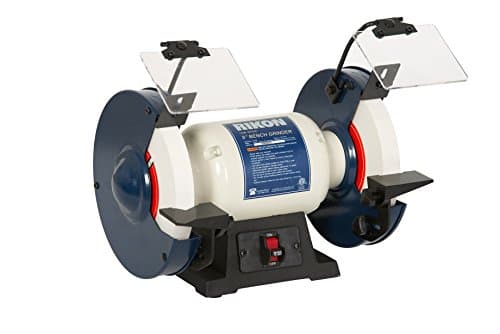
Half the wheel speed of a hardware-store grinder, wheels and a diamond dresser in the box, and the longest published warranty in this price bracket at five years. It is the machine most hand-tool owners should buy, and the one whose spec sheet leaves the fewest blanks.
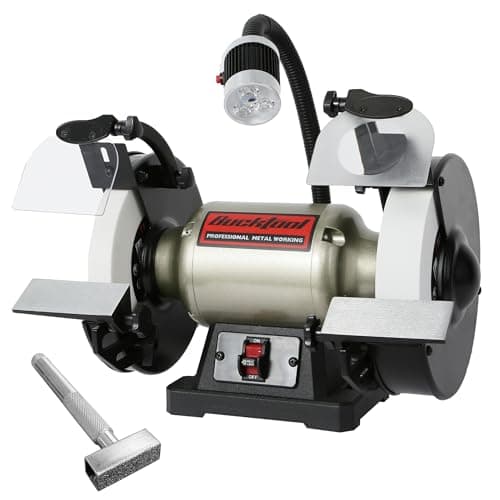
The only grinder here that arrives with white aluminum oxide wheels rather than unspecified gray ones, on a cast iron base, with a wider 1-1/2 in wheel on the right and more motor than anything else at the price. What it does not have is a published parts list.
The most machine per dollar, with the right wheels included
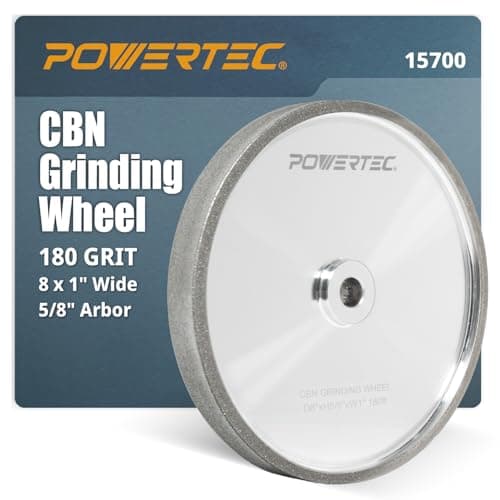
Cubic boron nitride electroplated onto a machined aluminum body. It never needs dressing, never loses diameter, and therefore never moves the rest setting you spent ten minutes getting right. On an edge-tool grinder it is the most useful thing you can bolt on.
The upgrade that changes the machine you already own
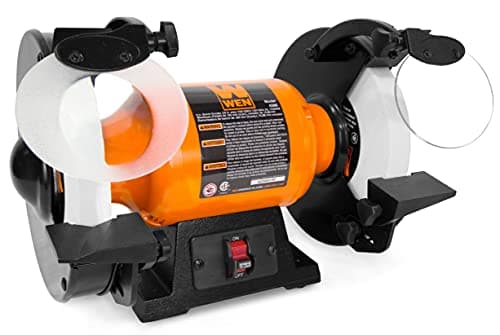
The lowest price at which you can still buy the right wheel speed. The motor is the smallest here on published amps and the machine is the plainest, but it turns at 1,750 RPM, and that matters more to your chisels than everything else on the spec sheet put together.
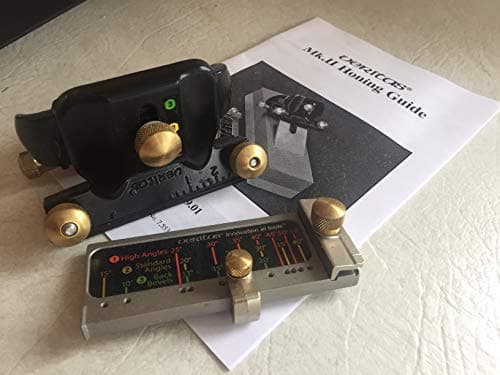
A registration jig that sets projection and angle repeatably, plus a micro-bevel mechanism that adds a couple of degrees without resetting anything. It is the guide that makes sharpening boring, which is the goal.
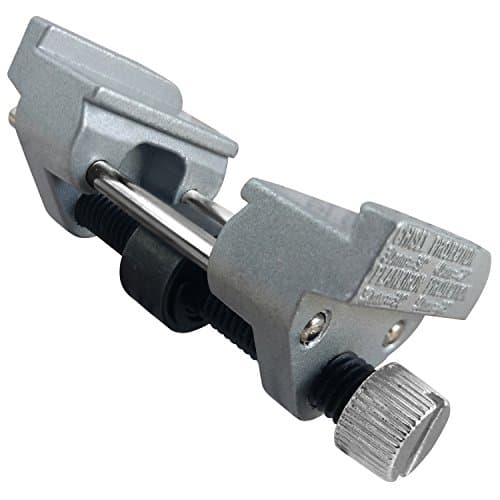
An Eclipse-pattern side clamp for under twenty dollars. It sets the same geometry the expensive guides do, less conveniently, and that is the whole difference.
The guide that makes the case against expensive guides
#ad· Live prices from the Amazon Product API, as of November 22, 2026. Where we have no verified live price we show none, and the cost-per-decade figure is suppressed with it — we would rather leave a gap than print a number that has rotted.
The verdict: buy the RIKON 80-805 slow-speed grinder and a honing guide, and you have replaced most of what a Tormek does for about a quarter of the money. That is the right answer for anyone who grinds a bevel a few times a year and hones on stones in between. The budget pick is the Atlin Eclipse-pattern honing guide — under twenty dollars, and on its own it buys the half of the Tormek proposition that matters most, which is a repeatable angle. Prices below are live, with the date they were checked.
Before the alternatives, the original, stated fairly. The Tormek T-4 is a 200 by 40 mm aluminium oxide stone turning at 120 RPM in a water bath, with a 120 W motor, weighing 17.6 lb, and Tormek backs it for eight years when registered for private use. At that speed, in water, overheating an edge stops being a skill you have to acquire and becomes something the machine cannot easily do to you. It ships with the universal support, the stone grader, the AngleMaster, a leather honing wheel and compound, so grinding and honing happen on one machine, and every wearing part is a separately cataloged Tormek item.
That is a genuinely good machine and this page is not an argument against it. It is an argument about what you are buying. A Tormek sells you two things — an edge that cannot get hot, and an angle that repeats — plus a parts catalog behind both. All three can be bought separately, and if you only need one of them you are paying three times over.
What the T-4 costs you besides money
Three things worth knowing before you decide you want the original, all of them from its own specification:
The square-edge jig is extra. The SE-77, which is what holds a chisel or a plane iron square to the stone, is sold separately and is not cheap. Budget for it, because without it the machine does not do the job this site cares about.
It is slow at removing metal. 120 RPM in water is a precision machine, not a reprofiling machine. A boxful of chipped secondhand chisels is a long evening on a Tormek and twenty minutes on a dry grinder.
Water has to be dealt with. Draining, drying and storing it somewhere it will not rust the bench is a real recurring cost in attention. And commercial, industrial or educational use cuts the eight-year warranty to two.
The main alternative: a slow-speed dry grinder
The RIKON 80-805 is the machine most hand-tool owners should buy. A 1/2 HP motor at 1,750 RPM — half the wheel speed of a hardware-store grinder, which is the single biggest factor in not bluing an edge — with 8 in 60 and 120 grit wheels and a diamond dresser in the box, 34.2 lb of machine, and a published five-year consumer warranty, the longest stated term in its bracket. RIKON publishes a parts line and a phone number for spares rather than treating the machine as disposable.
It is not a Tormek. 1,750 RPM dry is slower than 3,450 and much faster than 120 in water, so the heat is manageable rather than impossible; the stock rests are stamped rather than a flat squared platform, which is fine for touching up and loose for repeatable angles; and the warranty explicitly excludes grinding wheels. At 34.2 lb it wants bolting down before you lean on it.
The Bucktool is the most machine per dollar: 3/4 HP continuous, a cast iron base, and the only grinder here that arrives with white aluminium oxide wheels rather than unspecified grey ones — the friable abrasive you would otherwise buy separately for edge tools. Its right-hand wheel is 1-1/2 in wide, which makes keeping a plane iron square markedly easier than a 1 in wheel does, and the maker rates it for CBN. It gives up three years of warranty against the RIKON and we could find no replacement-parts listing at all.
The WEN BG4286 is the cheapest honest way into 1,750 RPM: soft start, both wheels included, a published two-year warranty and a stocked parts inventory. 3 A is the smallest motor here, WEN does not publish the weight, and a light grinder walks under load unless it is bolted down. The whole field is ranked on the best bench grinders for chisels.
The upgrade that closes most of the gap: a CBN wheel
If there is one purchase on this page that makes a dry grinder behave like an expensive machine, it is the POWERTEC 15700: cubic boron nitride electroplated onto a machined 6061 aluminium body, 8 in by 1 in, 180 grit, rated 1,000 to 3,600 RPM.
The maker states it never needs truing or dressing, and that has a consequence people underrate: because the diameter never changes, the angle you set on the rest is still that angle next year. That is the repeatability half of the Tormek proposition, bought for a fraction of it. There is nothing bonded to fracture, no wheel dust and no lost diameter. Against it: one grit, permanently; it costs about as much as a budget grinder on its own; it loads if you touch mild steel or aluminium to it and there is no dressing it clean; and POWERTEC publishes no warranty term of any kind.
The other half, bought on its own: a honing guide
The second thing a Tormek sells is a repeatable angle, and a honing guide sells it directly. The Veritas Mk.II is a registration jig that sets projection and angle repeatably between sessions, with a built-in eccentric roller that adds a micro-bevel by cam rather than by re-clamping. It handles chisels and plane irons without an adapter. Lee Valley publishes a three-month satisfaction guarantee, which is a returns window rather than a defect warranty, and the guide costs more than most of the chisels it will sharpen.
The Atlin is the budget pick and the argument against expensive guides: an Eclipse-pattern side clamp for under twenty dollars, with a published 1/8 to 1-7/8 in chisel capacity and 1-3/8 to 3-1/8 in for plane blades. It sets the same geometry the expensive guides do, less conveniently, and that is the whole difference. Setting projection needs a separate jig or a marked block, narrow chisels can rock in the jaws if you are careless, and there is no micro-bevel mechanism. The field is ranked on the best honing guides, and the case for using one at all is on freehand vs honing guide.
Which combination to buy
If you grind a bevel twice a year: a slow-speed dry grinder and a careful hand do the same job for a quarter of the money, and the T-4 is the wrong purchase. Add the Atlin guide and you are done.
If you reprofile a lot of secondhand tools: the dry grinder is not just cheaper, it is better — it removes metal far faster than a water-cooled stone, which is the job. Buy the bigger motor and a white wheel.
If what frightens you is burning an edge: a CBN wheel on a 1,750 RPM grinder is the practical answer, because CBN runs cooler than a bonded wheel and never changes diameter. That is the closest any of these gets to the original.
If you sharpen turning tools daily and want one machine: buy the Tormek. Nothing here replicates grinding and honing on one jig-supported machine with an eight-year warranty behind it, and we would rather say so than pretend a pile of accessories is the same thing. The whole sharpening sequence, whichever route you take, is on the sharpening starter kit.
Every pick, in full
The write-ups
01The default grinder for chisels and plane irons
Motor
1/2 HP, 3 A, 120 V
Speed
1,750 RPM
Wheels
8 x 1 in, 60 and 120 grit, 5/8 in arbor
Weight
34.2 lb
Warranty
5 years, consumer use
RIKON 80-805 8 in Slow Speed Bench Grinder
RIKON
8.2/10
Half the wheel speed of a hardware-store grinder, wheels and a diamond dresser in the box, and the longest published warranty in this price bracket at five years. It is the machine most hand-tool owners should buy, and the one whose spec sheet leaves the fewest blanks.
Cost per decade
$66.99
Horizon · tier B
20 years — Finite stated warranty, cited
RIKON publishes a five-year warranty on this machine for consumer use, dropping to two years if it is used commercially, industrially or in education. Read the exclusion: the limited warranty 'does not apply to accessory items such as blades, drill bits, sanding discs, grinding wheels' — the motor is covered, the wheels are not. Wheels are a standard 8 x 1 in, 5/8 in bore item, and RIKON publishes a parts line for everything else.
Rebuy risk
Medium
parts listed, resharpenable
Heat control
8.5
Wheels & rests
8.0
Build
7.5
Parts & warranty
8.5
Value
8.5
What it gets right
+1,750 RPM halves the surface speed of a 3,450 RPM grinder, which is the single biggest factor in not bluing an edge
+Five-year published warranty — the longest stated term of any machine on this page
+Ships with both wheels and a diamond-faced dressing tool, so there is nothing else to buy on day one
+RIKON publishes a parts line and a phone number for spares rather than treating the machine as disposable
+Left tool rest is grooved for drill bits, which is the one job a flat rest is bad at
What it costs you
−RIKON does not publish what abrasive the supplied 60 and 120 grit wheels use, and the warranty explicitly excludes grinding wheels
−At 34.2 lb it is the lightest of the cast-base machines here; it wants bolting down before you lean on it
−The stock rests are adjustable but stamped rather than a flat, squared platform — fine for touching up, loose for repeatable bevel angles
−Commercial, industrial or educational use cuts the five-year warranty to two
Skip this if…
…you already own a working grinder. A white wheel and a proper flat rest cost a fraction of this and will do more for your bevels than a new motor will.
02The most machine per dollar, with the right wheels included
Motor
3/4 HP continuous, 1-1/4 HP peak, 4.0 A
Speed
1,750 RPM
Wheels
8 x 1 in and 8 x 1-1/2 in white aluminum oxide, 80 and 120 grit
Base
Cast iron with rubber feet
Warranty
2 years, per the maker's page
Bucktool 8 in 3/4 HP Low Speed Bench Grinder
Bucktool
8.0/10
The only grinder here that arrives with white aluminum oxide wheels rather than unspecified gray ones, on a cast iron base, with a wider 1-1/2 in wheel on the right and more motor than anything else at the price. What it does not have is a published parts list.
Cost per decade
$131.20
Horizon · tier B
15 years — Finite stated warranty, cited
Bucktool states '2 YEARS WARRANTY' on its own product page for this model and publishes a full specification table for it, but no replacement-parts listing we could find. The wheels are standard sizes and the motor is a conventional induction unit; the gap is in what happens if something other than a wheel fails.
Rebuy risk
Medium
parts listed, resharpenable
Heat control
8.5
Wheels & rests
9.0
Build
8.0
Parts & warranty
6.5
Value
8.0
What it gets right
+White aluminum oxide wheels in the box — the friable abrasive you would otherwise buy separately for edge tools
+The right-hand wheel is 1-1/2 in wide, which makes a plane iron far easier to keep square than a 1 in wheel does
+Cast iron base and rubber feet at a price where sheet-metal bases are normal
+Bucktool publishes a full specification table for the model, including continuous and peak horsepower
+Rated by the maker for CBN wheels, so the upgrade path does not need a different machine
What it costs you
−Two years of warranty against RIKON's five, and no replacement-parts listing we could find
−The Amazon listing does not print a model number; Bucktool publishes these figures under TDS-200C4HL
−At roughly 46 lb shipped it is a two-hand lift onto the bench
−80 grit is coarser than most people need on the left wheel for bench chisels
Skip this if…
…the thing that would let you sleep at night is a warranty you can read in one click and a parts diagram you can order from. Buy the JET or the RIKON.
03The upgrade that changes the machine you already own
Size
8 x 1 in, 5/8 in arbor
Grit
180
Body
6061 aluminum, nickel plated
Rated speed
1,000-3,600 RPM
Warranty
Not published
POWERTEC 15700 CBN Grinding Wheel, 8 in, 180 Grit
POWERTEC
8.1/10
Cubic boron nitride electroplated onto a machined aluminum body. It never needs dressing, never loses diameter, and therefore never moves the rest setting you spent ten minutes getting right. On an edge-tool grinder it is the most useful thing you can bolt on.
Cost per decade
$52.24
Horizon · tier C
20 years — No lifetime warranty; parts purchasable and resharpenable
No warranty term published at the date checked. A single electroplated layer of cubic boron nitride on a machined 6061 aluminum body, nickel plated; the maker states it 'does not need to be trued or dressed', so unlike a bonded wheel it does not lose diameter and there is no consumable element inside it. The same reasoning this site applies to a diamond plate: long-lived, renewable in the sense that nothing wears away, and unbacked by any published term.
Rebuy risk
Medium
parts listed, resharpenable
Cut rate
8.0
Maintenance
10.0
Finish
7.5
Longevity
9.0
Value
6.0
What it gets right
+The maker states it does not need to be trued or dressed — no dressing tool, no wheel dust, no lost diameter
+Because the diameter stays constant, an angle you set on the rest is still that angle next year
+180 grit is the right single grit for reprofiling bench chisels and plane irons
+Nothing bonded to fracture: it is an abrasive layer plated onto a machined aluminum wheel
+Rated to 3,600 RPM, so it fits a high-speed grinder as well as a slow one
What it costs you
−Costs about as much as a budget grinder on its own
−One grit, permanently — there is no grading it coarser or finer
−POWERTEC lists it for carbon steel, HSS and tool steel; mild steel and aluminum load an electroplated wheel and there is no dressing it clean
−No published warranty term of any kind
Skip this if…
…you grind occasionally and mostly need to fix chipped secondhand tools. A white wheel and the dresser you already own cost a tenth of this.
Price as of November 22, 2026. Prices move; Amazon's is the one that counts.
#ad · we may earn a commission from this link to POWERTEC 15700 CBN Grinding Wheel, 8 in, 180 Grit
04The cheapest honest way into 1,750 RPM
Motor
3 A, soft start
Speed
1,750 RPM
Wheels
8 x 1 in, 60 and 120 grit, 5/8 in arbor
Rests
Adjustable, pivoting
Warranty
2 years
WEN BG4286 8 in Slow Speed Bench Grinder
WEN
7.6/10
The lowest price at which you can still buy the right wheel speed. The motor is the smallest here on published amps and the machine is the plainest, but it turns at 1,750 RPM, and that matters more to your chisels than everything else on the spec sheet put together.
Cost per decade
$78.17
Horizon · tier B
15 years — Finite stated warranty, cited
WEN publishes a two-year warranty plus 'a stocked inventory of replacement parts' and a phone line, and lists the wheels, wire wheels and safety keys for this model as purchasable accessories. Two years is the shortest stated term of any machine on this page, which is why the horizon is shorter than the RIKON's rather than equal to it.
Rebuy risk
Medium
parts listed, resharpenable
Heat control
8.5
Wheels & rests
7.0
Build
6.5
Parts & warranty
7.0
Value
9.0
What it gets right
+Slow speed at the price most 3,450 RPM grinders sell for
+Soft start, so it does not snatch the bench when you switch it on
+WEN publishes a two-year warranty, a stocked parts inventory and a support line, and sells the wheels for it as listed accessories
+Both wheels included, so the entry cost really is the sticker price
What it costs you
−3 A is the smallest motor here; it is the one to think twice about if you reprofile damaged edges often
−WEN does not publish the machine's weight, and a light grinder walks under load unless it is bolted down
−The grade of the supplied aluminum oxide wheels is not published, so assume you will want a white wheel eventually
−Two-year warranty and a plain stamped rest — this is a budget machine and it reads like one
Skip this if…
…you are buying a grinder to reprofile a boxful of secondhand chisels. Spend once on a bigger motor rather than twice on a small one.
A registration jig that sets projection and angle repeatably, plus a micro-bevel mechanism that adds a couple of degrees without resetting anything. It is the guide that makes sharpening boring, which is the goal.
Cost per decade
$57.50
Horizon · tier C
20 years — No lifetime warranty; parts purchasable and resharpenable
No lifetime warranty published at the date checked. A purely mechanical jig with no cutting edge and no consumable part; the failure mode is a lost thumbscrew rather than wear.
Rebuy risk
High
parts listed
Cut rate
9.0
Maintenance
9.0
Finish
9.5
Longevity
8.5
Value
6.0
What it gets right
+Angle registration is genuinely repeatable between sessions
+Micro-bevel by cam rather than by re-clamping saves real time
+Handles both chisels and plane irons without an adapter
What it costs you
−Costs more than most of the chisels it will sharpen
−Lee Valley publishes a 3-month satisfaction guarantee, not a defect warranty
−More setup steps than a simple Eclipse-style guide
Skip this if…
…you own four chisels and a plane. The cheap guide does the same geometry; this one saves time you may not be spending.
06The guide that makes the case against expensive guides
Type
Eclipse-pattern side clamp
Chisel capacity
1/8 to 1-7/8 in
Plane blade capacity
1-3/8 to 3-1/8 in
Warranty
Not published
Atlin Honing Guide, Eclipse Pattern
Atlin
7.8/10
An Eclipse-pattern side clamp for under twenty dollars. It sets the same geometry the expensive guides do, less conveniently, and that is the whole difference.
Cost per decade
Suppressed — no live price
Horizon · tier D
10 years — No warranty and no parts availability found
No warranty terms and no replacement-parts listing found at the date checked. A budget jig with cast or stamped components; there is nothing published to support a longer horizon.
Rebuy risk
High
none of the three met
Cut rate
8.0
Maintenance
7.0
Finish
8.5
Longevity
6.0
Value
9.5
What it gets right
+Produces a correct, repeatable bevel from the first attempt
+Cheap enough that there is no reason to sharpen freehand while learning
+Wide enough jaws for plane irons as well as chisels
What it costs you
−Setting projection needs a separate jig or a marked block
−Narrow chisels can rock in the jaws if you are careless
−No micro-bevel mechanism
Skip this if…
…you sharpen daily. The time the Veritas saves adds up at that frequency; at weekend frequency it does not.
A 1,750 RPM slow-speed bench grinder plus an Eclipse-pattern honing guide. Together they cost roughly a quarter of a T-4 with its square-edge jig, and they cover the two things the Tormek is bought for: an edge that does not overheat and an angle that repeats.
Is a slow-speed grinder as good as a Tormek?+
Not at avoiding heat — 1,750 RPM dry is manageable, while 120 RPM in water is nearly impossible to burn an edge on. It is better at removing metal, which matters if you reprofile damaged tools, and it is far cheaper. Which of those you need decides the purchase.
Does a CBN wheel replace a water-cooled system?+
Partly. CBN runs cooler than a bonded wheel and, because it never loses diameter, an angle set on the rest stays that angle indefinitely. It does not add water cooling or a jig system, and it is one grit forever.
Do I need the Tormek SE-77 jig?+
If you are sharpening chisels and plane irons on a T-4, yes — it is what holds the edge square to the stone, and it is sold separately. Budget for it when you compare prices, because without it the machine does not do the job this site is about.
What does the Tormek warranty actually cover?+
Tormek publishes eight years when the machine is registered for private use, which is the longest term of any machine we rank. Commercial, industrial or educational use reduces it to two years. None of the alternatives here publishes more than five.
We have not handled these tools. Nobody here has tested one, owned one, or taken one apart. Specifications come from the manufacturer or the retailer listing; warranty terms come from the maker's own warranty page; the cost-per-decade arithmetic is ours and reproducible. Where we could not verify a figure we say so on the page rather than quietly leaving it out. Read the full method.