The verdict: buy the DMT DuoSharp Fine/Coarse if what you wanted was a stone that never needs flattening again. It is the right answer for anyone whose real complaint about waterstones is the maintenance rather than the price — coarse and fine on opposite faces of one plate, no soaking, and it will still be flat in thirty years. The budget pick is the DMT D8F, the cheapest route to the same never-flatten-again property, with a continuous surface that suits narrow chisels better than the DuoSharp's. Prices below are live from the Amazon Product API with the date they were checked.
Before the alternatives, the original, stated fairly. The Shapton GlassStone is a thin abrasive layer bonded to a glass plate, and that construction buys three things at once:
- It stays flat. The glass substrate means it dishes far less than a conventional waterstone. It still needs occasional flattening — the maker does not claim otherwise — but far less of it.
- Splash and go. A spritz of water rather than a soak, so sharpening is a two-minute interruption instead of a ritual you have to plan fifteen minutes ahead of.
- It cuts fast. Noticeably faster than a King at the same nominal grit.
And one real cost, which is the reason people go looking for an alternative in the first place: the abrasive layer is thin, finite and visible. You can watch it go down. Per usable millimetre of abrasive it is expensive, and that is a legitimate thing to object to on a site about tools that outlive their owners.
So this page is not a ranking of "better stones". It is sorted by which of those three properties you were buying, because no cheaper stone delivers all three plus a polish, and pretending otherwise would send half of you home with the wrong object. The whole field ranked conventionally, Shapton included, is on the best sharpening stones.
If you wanted "never flatten it again": go diamond
This is the biggest group, and diamond plates do not just beat a Shapton on flatness, they end the argument. Diamond is bonded to a steel or aluminium plate that does not wear away, so there is nothing to dish and nothing to true. There is also no soaking and no storage precaution.
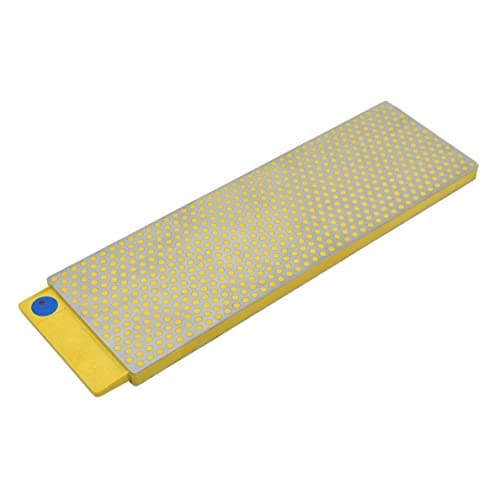
The DMT DuoSharp Fine/Coarse is the complete version: 600 mesh fine and 325 mesh coarse on opposite faces of one plate, manufactured in the USA, with an interrupted "polka dot" surface that clears swarf so the plate keeps cutting. One object covers repair and honing, and it is genuinely a lifetime purchase with no consumable element at all — which is the direct answer to the Shapton's visible, finite layer.
Two honest cons. The interrupted surface can catch a very narrow chisel, which is irritating at 1/4 in and below. And it costs more up front than a combination waterstone.
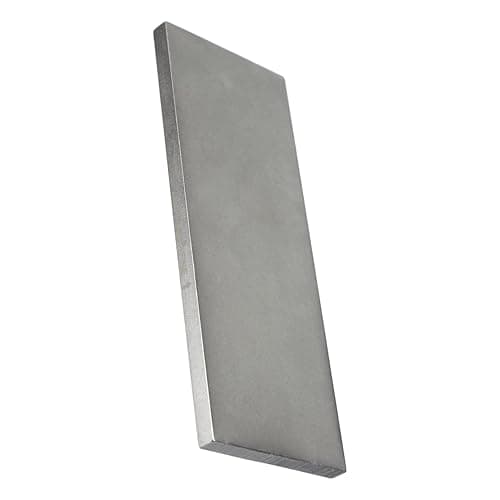
The DMT D8F is the budget pick and the fix for that first con: the same 600 mesh fine grit on a continuous 8 in surface, so narrow chisels do not drop in. Zero maintenance, no soaking, no storage precautions, US manufacture with a published warranty page behind it. It is one grit, which is the trade, and it is expensive for one grit. Diamond plates also lose their initial aggression in the first weeks of use — that is normal breaking-in, not a fault, and nobody selling them says it clearly enough.
If you wanted the diamond properties for less money
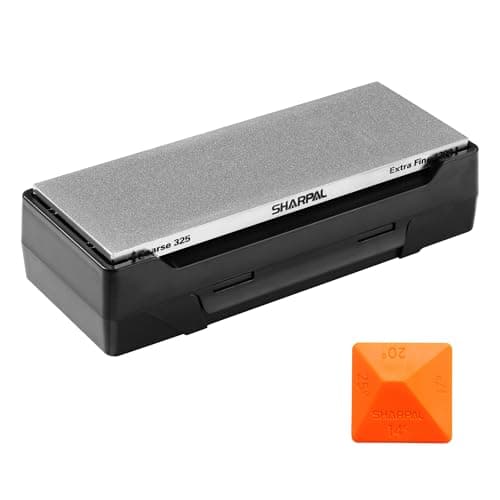
The Sharpal 162N is diamond-plate capability at roughly half the DMT price: two grits, an 8 by 3 in working surface large enough for plane irons (many budget plates are not), and a non-slip base in the box. If the maintenance-free argument appealed but the DMT price did not, this is the honest middle.
It will not last like a DMT and it costs accordingly. Diamond retention over years is not in the same class, the cutting rate drops off faster than the premium plates, and no warranty terms are published. If this is genuinely the last stone you intend to buy, the DMT is the one with the manufacturing record behind it.
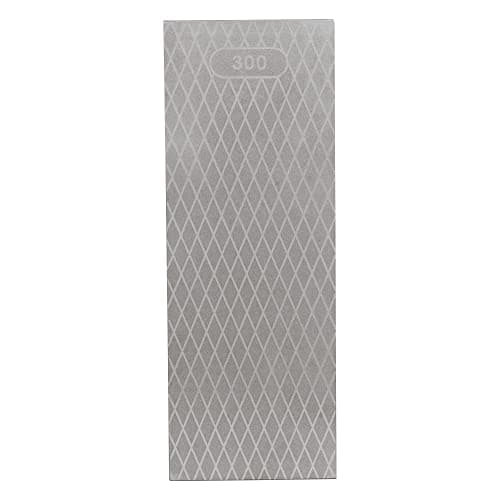
The Trend diamond kit solves a different problem: it arrives ready to use. 300 and 1000 on opposite faces of an 8 by 3 in plate, with a bench holder so nothing slides while you work. For someone replacing a Shapton and not wanting to buy a holder, a base and a second stone separately, that is a real convenience. 1000 is not a finishing grit though — you will want a strop at minimum — and no warranty is published.
If what bothered you was the finite abrasive layer
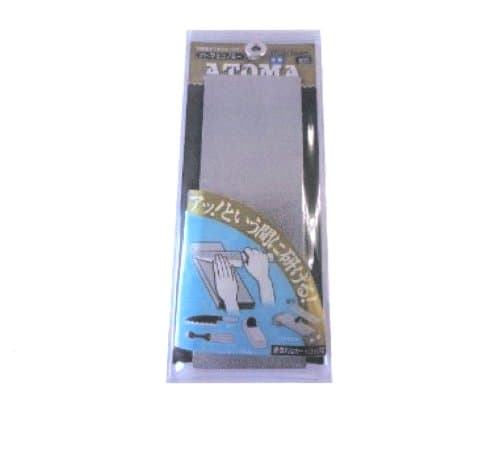
There is exactly one stone in this registry that answers that objection directly, and it is the Atoma #140. The diamond sits on a 1 mm stainless sheet mounted to a 10 mm precision-flattened aluminium plate, and Tsuboman sells the diamond sheet separately in all four grits. The machined base outlives the abrasive. That is the same bargain the Shapton offers — a consumable abrasive on a stable substrate — except that here the consumable is replaceable rather than the whole stone.
The clustered diamond pattern leaves channels for swarf, so it clears instead of loading up. The catch is the grit: #140 is the coarse end of the range, specified by Atoma for aggressive removal and for flattening stones. It is not a bench stone you finish on, it is expensive for a maintenance accessory, and no US warranty terms are published. Buy it as the coarse half of a setup, not as a Shapton replacement on its own. Its main job is covered on the best waterstone flatteners.
If you want to stay on waterstones
Everything above gets you sharp. None of it gets you shiny, and that distinction matters more than people expect: a diamond plate cannot reach the polish a fine waterstone gives, and if you like a mirror back and a translucent shaving, a diamond-only setup will quietly disappoint you.
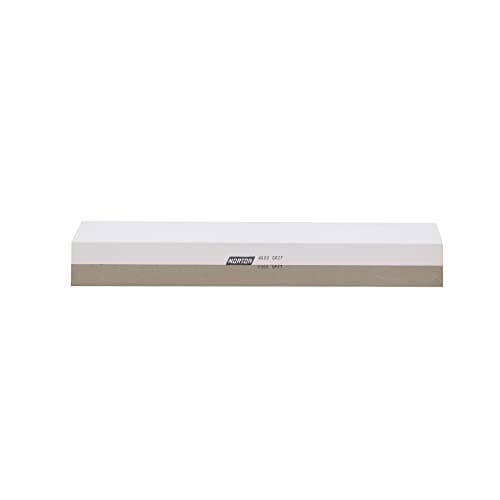
The Norton combination waterstone, 1000/4000 is the stay-on-waterstones answer, and it addresses the flatness complaint from the other direction: Norton's binder is harder than the King equivalents, so it dishes noticeably more slowly. 4000 is a genuinely usable working polish, which is a grit no diamond plate here reaches.
You pay for the hard binder in cutting speed — it is slower than a King and slower than a Shapton, which is exactly the deal you are making — and it still needs soaking and still needs flattening, just less often. It also costs more than twice the King combination. The full comparison of the two media is on waterstones vs diamond stones.
What none of these replaces
The combination. A Shapton gives you fast cutting, near-flatness and splash-and-go in one object that also polishes, and every alternative above drops at least one of those. Diamond drops the polish. The Norton drops the speed and the splash-and-go. The Atoma drops the fine end entirely.
If all three properties genuinely matter to you and the finite layer is a price you will pay, then the honest answer is that the Shapton is the right stone and you should buy another one. We would rather say that than sell you a substitute for something none of these offers — and we earn the same either way, since the Shapton is linked on the best sharpening stones too.
One stone that is not ranked, and why
The DMT D8C — the coarse 325 mesh continuous plate — would normally sit on this page as the repair-grit companion to the D8F. At the price check behind this page it came back with no buyable offer: an image, no price. Our rule is that a pick has to be purchasable on the day we publish, so it is named here and not ranked. The DuoSharp covers the same coarse grit on its reverse face in the meantime.
Which to buy, in one line each
Maintenance was the complaint: DMT DuoSharp, or the D8F if your chisels are narrow and your budget is tight.
Price was the complaint: Sharpal 162N, knowing it will not last like the DMT.
You want it to arrive as a working setup: the Trend kit, plus a strop.
The disappearing abrasive layer was the complaint: Atoma, whose sheet is replaceable — as the coarse half of a two-stone setup.
You want the polish: stay on waterstones and buy the Norton. The angles any of them has to hold are on sharpening angles explained, and if you own none of this yet, start at the sharpening starter kit.
The same approach applied to the other stone people ask to be talked out of is on Atoma alternatives.