We earn a commission when you buy through our Amazon links, at no extra cost to you. It never decides a ranking, and where the best tool in a class is one we earn nothing on, we say so and link it anyway. How this works.
Woodcraft's house premium plane, third revision, and the revision matters — V3 fixed the frog fit and iron thickness complaints that dogged the earlier versions.
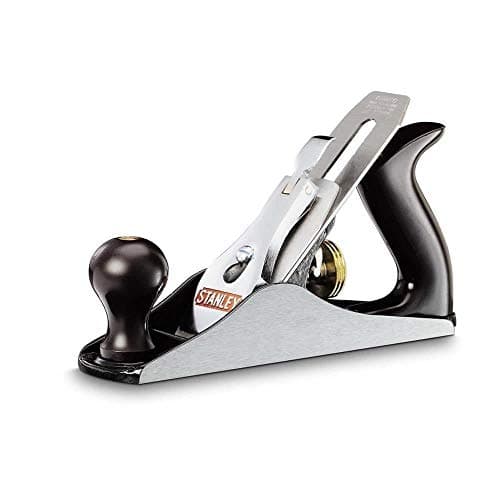
The current production Bailey is the same architecture as the plane your grandfather owned, at a price that leaves room in the budget for a stone. It needs more fettling than the Sweetheart and rewards it.
The pattern everything else copies, at half the Sweetheart price
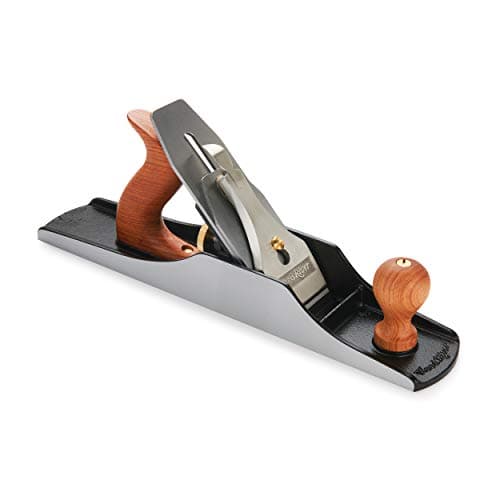
Woodcraft's house premium line in the wide 5-1/2 size: a 2-3/8 in iron, stress-relieved ductile castings, a fully machined Bedrock-based frog, and just over seven pounds of mass. It is the plane on this page for someone who flattens wide hardwood and never wants it to chatter.
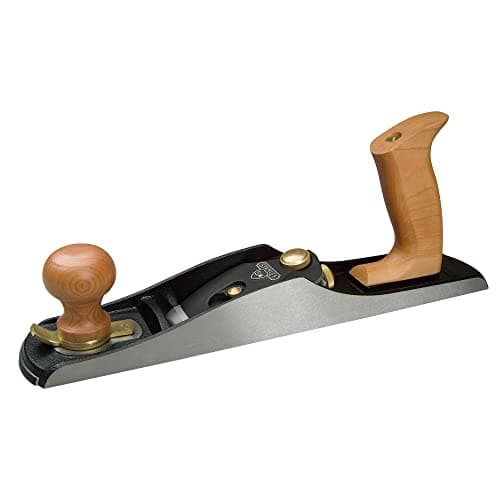
Bevel-up at a 12 degree bed, which means the bevel you grind sets the cutting angle. Grind three irons at three angles and one plane covers end grain, general work and figured hardwood.
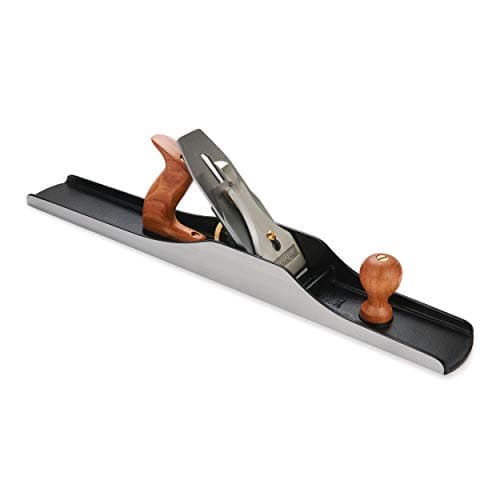
Woodcraft's house premium line at full jointer length: stress-relieved ductile castings, a fully machined Bedrock-based frog, 9-1/2 lb, and a replacement blade that is a numbered catalog item. It is the plane on this page for someone who wants the premium-pattern jointer from a large retailer and does not need the maker to print a hardness figure.
The heavyweight jointer with a replacement iron in the catalog
#ad· Live prices from the Amazon Product API, as of October 16, 2026. Where we have no verified live price we show none, and the cost-per-decade figure is suppressed with it — we would rather leave a gap than print a number that has rotted.
If you will sharpen and fettle, buy the WoodRiver — the thick iron and the Bedrock-pattern frog are the two things that make a plane feel expensive, and WoodRiver has both at roughly a third of the premium makers' money. If you want a tool a company will replace and parts you can find in any town, buy the Stanley, and spend the difference on a thicker iron. Neither answer is wrong. They are different purchases, and the specification sheets make the difference unusually clear for once.
This is the modern version of a comparison this site already runs for old tools on record vs stanley planes. The modern one is more interesting because the two companies have moved in opposite directions. Stanley sells the pattern it invented, at a price that reflects a thinner iron and a lot of competition. WoodRiver — Woodcraft's house premium line, made in Asia to a Bedrock pattern, now in its third revision — sells what the Stanley used to be, at four or five times the price.
What each one actually is
Stanleyowns the Bailey pattern: a frog that beds on two narrow machined pads, an iron around 0.080 in thick in the current line, a lever cap, and a century of interchangeable parts behind it. The current Bailey line is a working-tradesman tool at a working-tradesman price. The Sweetheart line sits above it — the No. 62 low angle jack with an A2 iron is the most interesting thing Stanley currently makes, and it is the one Stanley plane we would buy without reservation.
WoodRiver is a Bedrock copy. The Bedrock frog beds on a wide flat face instead of two pads and adjusts fore and aft with the iron in place, which is a genuine mechanical advantage and the thing premium makers charge for. The V3 revision matters: it is the one that addressed the frog-fit and iron-thickness complaints that followed the earlier versions, and a V1 or V2 on the secondhand market is not the same tool. The bodies are stress-relieved ductile iron with sides machined flat and square to the sole, which is what lets a plane be used on a shooting board.
The comparison, on published facts only
WoodRiver
Stanley
Frog
Bedrock-based, fully machined, mouth adjusts with iron in place
Bailey, two-pad contact, 45 deg (Sweetheart 62 is bevel-up at 12 deg)
Iron
High carbon, “thick section”; no figure published
Bailey: not published. Sweetheart 62: A2, thick section
Body
Stress-relieved ductile iron; sole and sides machined flat and square
Cast iron; no tolerance published
Warranty
None published; Woodcraft publishes a retailer guarantee
Limited lifetime, excludes consumables including “any blade”
Replacement iron
Yes — Woodcraft sells WoodRiver irons by size
Aftermarket, and abundant; Stanley does not catalog irons for the Bailey line
Spare parts
Retailer-dependent; no published parts diagram
A century of interchangeable Bailey parts, new and used
Notice what each company declines to tell you. WoodRiver will not publish an iron thickness or a warranty; Stanley will not publish an iron thickness or a sole tolerance, and its warranty explicitly excludes the part that wears out. On a comparison page where we cannot test anything, those omissions are the most honest content available, and we have ranked on them rather than on reputation.
Where the money actually goes
You are paying WoodRiver for machining. A flat sole, sides square to that sole, a frog that contacts across its whole face, and a mouth you can close without dismantling the plane. Those are the four things that make the difference between a plane that works out of the box and one that needs an evening. If your time is worth something and you do not enjoy fettling, that is a real purchase and not a vanity one.
You are paying Stanley for the ecosystem. Every Bailey part ever made fits. Totes, knobs, frogs, lever caps, irons and chipbreakers turn up for a few dollars, and a limited lifetime warranty covers the casting. A Stanley Bailey can be kept alive indefinitely by a person with no special skill, which is what this site means by buy-it-for-life — see warranties and repairability.
And there is a third option that beats both on value. A pre-war Stanley has a thicker iron than the modern one and better machining than either, and costs less than the current Bailey. What it costs you is an afternoon and some judgment — vintage vs new planes makes that case properly, and the Stanley plane type study tells you what you are looking at. We cannot sell you one, which is exactly why we will say so plainly.
The one pick that settles it for most people
If you are buying one plane and you want this argument to go away: the Stanley No. 62 Sweetheart low angle jack. It is bevel-up at a 12 degree bed, so the bevel you grind sets the cutting angle; grind three irons at three angles and one plane handles end grain, general work and figured hardwood. It has an A2 iron and an adjustable mouth, and it sits between the WoodRiver and the Bailey on price.
It is the only plane in this comparison that changes what it can do depending on how you sharpen it, which makes it the best single-plane answer on the page. See bevel up vs bevel down for why that works and what it costs you.
Every pick, in full
The write-ups
01Premium feel without the premium-maker lead time
Size
No. 4 smoother
Pattern
Bedrock-style
Iron
Thick section, high carbon
Revision
V3
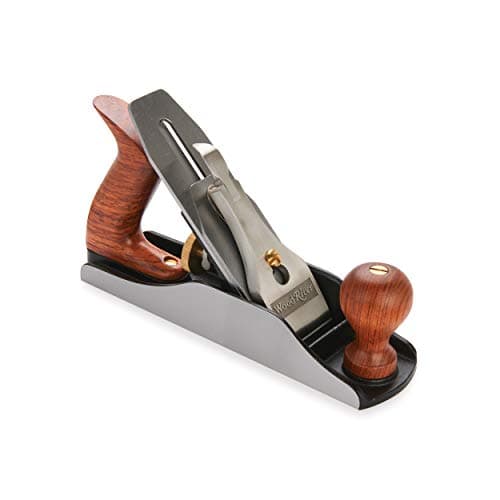
WoodRiver #4 Bench Plane, V3
WoodRiver
7.9/10
Woodcraft's house premium plane, third revision, and the revision matters — V3 fixed the frog fit and iron thickness complaints that dogged the earlier versions.
Cost per decade
$116.99
Horizon · tier C
20 years — No lifetime warranty; parts purchasable and resharpenable
No lifetime warranty published at the date checked. The iron is a standard Bailey-pattern size, so aftermarket replacements from third-party makers are purchasable, and the body is a casting with no consumable part.
Rebuy risk
Medium
parts listed, resharpenable
Sole & body
9.0
Iron & edge
8.5
Adjustment
8.5
Out of box
8.0
Parts & repair
7.0
Value
6.5
What it gets right
+Heavy, well-machined body that damps vibration on difficult grain
+Thick iron and substantial chipbreaker, minimal chatter
+In stock far more reliably than the small premium makers
What it costs you
−Priced against Lie-Nielsen and Veritas without the parts catalog either has
−Heavier than some people want in a smoother
−No published lifetime warranty terms found
Skip this if…
…the price difference to a Lie-Nielsen is money you have. At that point buy the one with the replacement-parts catalog behind it.
02The pattern everything else copies, at half the Sweetheart price
Size
No. 4 smoother, 9 in sole
Pattern
Bailey, bevel down
Bed angle
45 deg
Warranty
Limited lifetime, blades excluded
Stanley Bailey No. 4 Smoothing Plane
Stanley
7.5/10
The current production Bailey is the same architecture as the plane your grandfather owned, at a price that leaves room in the budget for a stone. It needs more fettling than the Sweetheart and rewards it.
Cost per decade
$31.93
Horizon · tier A
30 years — Lifetime warranty, cited
Stanley publishes a limited lifetime warranty on hand tools against material and workmanship defects. Note it excludes consumables including 'any blade' — the casting is covered, the iron is not. Bailey-pattern irons are a standard size and replacements are widely sold.
Rebuy risk
Low
lifetime warranty, parts listed, resharpenable
Sole & body
7.0
Iron & edge
6.5
Adjustment
8.0
Out of box
6.0
Parts & repair
9.0
Value
8.5
What it gets right
+Same warranty position as the Sweetheart at a much lower price
+Standard Bailey iron size, so a $40 aftermarket iron transforms it
+Every setup guide, video and parts diagram ever written applies to it
What it costs you
−Sole flatness out of the box is inconsistent and may need lapping
−Factory iron is thinner and softer than the Sweetheart's A2
−Tote and knob finish is functional rather than pleasant
Skip this if…
…you want to open the box and take a shaving. This is a plane you set up first; budget an evening.
Woodcraft's house premium line in the wide 5-1/2 size: a 2-3/8 in iron, stress-relieved ductile castings, a fully machined Bedrock-based frog, and just over seven pounds of mass. It is the plane on this page for someone who flattens wide hardwood and never wants it to chatter.
Cost per decade
$161.49
Horizon · tier C
20 years — No lifetime warranty; parts purchasable and resharpenable
No lifetime warranty published at the date checked. The iron is a standard Bailey-pattern size, so aftermarket replacements from third-party makers are purchasable, and the body is a casting with no consumable part.
Rebuy risk
Medium
parts listed, resharpenable
Sole & body
9.0
Iron & edge
8.0
Adjustment
8.5
Out of box
8.0
Parts & repair
7.0
Value
6.0
What it gets right
+The heaviest and widest plane on the page, which is exactly what a jack used for flattening wants
+Stress-relieved ductile castings and a fully machined frog, per the retailer's own spec sheet
+Woodcraft lists a V3 replacement blade that fits the 4-1/2, 5-1/2, 6 and 7
+In stock at a large retailer rather than on a small maker's waiting list
What it costs you
−Woodcraft does not publish the iron's thickness, hardness or the bed angle for this size
−Priced against the premium makers without a published warranty
−Too wide and heavy for a general-purpose first jack; a standard No. 5 is the better all-rounder
−Woodcraft's own listing was priced below the Amazon one at the time of check
Skip this if…
…this would be your only bench plane. A 5-1/2 is a specialist flattening plane; buy a No. 5 first and this second.
Bevel-up at a 12 degree bed, which means the bevel you grind sets the cutting angle. Grind three irons at three angles and one plane covers end grain, general work and figured hardwood.
Cost per decade
Suppressed — no live price
Horizon · tier A
30 years — Lifetime warranty, cited
Stanley publishes a limited lifetime warranty on hand tools against material and workmanship defects. Note it excludes consumables including 'any blade' — the casting is covered, the iron is not. Bailey-pattern irons are a standard size and replacements are widely sold.
Rebuy risk
Low
lifetime warranty, parts listed, resharpenable
Sole & body
8.5
Iron & edge
8.5
Adjustment
8.0
Out of box
8.0
Parts & repair
9.0
Value
7.0
What it gets right
+One body, three effective cutting angles, if you buy spare irons
+Low bed angle plus adjustable mouth is the best end-grain setup at this price
+Simple architecture: no frog to fettle, fewer things to get wrong
What it costs you
−Spare irons are the whole point and they are an extra purchase
−Bevel-up geometry means a chipped edge changes your cutting angle, not just your sharpness
−Heavier and longer than a smoother if that is the only job
Skip this if…
…you have already committed to a bevel-down set. Mixing the two systems means two sharpening setups for no benefit.
05The heavyweight jointer with a replacement iron in the catalog
Size
No. 7 jointer, 22 x 2-7/8 in, 9-1/2 lb
Iron
High carbon steel, 2-3/8 in wide, 25 deg bevel
Frog
Fully machined, adjustable, Bedrock-based
Body
Stress-relieved ductile iron; sole and sides machined flat and square
Warranty
None published
WoodRiver #7 Jointer Plane, V3
WoodRiver
7.8/10
Woodcraft's house premium line at full jointer length: stress-relieved ductile castings, a fully machined Bedrock-based frog, 9-1/2 lb, and a replacement blade that is a numbered catalog item. It is the plane on this page for someone who wants the premium-pattern jointer from a large retailer and does not need the maker to print a hardness figure.
Cost per decade
$211.49
Horizon · tier C
20 years — No lifetime warranty; parts purchasable and resharpenable
No lifetime warranty published at the date checked. The iron is a standard Bailey-pattern size, so aftermarket replacements from third-party makers are purchasable, and the body is a casting with no consumable part.
Rebuy risk
Medium
parts listed, resharpenable
Sole & body
9.0
Iron & edge
7.5
Adjustment
8.5
Out of box
8.0
Parts & repair
7.5
Value
6.0
What it gets right
+Stress-relieved ductile castings and a fully machined Bedrock-based frog, per the retailer's own spec sheet
+Woodcraft lists a V3 replacement blade (item 153919) that fits the 4-1/2, 5-1/2, 6 and 7, so the wear part is a catalog item
+9-1/2 lb of mass, which on a jointer is what keeps the plane in the cut over a long edge
+In stock at a large retailer with a physical store network rather than on a small maker's waiting list
What it costs you
−Woodcraft does not publish the iron's thickness, hardness or the bed angle; the Taytools above it publishes all three
−Flatness is described as machined within tightly held tolerances, with no number attached
−The most expensive plane on this page, priced against the premium makers without a published warranty
−Woodcraft's own site listed it below the Amazon price at the time of check
Skip this if…
…the Taytools is in stock. It has the same frog pattern, a fully published iron and a lapped body for about half the money; this plane's case is the retailer, the catalog blade and the mass.
Compact, unfussy, and covered by the same warranty as the rest of the range. Not a joinery tool, and does not pretend to be.
Cost per decade
$19.33
Horizon · tier A
30 years — Lifetime warranty, cited
Stanley publishes a limited lifetime warranty on hand tools against material and workmanship defects. Note it excludes consumables including 'any blade' — the casting is covered, the iron is not. Bailey-pattern irons are a standard size and replacements are widely sold.
Rebuy risk
Low
lifetime warranty, parts listed, resharpenable
Sole & body
6.0
Iron & edge
5.5
Adjustment
5.5
Out of box
6.5
Parts & repair
9.0
Value
7.5
What it gets right
+Small enough to actually live in a pocket or apron
+Under the published limited lifetime warranty on the casting
+Nothing on it to break or lose
What it costs you
−Fixed mouth and standard bed angle
−Too small for anything but light easing work
−Iron quality is entry-level
Skip this if…
…this is going to be your only plane. It is a supplement, not a foundation.
Buy WoodRiver if: you want a plane that works properly out of the box, you value a Bedrock frog and square sides, you would use the plane on a shooting board, and you are comfortable owning a tool with no published warranty behind it. The No. 4 V3 is the one to start with; the No. 7 is the best jointer in this comparison by a distance.
Buy Stanley if: you want a company obliged to replace a cracked casting, you want parts to be a non-issue for the rest of your life, you do not mind spending an evening on setup, or you are buying the No. 62 — which is the single best plane either company sells at a sane price.
Buy neither if: you enjoy restoring. A pre-war Bailey plus a modern thick iron beats both on performance per dollar, and the only thing it costs you is time you were going to enjoy spending.
Pick by pick
WoodRiver No. 4 V3— the smoother that makes the case for the brand. Heavy, well-machined, Bedrock frog, replacement iron in the Woodcraft catalog. See the best smoothing planes for how it ranks against the whole field.
Stanley Bailey No. 4— the pattern everything copies, at a quarter of the WoodRiver. Flatten the sole, fit a thicker iron, and most of the gap closes.
WoodRiver No. 5-1/2— wide and over seven pounds, the plane for flattening panels. More material per stroke than any Stanley in the line.
Stanley No. 62 Sweetheart— the best single plane either maker sells. A2 iron, 12 degree bevel-up bed, adjustable mouth, and it changes character with the bevel you grind.
WoodRiver No. 7 V3— 22 in, 9-1/2 lb, and the replacement iron is a catalog item. If you joint by hand this is the pick in this comparison.
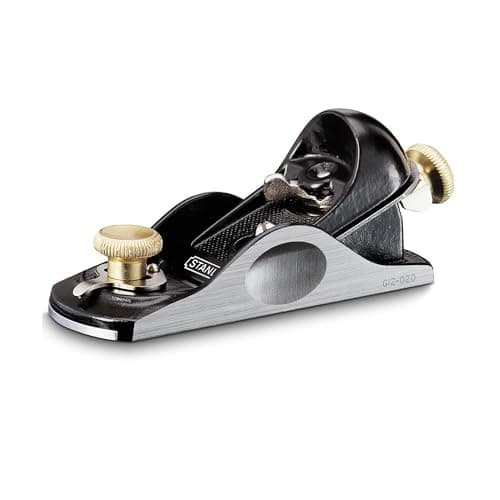
Stanley No. 9 block plane— a fixed-mouth pocket plane with a lifetime warranty on the casting. Not refined, genuinely hard to kill, and the cheapest Stanley here.
Cost per decade, both ways
Over thirty years neither of these planes is likely to break. Cast iron does not fatigue and there is no mechanism to fail, so the long-run cost on both sides is the iron, and both sides have a route to one: Woodcraft sells WoodRiver irons by size, and the aftermarket sells Bailey-pattern irons by the thousand.
That makes the honest conclusion unusually simple. The Stanley is cheaper to own and worse out of the box; the WoodRiver is dearer to own and better out of the box; and the gap between them in use closes substantially the moment you fit the Stanley with a thick aftermarket iron — see the best replacement plane irons. The remaining differences are the frog pattern and the machined sides, and whether those are worth the balance is a question about your bench, not about the brands. Cost per decade has the arithmetic, and premium plane brands compared covers what the tier above both of these actually buys.
Questions
Frequently asked
Are WoodRiver planes as good as Lie-Nielsen?+
Close enough on the machining to make the price gap arguable, and not close on the after-sales side. Lie-Nielsen publishes a parts catalog and sells individual blades, frogs and totes for planes it made decades ago; WoodRiver publishes no parts diagram and its spares are retailer-dependent. On a tool meant to outlive you that is the difference that matters — premium plane brands compared goes through it properly.
Are new Stanley planes any good?+
The current Bailey line is a usable tool that needs work: expect to flatten the sole and expect the iron to be thinner than the frog can fully support. The Sweetheart line is a different proposition, and the No. 62 low angle jack is genuinely good. Stanley publishes a limited lifetime warranty on both, which excludes blades by name.
Where are WoodRiver planes made?+
They are Woodcraft's house premium line, manufactured in Asia to a Bedrock pattern, and the castings come from the same part of the industry that supplies several other Bedrock-copy brands. Woodcraft does not publish a factory. If country of origin is the deciding factor for you, made in USA hand tools covers what is actually still made domestically.
Which WoodRiver plane should I buy first?+
The No. 4 if you already dimension stock with machines, because smoothing is the work your machines leave behind. The No. 5-1/2 if you work rough stock by hand, because width and mass remove more per stroke. Buy the V3 revision specifically; the earlier versions are the ones the complaints were about.
Is a WoodRiver plane worth the price over a Stanley?+
If you do not want to fettle, yes. If you are willing to spend an evening flattening a sole and the price of a thick iron, the honest answer is that most of the performance gap closes and you keep the parts ecosystem and the warranty. What you cannot buy your way to is the Bedrock frog and the machined sides.
We have not handled these tools. Nobody here has tested one, owned one, or taken one apart. Specifications come from the manufacturer or the retailer listing; warranty terms come from the maker's own warranty page; the cost-per-decade arithmetic is ours and reproducible. Where we could not verify a figure we say so on the page rather than quietly leaving it out. Read the full method.