Buy It For Life
Hand Tools vs Power Tools
Not a fight anyone needs to win. A shop with a fifty-year horizon usually has both, and knows which is which.
We earn a commission when you buy through our Amazon links, at no extra cost to you. It never decides a ranking, and where the best tool in a class is one we earn nothing on, we say so and link it anyway. How this works.
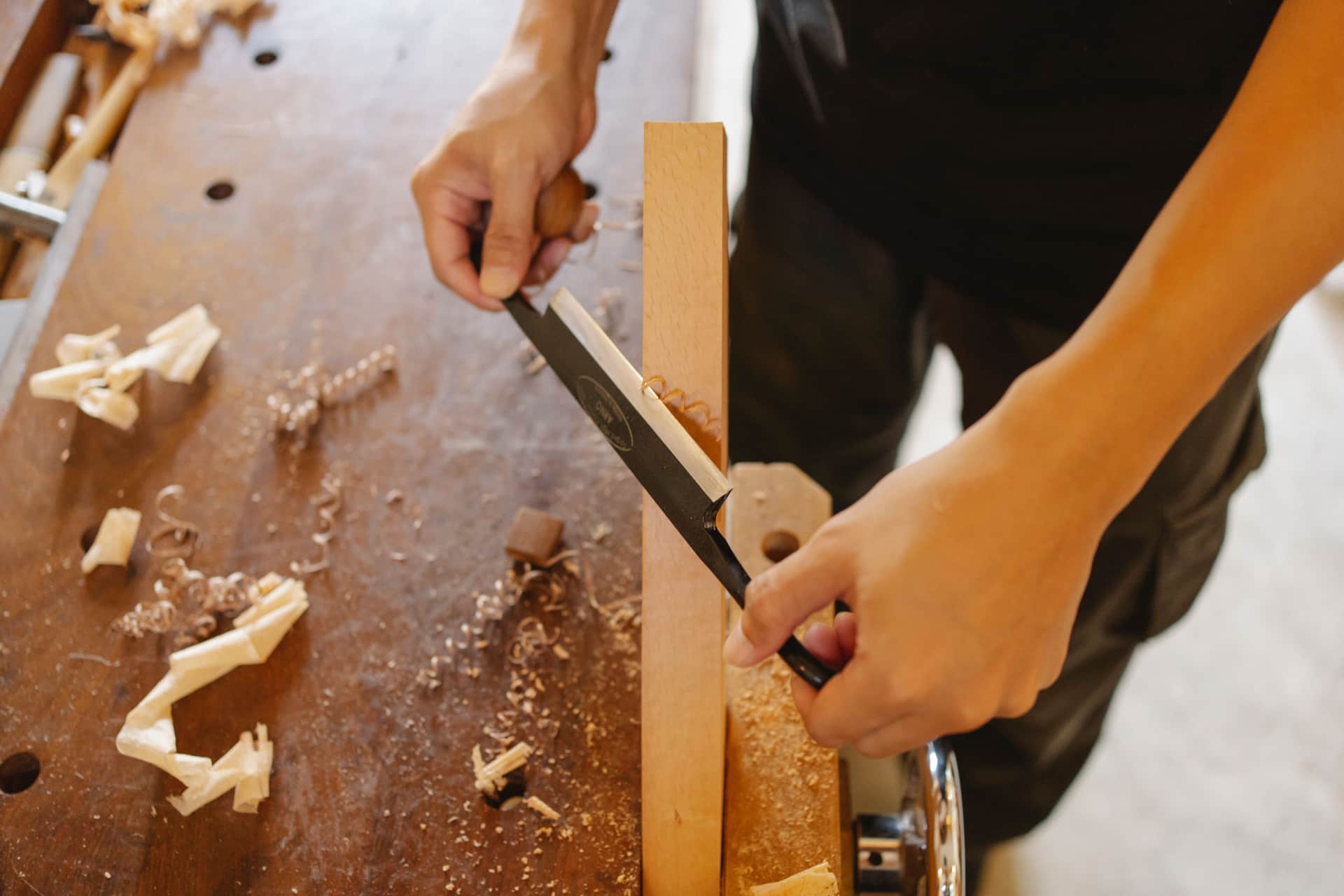
The buy-it-for-life question is not “which is better”. A table saw and a hand plane do different jobs, and a shop you intend to keep for fifty years usually has some of both. The useful question is narrower: which tools earn a permanent place in that shop, and which are means to an end you will replace two or three times along the way?
That framing sorts the two categories more honestly than the usual argument does. A hand plane, a chisel, a marking gauge — these are candidates for permanence, because almost nothing in them wears out. A cordless drill, a random-orbit sander, a benchtop planer — these are working equipment with motors, bearings, batteries and control boards, and over a fifty-year horizon you will buy each of them more than once. That is not a criticism of power tools. It is what they are.
This page is not written to talk you out of power tools. It is written to tell you where each category genuinely earns its place, so that the money you spend once goes on the things that stay and the money you spend repeatedly goes on the things that were always going to need replacing.
The comparison, at a glance
| Property | Hand tools | Power tools |
|---|---|---|
| Longevity horizon | Decades to indefinite; wear part is usually renewable | Years to a decade or two; motors, bearings and batteries are finite |
| Repairability | Sharpen, replace an iron, flatten a sole — owner-serviceable | Depends on parts and boards being stocked; often not economical |
| Speed at stock removal | Slow; hard work by hand on rough lumber | Fast, and tireless across repetition |
| Precision at the joint | To the scribed line, by feel; excellent for fitting | Repeatable to a setup; excellent for identical parts |
| Noise and dust | Quiet; shavings, not airborne dust | Loud; fine dust needs extraction and hearing protection |
| Space and power | A bench and a wall; no dedicated circuit | Floor space, dust collection, sometimes 240V |
Read the table as a division of labor, not a scoreboard. Neither column is trying to do the other column's job.
Where power tools genuinely win
Dimensioning rough stock.Flattening a face, thicknessing to a consistent dimension and ripping boards to width out of rough lumber is brutal, slow work by hand. A jack plane, a jointer plane and a lot of sweat will do it, and generations did exactly that, but a powered jointer and planer do it in minutes with a consistency that is genuinely hard to match by hand. If you buy rough-sawn lumber, this is where machines earn their keep. The two machines are not interchangeable either — a jointer flattens one face and squares one edge, a thickness planer makes the opposite face parallel to it — and the practical split between jointer vs planer is worth understanding before you buy either one.
Repetition.Forty identical shelf pins, a run of forty rails all the same length, a batch of face frames — a machine set up once and fed forty times beats hand work on both speed and consistency. Hand tools shine on the one-off; machines shine on the copy.
Sheet goods and breaking down panels. A track saw or a circular saw crosscutting a full sheet of plywood is safer and squarer than wrestling a large panel across a bench with a handsaw. This is a job the hand-tool tradition never really had, because the material is modern.
Sanding broad surfaces to a finish.A random-orbit sander levels a tabletop quickly. A hand-planed and scraped surface is arguably better — more on that below — but the sander is faster and more forgiving of grain that tears.
Where hand tools genuinely win
Joinery and fitting.Cutting a dovetail, paring a tenon shoulder to a scribed line, fitting a hinge mortise — this is where hand tools are not just adequate but preferred by many people who own every machine going. You are working to a line you can see, adjusting by feel, and a chisel removes a shaving where a router removes a fixed amount. Precision at the joint is a matter of fitting, and fitting is a hand skill.
Surface finish.A smoothing plane and a card scraper leave a surface that reflects light differently from a sanded one — sliced fibers rather than torn and abraded ones, no swirl marks, no dust embedded in the pores. It takes skill and a sharp iron, but the result is a finish sandpaper cannot quite reach.
Permanence. This is the buy-it-for-life point. A well-kept chisel or plane is a candidate to outlive its owner, and the reasons are covered in tools that last a lifetime. A cordless drill is not that object and was never meant to be. If part of the appeal of a hand-tool shop is that the tools are permanent, that is a real property of the tools, not a romantic one.
Quiet, small, apartment-friendly work. You can do hand-tool woodworking in the evening in a spare room without a dust collector, a dedicated circuit or a pair of ear defenders. For a lot of people that is the difference between having a workshop and not.
Cost over decades
This is where the two categories diverge most, and it is worth being precise. A hand plane bought well has one consumable — the iron — and that iron is replaceable and lasts decades of sharpening. A chisel has none. The purchase is close to a one-time cost, and the arithmetic is on cost per decade.
A power tool has a motor, bearings, brushes or electronics, and increasingly a battery platform that the maker will discontinue. Over fifty years you will replace batteries several times, and quite possibly the whole tool when the battery format is orphaned. None of that makes a power tool a bad buy — it makes it a working cost rather than a permanent asset. Budget for power tools the way you budget for tires, and for hand tools the way you budget for a cast-iron pan.
The practical upshot for a buy-it-for-life buyer: spend your “once” money on the hand tools that will still be here, and treat power tools as replaceable equipment bought on value rather than permanence. Do not pay a heirloom premium for something with a control board in it.
Repairability and longevity
A hand tool is owner-serviceable almost by definition. A dull iron is sharpened. A pitted sole is flattened. A cracked tote is replaced with a block of wood and an afternoon. There is no failure mode that requires a technician and a schematic.
A power tool's longevity depends entirely on whether the maker stocks parts and whether the repair is economical against the price of a new unit. Often it is not, and the tool is landfill when a ten-dollar switch fails. Some professional-grade machines buck this — a good cast-iron table saw or bandsaw can run for generations with bearings and belts — but the cordless, plastic-bodied end of the market is largely disposable, and honest buying means admitting that.
Learning curve
Power tools are faster to a first result and slower to mastery hidden behind that: the tool does the cutting, so early results look good, but jigs, setups and safety take real study. Hand tools are slower to a first result — you have to learn to sharpen before anything works at all — and the skill you build transfers across every tool you will ever own. Neither is “easier”; they front-load the difficulty in different places.
The one thing worth saying plainly: a hand tool that is not sharp is not a fair test of hand tools. Most people who bounce off hand woodworking did so with a dull edge. Sort sharpening first with the budget kit approach and the whole category feels different.
Noise, dust and space
Hand tools produce shavings and quiet. Power tools produce fine airborne dust and noise, and both are health issues over a lifetime — the dust more than the noise. A powered shop needs extraction, filtration and hearing protection to be run safely for decades, and that is real cost and real space on top of the tools themselves. A hand-tool shop needs a bench and a dry corner. For a small or shared space, that difference often decides the whole question before cost or performance enter into it.
The shop most people actually want
It is a hybrid, and there is nothing dishonest about that. Let machines dimension rough stock and break down sheet goods, because that work is slow and joyless by hand. Do the joinery, the fitting and the final surface by hand, because that is where hand tools are better and where the pleasure of the craft largely lives. The buy-it-for-life money goes on the hand tools, which stay; the value money goes on the machines, which do not.
If you are starting from nothing and cannot buy both, start with hand tools. They are cheaper to buy well, they build the skill that makes everything else easier, and they are the part of the shop you will still own in forty years. Add machines as specific jobs demand them — an outdoor structural build is usually the first job that does, and this site's editor photographed one end to end in a freestanding backyard treehouse build at Steve's Outpost: posts, joist hangers and an impact driver, which is precisely the half of the split machines exist for. The narrower question of a plane against a router or a powered jointer is covered in hand plane vs power tools.
The shortest version
Power tools win on removing a lot of material fast and on doing the same thing many times. Hand tools win on fitting, on finish, on quiet and small spaces, and on being permanent. Buy the permanent things once and buy the equipment on value. That is most of it.
Questions
Frequently asked
Are hand tools cheaper than power tools?
To buy well, usually yes — and the gap widens over decades because a hand tool has no motor or battery to replace. A power tool is a working cost you pay more than once; a good hand tool is closer to a one-time purchase.
Can you do woodworking with only hand tools?
Yes, entirely, and people did for centuries. The hardest part by hand is dimensioning rough lumber, so many hand-tool woodworkers buy stock already surfaced or let a machine do that one step and do everything else by hand.
Which should a beginner buy first, hand or power tools?
Hand tools, if you have to choose. They are cheaper to buy well, they build the sharpening and fitting skill that makes every other tool easier, and they are the part of the shop you will still own in forty years.
Do power tools do a worse job than hand tools?
Not worse, different. Machines are better at fast stock removal and identical repeated parts. Hand tools are better at joinery, fitting to a line, and final surface finish. A good shop uses each where it is stronger.
Is hand-tool woodworking better for a small or shared space?
Usually, yes. Hand tools are quiet, need no dust collection or dedicated circuit, and produce shavings rather than fine airborne dust. That often decides the question for an apartment, a spare room or a shared garage before cost does.
Keep reading
Related
Back to Buy It For Life · how we pick · editorial policy